

At Stonewall, we strive to provide support for lesbian, gay, bi, trans, queer, questioning and ace (LGBTQ+) people in the workplace.
We’ve come a long way, but there is still further to go to ensure all LGBTQ+ people can thrive at work. In particular, bi people can encounter struggles unique to their identity, issues that are often underrepresented within conversations about the wider LGBTQ+ community.
As well as experiencing high levels of discrimination in everyday life and poor outcomes in other areas like health, bi people face distinct challenges in the workplace. Stonewall’s LGBT in Britain research (published in 2020) found that only 22 per cent of bi staff were out to everyone they work with, compared to 57 per cent of gay and lesbian staff.
Sadly many bi people who are out at work experience discrimination and abuse, and only 28 per cent of bi respondents would feel confident reporting being a victim of bullying and harassment, compared to 41 per cent of gay and lesbian staff.
But employers have the power to change this and create environments where bi staff are free from discrimination and can reach their full potential.
Creating workplaces that are accepting and inclusive of bi people requires an organisation-wide commitment: network groups, HR teams, allies and senior leaders all play a key role. In turn, creating a bi-inclusive workplace benefits all staff. It supports your bi staff to feel confident and perform at their best, and promotes acceptance and knowledge among staff who do not identify as bi.
This guide explores key areas of practice for supporting bi employees in your organisation and creating an inclusive environment for all staff. We explore how biphobia can manifest in the workplace, and actions that organisations, allies, network groups and senior leaders can take to champion bi inclusion.
What do we mean by the term ‘bi’?
Bi is an umbrella term used to describe a romantic and/or sexual orientation towards more than one gender.
Bi people may describe themselves using one or more of a wide variety of terms, including, but not limited to, bisexual, pan, queer, and some other non-monosexual and non-monoromantic identities. For more detail on language and definitions, take a look at our full glossary of terms.
What is biphobia?
Biphobia is the fear or dislike of someone who identifies as bi based on prejudice or negative attitudes, beliefs or views about bi people. Biphobic bullying may be targeted at people who are, or who are perceived to be, bi.
Take a look at our Bi Report for more detail on the impact of biphobia in the workplace and beyond.
Common issues facing bi people in the workplace:
Bi erasure
Bi erasure is when bi identities are diminished or made invisible by others.
Individually, this might include telling someone who is bi that they are either gay or straight and need to ‘pick a side’. For example, colleagues may assume that a bi man dating another man is gay. Insisting that he is ‘definitely gay’ because of the gender identity of his partner would erase his bi identity.
Bi erasure can also happen at an organisational level, with workplaces naming their initiatives ‘gay pride’ or referring only to gay and straight communities. This makes inclusion work less accessible to bi employees, as well as trans and other LGBTQ+ groups. It also means that campaigns are less likely to address their needs.
Stigma and lack of understanding
Bi people face high levels of discrimination and abuse in the workplace, which is often driven by stigma, stereotypes and a limited understanding of what it means to be bi.
For example, bi people are sometimes assumed to be ‘promiscuous’ or to have multiple partners. An example might include telling a bi colleague that they are ‘just greedy’.
The stigma bi people face can also be gendered. Bimisogyny is when bi women, and people perceived as bi women, are objectified for their sexual orientation or when their orientation is seen as a performance for men. For example, a bi woman dating another woman might be asked by a colleague when she will ‘actually settle down’ or asked about her sexual preferences.
Language evolves constantly, but it’s commonly assumed that bi still means ‘two’, and that bi identities can’t encompass non-binary identities. An example could include assuming that a bi person ‘can’t really be bi’ if either they or their partner doesn’t identify with a binary gender.
Access to LGBTQ+ spaces and support
Bi people are less likely to feel included in LGBTQ+ community spaces. Stonewall’s LGBT in Britain research found that 43% of bi people have never attended an LGBTQ+ space or event, compared to 29% of gay and lesbian people.
This may mean that bi employees are less likely to feel confident accessing much needed workplace support, like LGBTQ+ network group spaces, bullying and harassment reporting channels, or specialist mental health services.

Supporting all staff to be bi allies
Read more, Opens a new window
All staff can play a role in creating a bi-inclusive workplace by supporting their colleagues and challenging biphobia.

Building bi equality into your Diversity & Inclusion practices
Read more, Opens a new window
Consider how bi inclusion can be built into key areas of your practice, or at each point of the employee lifecycle.
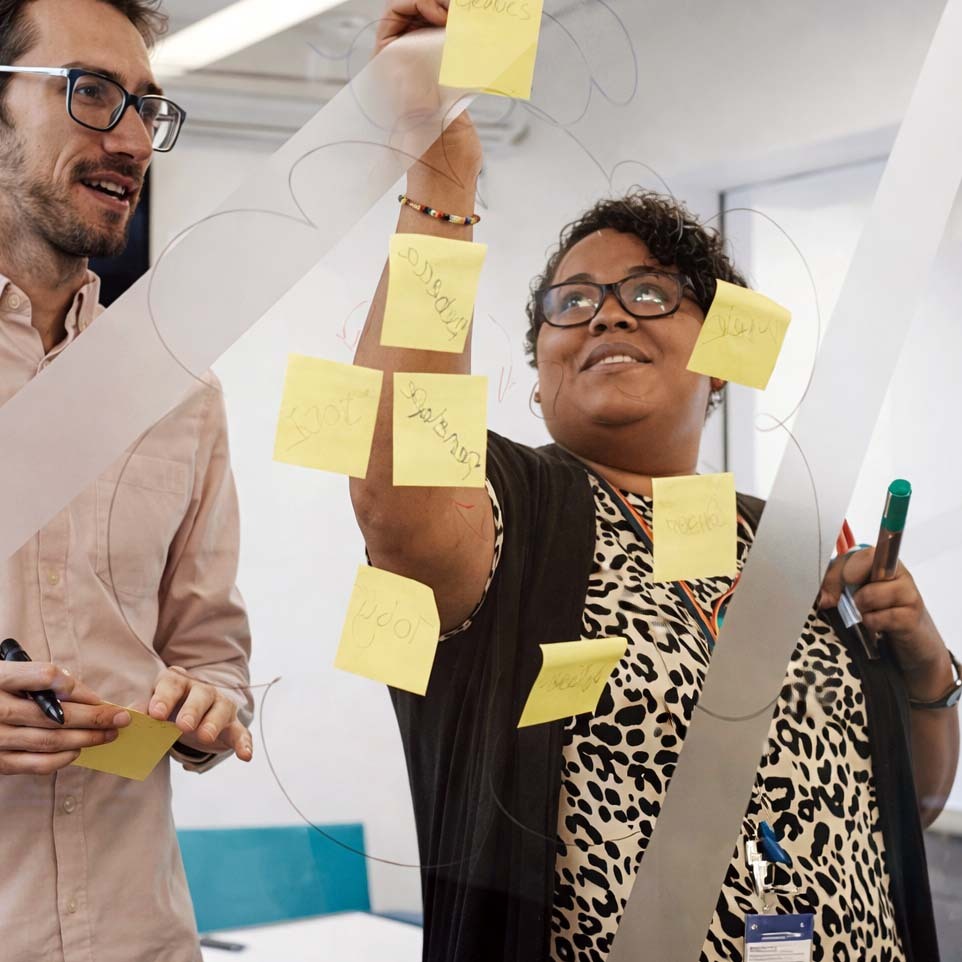
Embedding bi inclusion in LGBTQ+ network groups
Read more, Opens a new window
LGBTQ+ network groups are an important place for bi people to access support in the workplace.

Encouraging senior leaders to champion bi inclusion
Read more, Opens a new window
Senior leaders are critical for creating truly inclusive work environments.

Bi inclusion thought leader: Macquarie
Read more, Opens a new window
Learn from our Diversity Champion Macquarie about how they embedded bi inclusion within their workplace.

Bi inclusion thought leader: Thoughtworks
Read more, Opens a new window
Learn from our Diversity Champion Thoughtworks about how they embedded bi inclusion within their workplace.