
Blog
When I first sat on a friend’s Shetland pony, Toby, when I was about 6 years old, I never wanted to get off. I was obsessed with their smell, the way they moved and their tenderness.
As I grew up, a local farmer, Mr Smeeth, lent me a pony called Tommy. Later I was loaned Frosty and Looby. I was a fearless child at pony club and was often put on the ponies that were ‘misbehaving’.
At 52, I am not as fearless as I was at 14 or as the world class riders that took on Badminton Horse Trials this week. Badminton is the iconic setting for one of the toughest three-day events in the world. The bond and trust between the horse and rider taking on this world-class challenge is inspiring.
But the bond I have with Boris and Obi is just as strong. And the absolute joy they bring me is vital to my mental and physical wellbeing. Whilst many people who ride do not compete, that has always been the fun bit for me. Pushing myself out of my comfort zone, aiming to improve and seeking new goals.
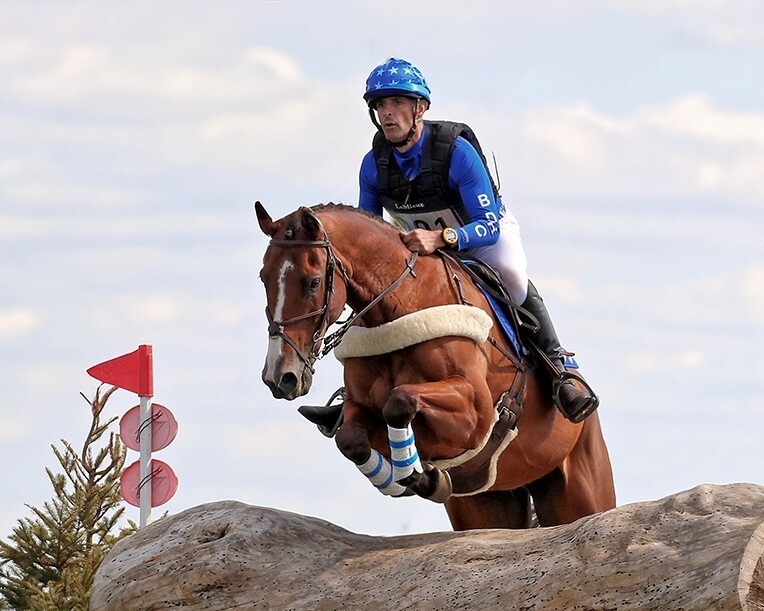

Success at any level in sport – equestrian or otherwise – is built on trust, confidence and a sense of belonging. I – and most of the people from the LGBTQ+ community I know – have always felt very welcome within the equestrian community.
I want every single member of the LGBTQ+ community to feel they are able to experience the mental and physical benefits of activity, exercise and movement – whether that be a gentle walk, a community club run or team sports. That is why the new era of the Rainbow Laces campaign matters so much to me.
While movement and exercise can be an incredibly powerful force for connection and wellbeing, for too many people from the LGBTQ+ community, that sense of belonging is not guaranteed.
After extensive consultation, we took the deliberate decision to shift the Rainbow Laces campaign to focus on exercise, movement and belonging. We created a Proud Pledge that clubs and bodies can sign as a commitment to create environments where LGBTQ+ people are and feel welcome: from inclusive policies to visible allyship and clear expectations of behaviour.
We have been inspired by those who have shown their commitment to actively creating cultures of belonging. This really matters, at a time when some people, particularly trans+ people, are being and feeling excluded.
Next week, is Mental Health Awareness Week, which is encouraging all of us to take action for our mental health. Activity, movement and exercise are one sort of action that many people from the community already take to look after their mental health. Our hope is that, through working in partnership with the Rainbow Laces campaign, we can encourage conversation, encourage action and amplify the amazing initiatives that promote inclusion such as Football vs Homophobia.
Sport should be for everyone. Events like the Gay Games in Valencia this summer and the Euro Games in Cardiff in 2027 have been designed because LGBTQ+ people have not always felt welcome – and some still don’t.
We can change that. People are taking big and small actions from wearing a pair of Rainbow Laces to signing the Proud Pledge to coordinating weeks of action, establishing LGBTQ+ supporters clubs in football and rugby, setting up queer hiking groups, opening inclusive gyms and much more – all helping to connect the LGBTQ+ community to activity, exercise, sport and nature.
The shifting nature of the Rainbow Laces campaign is important given the context. We are in a period of significant turbulence for the LGBTQ+ community and the evidence shows that poor mental ill health is increasing, including among young people, and there are significant disparities in mental health outcomes for LGBTQ+ people. Activity, exercise and sport can play a vital role in supporting wellbeing, offering community, creating structure and a sense of achievement. That only holds true if people feel confident enough to take part.
Fear of being judged, excluded or discriminated against can prevent us from trying new activities that could bring joy and make us step back from activities where we feel excluded. That is why belonging is not a “nice to have”. It is essential.
As we look ahead to global events like the FIFA World Cup in Canada, Mexico and the USA and the Commonwealth Games in Glasgow, there is an opportunity to bring people together. These events can create hope and optimism, building unity and belonging, or they can do the opposite. When I and others in the LGBTQ+ community watch these sporting events, we are not just seeing sport, we are also asking ourselves, is there a place for me here? Can I be part of this?
If the answer is yes, whether as a competitor, spectator and supporter, sport has the power to bring people together in ways few other things can.
The visibility and success of Team LGBTQ+ at the winter and summer Olympics was wonderful to see. It shows that change is happening, but in the current political environment, progress is not inevitable.
As we gathered in Parliament for Stonewall’s reception to mark LGBT History Month, we took time to honour those who worked tirelessly, often at personal cost, to achieve the rights we have now, celebrate the progress we have made, reflect on the collective action that has brought us here, and what our history means for the work we must continue together in this moment we find ourselves in.
Across the UK and around the world, rights including LGBTQ+ rights are being challenged. Hard-won advances are being questioned, freedoms and rights are under threat, and the world feels more polarised. Further progress is no longer inevitable, but history tells us that we are a resilient, tenacious and powerful movement for change. And when we stand in unity, with shared purpose we can and will continue to make progress.
The rights and freedoms we have today are owing to the courage, solidarity and dedication of those who stood up and imagined a world where equality is possible and discrimination is not inevitable.
In the UK legal and policy changes on the road to equality including the repeal of Section 28, the equalisation of the age of consent, the right to serve in the military, equal marriage and the ability of same sex couples to adopt happened step by step, through coalitions of activists, allies, organisations and others, all part of an enormous ecosystem, who often had hugely differing views and tactics, but aligned together with shared values and a common goal, equality.
Organisations with the courage to stand up for the simple, profound idea that everyone deserves dignity and equality. Legislative change is only one part of transformation. Laws alone do not end prejudice or make workplaces, schools and communities safe and inclusive.
Still too many people in LGBTQ+ communities experience discrimination, exclusion and bias; there is a globally connected web of organised, concerted efforts to undermine equality and progress, and a loud political discourse which tries to ridicule and undermine the legislation, systems and structures designed to promote equality.
That is why LGBT+ History month really matters. When we understand our histories and give space to honour the contributions of LGBTQ+ people across every walk of life we learn how – and are inspired to - tackle the moment we are in now with courage and hope.
At our Parliamentary Reception, we will hear from four people who have played an important part in LGBTQ+ equality in recent years. Lord Michael Cashman CBE, one of our founders, has long campaigned for LGBTQ+ rights - from featuring in the first British soap same-sex kiss in East Enders to his work in the European Parliament and the House of Lords. Dame Angela Eagle, the second openly lesbian MP, who has served in the governments of Tony Blair, Gordon Brown and Kier Starmer. Ayla Holdom, Stonewall trustee, former RAF pilot, now a helicopter pilot with the National Police Air Service and advocate for trans visibility. And Saba Ali, multi-award winning advocate and chair of the Ban Conversion Practices Coalition. All have been part of coalitions that span communities, institutions and sectors with a shared determination to address injustices where they persist.
American civil rights leader Fannie Lou Hamer once said
we are none of us free until we are all free.
History teaches us that we make progress through building empathy and understanding, by working together across communities, lifting each other up and acting in solidarity. Empathy and understanding is built by finding common ground through conversation, listening and understanding.
Today, Stonewall continues to champion that work. We are engaging with partners across government, business, education and civil society to build alliances and create the changes in legislation, policy and practice that will benefit our communities including securing a comprehensive ban on harmful conversion practices, ensuring that anti-LGBTQ+ hate crimes are recognised and addressed in law; supporting LGBTQ+ people in the workplace, and creating a world where every person who is lesbian, gay, bi, trans, queer+ is living free from discrimination, prejudice and inequality, making our shared future safer, fairer and more prosperous.
The world may be more polarised and it is a turbulent time, but as the Chief Executive of Stonewall I remain optimistic. At a recent celebration of 25 years of our work in Scotland, one of our founders reminded us publicly and then gently chastised me privately, that it may be tough at the moment but it has always been tough and
25 years ago there would not have been this many people stood in a room free to be who they are and supporting LGBTQ+ rights’.
If history teaches us anything, it is that people often unite, find common ground and form alliances when the chips are down. And there is no doubt the chips are down, so this LGBT History Month I am grateful for the bravery of all those who have worked tirelessly with gratitude for their bravery so we can stand here now with a clear focus on the work that lies ahead.
Together, across generations, we can build a future where everyone everywhere has equal rights. That is the goal. Words are important and collective action even more so.
Our vision at Stonewall is a world where everyone, everywhere has equal rights. As a society we often place such hope in the next generation to advance equality for all and, of course, they deliver time and again.
But if we are to place hope in the next generation, we also have to set an example and create the conditions for them to progress human rights and freedoms. We have to teach and demonstrate the importance of compassion, empathy and humanity and to nurture values of kindness and inclusion.
This week Girlguiding made the ‘difficult decision' that young trans women will no longer be able to join. A decision which runs contrary to their values. No organisation that seeks to support young people wants to have to tell some of them that they do not belong.
Today the Women's Institute has announced it will no longer accept trans women as full members. They combined their announcement with the decision to set up sisterhood groups; looking for ways to champion and signal inclusion, despite having had to take steps about membership that are not aligned to their values.
Whatever the individual views of the Supreme Court judgment in April 2025 are, organisations must seek expert legal advice and act in accordance with the law. And regardless of Stonewall's views about the decisions being subsequently enacted, it is clear that they are being made reluctantly and with heavy hearts.
As pressure is applied, and decisions are confronted, many organisations await the forthcoming statutory guidance from the Equality and Human Rights Commission (EHRC). We hope it makes clear how organisations can operate from the principle of inclusion, in line with their values, rather than one of exclusion.
We cannot lose sight of how crucial our actions and responses are at this moment. In both the case of Girlguiding and of the Women’s Institute, their respective announcements express sadness, regret and solidarity with trans+ communities. Both have also shared their intentions to create alternative, inclusive options.
Against this backdrop, the new EHRC Chair, Mary-Ann Stephenson has taken up her post this week. We hope this will be an important opportunity for reset within our national human rights body as she sets out her intent 'to lead with compassion, honesty and dedication, working collaboratively to ensure we can all live with dignity'.
All of this is taking place in the middle of 16 days of activism to end violence against all women and girls. Organisations that have played an important role in empowering women and girls for decades are having to spend time and resources on decisions that are divisive and harmful, and that do not contribute to keeping women or girls safe.
Last week at the No More, End Violence Against Women conference, I highlighted this:
unless we are honest about the fact that it is predominantly heterosexual men who commit violence against women, then we will continue to perpetuate narratives that hinder effective policymaking. Failing to challenge narratives and policies that persistently seek to undermine the dignity of a small and marginalised group in trans and non-binary people does nothing to help achieve the shared goal of ending violence against all women and girls, including against those in the LGBTQ+ community.
We should all be worried. Exclusion is not something to be celebrated - it should give cause for concern to all of us who care about creating and maintaining an equal and prosperous society.
We know that many are struggling and deeply worried. If you need support, please reach out to those who offer support:
Ending HIV Stigma once and for all
The HIV epidemic, from its earliest days, had a devastating impact on the LGBTQ+ community, first manifesting amongst gay, bisexual and other men who had sex with men. At the same time as Stonewall was being established (1988) to fight Clause 28, members of the community were experiencing the same homophobia relating to what was seen as a “gay plague”. The after-effects of this stigma can still be seen in today’s turbulent times, with persisting health inequalities and discrimination and poorer health outcomes for the community.
Stonewall’s fight for fairness, equality and equal rights for everyone complements the vital work being done by the HIV sector, and by people like Julian and Adam who, here, share their own experiences as men from different generations who are living with HIV.
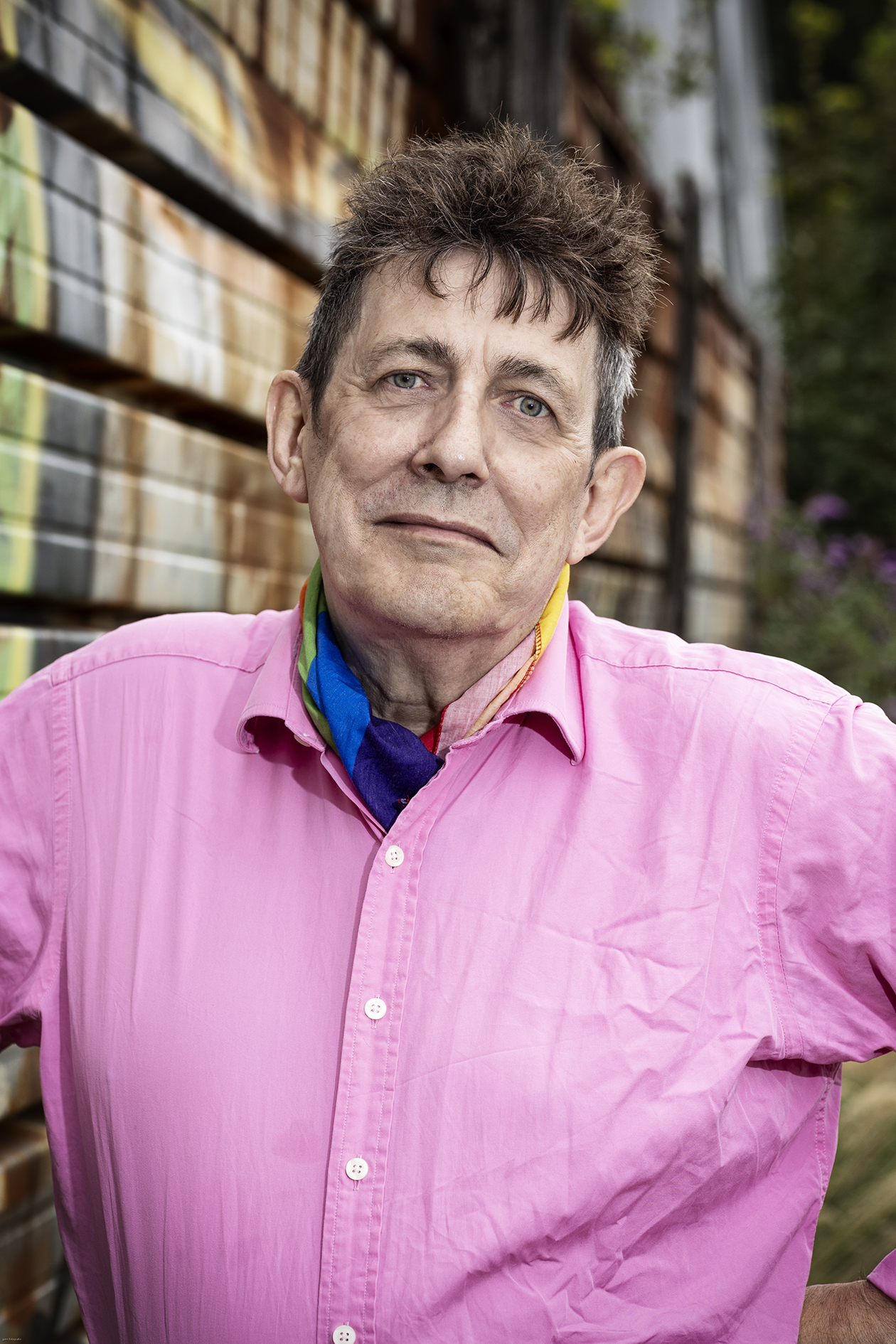
When Julian Hows (70) was diagnosed with HIV in the late 1980s, he was working on the phones at London Lesbian & Gay Switchboard, supporting a community in the midst of devastation. “I put off testing for years,” he says, “because I was caring for people who were being diagnosed at ten T-cells. I didn’t want to know. Not then.”
In those years before effective treatment, HIV was a daily reality of illness and loss. The fear wasn’t abstract. 'We were burying people,' Julian recalls. And there was no treatment. Just AZT (azidothymidine). You were supposed to survive on macrobiotic diets, homeopathy, visualisation… but there was no cure, honey.”
More than thirty years later, Adam Williams (28) got his diagnosis during the COVID-19 pandemic. “I didn’t realise it was HIV,” he says. “I was actually really ill at first. I did an at-home test because clinics were shut, during lockdown, and when it was positive, I thought: that’s it. I’m going to die.”

But he was put onto modern retrovirals within a fortnight - treatment so effective it suppressed his virus almost immediately. “The contrast between Julian’s experience and mine is massive,” he says.
I feel privileged to get medication that works straight away. But that’s only because generations before us went through that trial-and-error stage.
Fear, resilience, and the realities of stigma
Despite their different experiences, both describe the same visceral moment after diagnosis: the confrontation with mortality. “Whether it’s 1988 or 2018,” Julian says, “there’s that feeling of: this changes everything.”
For Adam, being gay softened the landing. “We do talk about HIV in the community - even if there’s stigma. In the straight world, it’s more taboo. At least we have spaces, conversations, PrEP [pre-exposure prophylaxis -medications that you can take to protect you from contracting HIV], PEP [post-exposure prophlaxis – emergency medication that can be taken to protect you, if taken within 24 hours of potential exposure].”
Yet stigma persists. Adam shares a recent experience at his dentist. “I disclosed my status and they said they’d have to book me the last appointment of the day so they could ‘disinfect’. They were acting like they didn’t already change their tools. It’s a constant reminder - especially in a small town - that education still has a long way to go.”
Julian nods at the familiarity. “It’s the same old story. Why should I have to disclose something that poses no risk to anyone? But we’re still forced into it, by people’s assumptions and attitudes, and we’re still living with that fear of being rejected because of stigma and lack of understanding.”
He remembers coming out as living with HIV on Slovenian national television in the early 1990s.
“No one in the whole country was willing to appear on camera,” he says. “I was only there for a few days, attending a conference, so I did it. That evening, 35 people travelled from all over Slovenia to the gay bar I had mentioned in the interview, just to talk to someone living with HIV. That’s the power of visibility, but also the burden of it.”
Adam understands that burden intimately after sharing his status on BBC Three’s I Kissed a Boy:
“I told the nation - but I still get scared someone I work with might Google me. There’ll always be that background fear. Having HIV becomes part of your identity, whether you want it to or not. But I’m proud to represent people who are newly diagnosed and terrified. I want them to see that life goes on, and that it can be great!”
Why community still matters
For both Julian and Adam, community has been life-sustaining – although it has taken differing forms. Adam speaks first about the support he found through HIV charities.
“I didn’t know anyone with HIV at first. I followed people on social media, but that’s not the same. Then I went to a conference from [HIV support organisation] Positive East, and spoke to this woman in her fifties who’d lived through the epidemic. She gave me such perspective. After that, I felt grounded again. That one human connection changed everything for me.”
Julian recognises that completely.
In the early days, support groups were all we had. Before treatment, peer support was medicine.
"Those groups taught us how much we had in common - whether we were gay men, people from African diasporas, drug users, mums, dads. That human touch mattered then and it matters now. HIV isn’t just a medical condition; it’s emotional, social, personal. Without support, people stop taking their meds. With support, they can thrive.”
Looking forward – together
Both men return to the same message: progress is real, but incomplete.
As Adam says:
“People think the battle’s over because treatment works. But stigma still affects people’s jobs, dating lives, access to healthcare. Globally, people are still dying. Cuts to HIV funding anywhere affect us everywhere.”
Looking back over the years, Julian adds:
“We’ve improved so much, but we still carry those old messages: that having HIV means you’re flawed, that you did something wrong. We have to keep challenging that. We deserve to live openly, safely, proudly.”
On World AIDS Day, their conversation is a reminder that our community is strongest when younger generations speak with older ones - and when lived experience is honoured, shared, and centred, with respect and understanding.
As Adam puts it:
“I hope the world gets kinder. Whatever your status, wherever you’re from, however you got here - everyone deserves support, dignity and connection.”
And Julian ends, with a smile:
“I did the 80s so you don’t have to, darling. But the fight for compassion - that’s all of ours.”
This piece was originally published in The Big Issue.
There's 'awareness' of trans people – but too often it's the wrong kind
Ayla Holdom, interim chair of the board of trustees at Stonewall, writes about the need for compassion for transgender people beyond Trans Awareness Week.
Every day is a Trans Awareness Day when you’re openly trans. Every interaction, every sideways glance, every moment of choosing authenticity over safety is an act of awareness.
So when Trans Awareness Week comes around, I sometimes feel conflicted. On one hand, it’s a welcome opportunity to talk openly about our lives. On the other, I can’t help thinking that there’s already too much awareness – just of the wrong kind.
We are, perhaps, one of the most discussed groups in Britain right now. Politicians, commentators, and campaigners seem endlessly fascinated by us. Yet so few of those conversations involve trans people themselves. The result is a strange kind of awareness: a noisy, abstract debate that bears little resemblance to our actual lives.
The truth is simple: being trans is just one facet of my life, my family and my humanity. I lead an everyday life like any other.
But that humanity is easily lost in the noise. In the mid-2010s, I thought we might be turning a corner – that trans people could live openly, safely and with dignity. Yet here we are, in 2025, facing new attempts to roll back equality, from the EHRC’s draft guidance following the April Supreme Court ruling to the political rhetoric that casts our existence as up for debate.
When I think about what I want people – especially policymakers – to understand, it’s this: trans people are not a political challenge to be solved. We are your colleagues, your constituents, your neighbours. We are parents walking our kids to school, partners planning the weekend, people trying to get on with life.
That’s what I see every day in my role as chair of the board at Stonewall. We work across sectors to help organisations do better – not by shouting, but by engaging, educating, and collaborating. Stonewall has always believed that progress happens when we meet people where they are, while holding them accountable to go further.
And yet, too often, trans people are used as political currency – a way to score points or provoke division. We’re not the first group to experience that, and we won’t be the last. But the cost is real: every headline that questions our legitimacy makes life harder for trans people just trying to exist.
So I am proud that Stonewall are continuing to bring people together, with our Brave Conversations series. It is only by having those – sometimes difficult – conversations, with others whose views we may find challenging, or different to our own, that we will find common ground and overcome some of the barriers to progress that still affect our communities.
So, what can you do if you want to be an ally? Start small. Don’t wait for the perfect words – perfection is the enemy of progress. Speak up when you can, even gently. Challenge misinformation when you hear it. Show kindness and curiosity. Each of those small moments builds the world we want to live in.
For me, that world already exists in miniature. I live in rural Devon with my wife and our five-year-old daughter. We’re a same-sex couple, and I’m trans. Our daughter knows my story; it’s simply part of who we are as a family. Our daily life – the school run, dinner with friends, planning holidays – looks just like everyone else’s.
That reality is invisible in most public debates about trans lives, but it’s the truth for so many of us. The real “trans experience” is not defined by conflict – it’s defined by love, belonging, and the simple desire to live freely.
Trans Awareness Week is a reminder that equality isn’t just a legal or political goal. It’s a human one. And it’s built, day by day, in the small moments of understanding we create together.
Because awareness, by itself, isn’t enough. What matters is empathy – and action.
Visit our Trans Hub to learn more about trans and non-binary inclusion
This piece was originally published in PoliticsHome.
It is one year since I became CEO of Stonewall. It’s been a year of turbulence, challenge and change for the LGBTQ+ community in the UK and globally.
We have seen numerous examples of rights being challenged, contested and rolled back across the world. Here in the UK, we have fallen down the global leaderboard on LGBTQ+ rights, and we are seeing hostility, discrimination and division more openly expressed.
Time and again I talk to people of my generation who are saying that despite how much progress has been made, the atmosphere surrounding LGBTQ+ rights feels horribly reminiscent of the past, and not in a good way.
LGBTQ+ rights, although hard won, remain fragile. We have seen several regressive actions in recent months.
In the UK, some councils have stopped supporting Pride, and flags have not been raised this year.
Funding for the LGBTQ+ movement globally has reduced and in the UK funding for LGBTQ+ services is incredibly tight. Same sex marriage is under threat in the US, and some are saying we shouldn’t have passed the equal marriage bill here in the UK. Over the summer, lawmakers in Hong Kong rejected a bill that would have granted limited rights to same-sex couples.
Rainbow crossings have been painted over in the US and some question them in the UK too. Many trans people are on extremely long waiting lists for healthcare, putting them at risk. Many trans+, gender non-confirming women are becoming fearful in public spaces.
Prejudice towards marginalised groups is unacceptably high; hate crimes are on the rise for the LGBTQ+ community and other marginalised groups and less than half of LGBTQ+ people feel safe holding their partners hand in public.
This anti-LGBTQ+ sentiment is crossing into some workplaces too. Some organisations are dialling down their diversity, equity and inclusion (DEI) activity - and where they do remain committed to DEI principles, many are renaming activity or merging it into other departments. Some are seeing reduction in budgets.
The Supreme Court judgment on the meaning of woman and man in the Equality Act, in April this year, and the subsequent inadequate Equality and Human Rights Commission (EHRC) consultation process on a new Statutory Code of Practice, has left the LGBTQ+ community, particularly trans and non-binary people, feeling angry, worried, hurt and uncertain.
This is set against a backdrop of a growing division in attitudes towards refugees, asylum seekers and people of colour. The Union Jack and St George flags being flown with a re-purposed meaning around the UK show that other marginalised communities are being demonised, along with the LGBTQ+ community.
Sadly, we are now living in a world that feels more hostile for many people.
My second year as Stonewall CEO kicks off, like my first, with the political party conferences - a crucial opportunity to advocate again for the legislative change and political leadership we need.
In July we launched Stonewall’s new strategy: In courage and unity, is hope. Our vision is of a world where everyone, everywhere has equal rights. Central areas of our work are navigating turbulence, which reflects the times we live in right now - and shaping policy.
Sustainable and long-term change cannot be achieved by anyone alone. Politicians from all parties play a vital role so we will be continuing to advocate for positive change with a wide range of politicians and policy makers. This year, we are attending the Labour, Conservative, Liberal Democrat and Green Party conferences to advocate for a safer and more equal society where LGBTQ+ people can live, work and thrive.
The government has yet to deliver on its election manifesto promises.
In the summer the Prime Minister said he wants the UK to be a leader in LGBTQ+ rights; we simply haven't yet seen the sustained commitment and political courage we need to advance LGBTQ+ equality in the UK.
Over the past eight years we have been promised time and time again that a fully inclusive ban on conversion practices will be brought forward. The Dutch parliament recently voted to criminalise them, which is a hugely positive step for LGBTQ+ people in the Netherlands. The UK must follow suit.
Government has committed to amend the Crime and Policing Bill to make LGBTQ+ and disability hate crimes aggravated offences. But it is not over the line yet.
Access to trans+ healthcare continues to be inadequate and highly politicised. The new updated relationships, sex and health education guidance for schools needs work and will not reflect the lived experience of young people. Many in the LGBTQ+ community await the gender questioning children guidance for schools with some trepidation.
Trust in the government and many politicians of those across the political spectrum is lacking and that makes it even more important that the needs, voices and realities of the LGBTQ+ community are represented in political debates and conversations.
Our call to action for all politicians is simple: we need moral courage and political leadership to reduce the social, economic and health inequalities that exist in the LGBTQ+ community.
Despite the challenges there is also so much that gives us hope. There are parliamentarians in both houses who consistently stand up for the rights of the community. The thousands and thousands of people who volunteer their time to answer calls and emails, to run employee and other networks to organise – and attend - Pride events, to fundraise for LGBTQ+ causes, give their time to support Stonewall (and me), organise activities that create space for joy and connection and so much more.
I remain determinedly optimistic. I was lucky to see the former New Zealand Prime Minister Rt Hon Dame Jacinda Ardern speak recently. She said this: “Optimism is a choice – a courageous choice that can sometimes be treated as naivety or not being grounded in the real world. More than hope, courage is the expectation that people, together, can solve what feels unsolvable.”
We know that progress is possible; we’ve seen it happen, time and time again. I look forward to working with politicians and partners to make that possibility a reality.
Rainbow Laces, Stonewall’s annual campaign to make sport an inclusive and welcoming space for all kicks off today, Saturday 16 November!
This year, Rainbow Laces has partnered with the Barclays Women’s Super League, the Football Association (FA) and with grassroots teams across the nation who will all celebrate their commitment to LGBTQ+ inclusion from 16 November - 5 December.
We’re encouraging anyone who wants to support the campaign to lace up and make sport safer for all – to show their support for LGBTQ+ inclusion in sport by wearing a wear a pair of iconic Rainbow Laces.
This weekend, the Barclays Women’s Super League will be kicking off their activities - find out more about where you can expect to see them championing Rainbow Laces.
The FA and Premier League’s activities will follow later in the month – you’ll see activities at all levels, from grassroots to elite levels of football.
The Professional Darts Corporation supported Rainbow Laces throughout the Grand Slam of Darts, promoting darts as a safe place and sport for all – with the PDC’s on-stage logo during the tournament reflecting the rainbow colours. See more.
How everyone can lace up and make sport safer for all
Since kicking off in 2013, Rainbow Laces has played a vital role in starting conversations around LGBTQ+ inclusion in sport.
Over a million people have laced up to support the campaign - including England footballer Harry Kane, people playing sport at grassroots level, and those attending their local gym. We know that millions have been impacted by clubs, teams and fitness spaces becoming more welcoming and accepting to LGBTQ+ people.
Yet, despite the progress we’ve made - many LGBTQ+ people continue to feel unsafe at live sporting events – and that’s why Rainbow Laces is still needed.
All of us can take part - on the pitch, in the stands, or anywhere in between!
There are so many ways to get involved – from snapping a picture of you wearing a pair of our iconic laces to sharing your story online, find out how you can support the campaign.
Join us - together we can create a safer, more inclusive sporting world.
This Trans Awareness Week, we celebrate the incredible trans people in our lives and the activists, organisations and groups that provide vital advocacy, support and services. Like many marginalised communities these are often provided by trans people, for trans people.
I am still in my first weeks as CEO of Stonewall and as we mark this week, I am acutely aware of the demonisation and dehumanisation trans people across the UK and the world experience. This includes lack of and withdrawal of high-quality affirmative healthcare services, health inequalities and rising transphobia and hate.
Since 2020, anti-trans hate crime has risen by over 70 per cent. Despite official figures showing a slight drop in reported anti-trans hate crime over the last year, this is only part of the picture – many trans people don’t report their experiences to the police. That is why Stonewall is campaigning for a safer society for all LGBTQ+ people with our Hold my Hand campaign – which thousands of people have already supported.
When I was growing up as a gay teenager, I learned that at best, gay people were not considered normal, and at worst we were dangerous and predatory. Our lives were up for debate. From the classroom to the workplace and the streets, the discrimination we experienced was blatant and expected.
Now, as then, trans people face similar demonisation and people debate the rights and needs of trans people without including trans voices in discussions. So often, people from different parts of the LGBTQ+ community are ‘othered’ – that is, they are viewed or treated as intrinsically different to other people. This has been particularly intense for trans people in recent years.
Tackling misinformation - whether deliberate or accidental - is critical, and empowering allies to recognise and challenge this can move us toward positive and fact-based engagement that reflects the actual lives of all trans and non-binary people.
I know from my early conversations as CEO that, since Stonewall became trans inclusive in 2015, despite some good work and the best intentions our work hasn’t always empowered and uplifted trans voices and the many organisations that directly support trans people and lobby for change as well as we and others hoped. As we move forward, I look forward to candid and honest feedback about how we play our role effectively and amplify trans voices and organisations effectively.
Awareness weeks are important and they must drive action. Trans people and allies are delivering vital services for, with and to trans people; from mental health support, to advocacy and legal advice. Organisations such as Gendered Intelligence, Mermaids and TransActual exist alongside smaller community groups and individuals. Together they have created a vibrant sector to champion trans rights and improve lives, and it’s more important than ever that this critical work is recognised and appreciated.
One of the privileges of my role is thinking about how we as a sector can reset the relationship with our new government and the national conversation about the importance of all LGBTQ+ people living free with dignity and respect, from prejudice and harm and to think about how all the different players in the sector work together to advance LGBTQ+ equality for all.
I am excited to be having conversations with trans and non-binary people, trans-led and trans-inclusive organisations to understand how, as we build our new strategy and approach, we at Stonewall play our part in securing a fairer, just and equal world.
The more candid the conversations, the stronger the learning, partnerships and alliances will be – even when where there are sometimes different perspectives, strategies and roles.
Partnerships deliver change and our TRANSforming Futures programme funded by the National Lottery Community Fund demonstrates that. We have had the enormous privilege of working with community groups and organisations to support trans people and allies to provide creative, participatory, trans led solutions to issues and challenges. The first step was to commission research to help us understand the experience of trans people in healthcare and the criminal justice system, as well as the experiences of trans young people. This research informed the commissioning of 18 national and local projects.
One of these projects is the Black Trans Foundation’s funding to provide free therapy to Black trans and non-binary people. The evidence shows that those who experience multiple inequalities often lack specialist support services and cannot access charged-for services. Through this programme the Black Trans Foundation supported 57 Black trans people with four to six months of free therapy.
This is just one of the projects that demonstrate the power and importance of trans-led initiatives. Designed and delivered by trans people, for trans people.
This Trans Awareness Week we must start moving from awareness to action. In the face of hostility and prejudice, trans and non-binary people and their allies continue to resist through acts of joy and demonstrate resilience, rising time and again, and showing that change is both essential and possible.
As I said back in 2021 as I stepped down as vice chair of the Board, the Stonewall I love will always be at the vanguard of change. The Stonewall I love will always be a place that stands up for all LGBTQ+ people. The Stonewall I love is driven by a deep understanding of the importance of solidarity across and beyond our LGBTQ+ communities.
We won’t always get it right, but we will always act with good intent and do all we can to amplify trans voices. A fairer, just and more equal world where trans people can live freely and safely can only be achieved through collaboration and partnership. We will always be stronger together.
Read more about the TRANSforming Futures Programme here.
Stonewall celebrated its annual Equality Dinner on Wednesday 30th October, with Sir Ian McKellen CBE accepting a Lifetime Achievement Award for his decades of committed campaigning towards advancing LGBTQ+ equality.
The night celebrated some of the incredible progress made toward a more equal world for LGBTQ+ people while highlighting the vital work that still needs to be done. The proceedings were overseen by fashion icon Gok Wan MBE and comedian Suzi Ruffell, helping to raise vital funds for Stonewall’s work.
Famous faces from sport, entertainment and politics gathered at the star-studded evening to unite for LGBTQ+ equality included singer Boy George, acclaimed actor Sir Derek Jacobi, TV presenter Cherry Healey, broadcaster Charlene White and comedian Sarah Kendall.
Despite the glitz and the glamour; and enthusiastic conversations between old friends and new, the highlight of the evening was when Sir Ian McKellen CBE stepped on stage to receive his award; 35 years after he co-founded Stonewall in 1989.
Over the decades, Sir Ian has played a crucial role in helping to secure important gains for LGBTQ+ equality in the UK. From abolishing Section 28 to equalising the age of consent and achieving same-sex marriage, he has spent his life working towards equality for the LGBTQ+ community of which is a proud member.
During his acceptance speech, Sir Ian reminisced with the audience about the journey he went on while founding Stonewall and how working with fellow LGBTQ+ campaigners helped him better understand who he was.
On receiving the award, Sir Ian reflected on what Stonewall has meant to him over the years:
Helping to found Stonewall changed my life so it’s with special gratitude that I thank them for this award. I hope the evening helps Stonewall have a good and productive future, as it’s in great need. I’ve had a few awards in the past and I don’t quite know what to do with them! This one is special – I am going to keep it in the kitchen where I can see it every day and think of you. Thank you.
Stonewall Chair, Cat Dixon, presented Sir Ian with his award, saying that:
Sir Ian’s contributions to the world of film and theatre have left an indelible mark on our culture. He is not only a talented actor but also a beacon of artistry, resilience and advocacy.
The Equality Dinner was also the first for Stonewall’s new CEO Simon Blake OBE.
Simon took to the stage and spoke passionately about his own professional and personal journey; reflecting on the connection he felt to Stonewall as a 15-year-old gay boy growing up in the countryside. He spoke about the achievements that the community can be proud of but highlighted the progress that is still needed for LGBTQ+ people to achieve true equality.
Speaking to a crowd of supporters and allies he said:
There’s still so much more to do. The world has changed since Stonewall was founded, and we need to use what we have learned to solve the problems facing us. That will mean working effectively with others. We must foster dialogue to achieve change in a messy and unjust world. I firmly believe that by focusing on the values that unite us, rather than our differences, we can create lasting change for all LGBTQ+ people.
The Equality Dinner is Stonewall’s annual fundraiser and goes towards its work advancing the movement for LGBTQ+ equality - including working to ban abusive conversion practices, tackling LGBTQ+ hate crime and ensuring equal access to IVF services for same-sex couples.
Donate now
35 years ago the founders of Stonewall came together to protest and ultimately ensure the repeal of the pernicious Section 28. I remember when I first heard that Stonewall had been founded. I was 15 and knowing Stonewall existed provided me with much needed hope.
As the new CEO of this long-standing LGBTQ+ charity I am proud of the difference Stonewall has made for us as LGBTQ+ people, our families and friends. The breadth and depth of impact on LGBTQ+ lives is unrivalled.
The long march to equality has never been linear. Progress has never been achieved by Stonewall alone. And progress has never been achieved with a single set of advocacy or campaigning tools.
It is easy for us to forget - or perhaps for many to have never known or experienced - the fiercely homophobic political context in which Section 28 became law.
Section 28 was the first overtly homophobic legislation since the 1885 amendment criminalising homosexuality. It led to Stonewall being founded.
In 1989 Pride in London was 17 years old. There were important campaign groups such as the Campaign for Homosexual Equality (CHE), the Organisation for Lesbian and Gay Action (OLGA) and the Gay Liberation Front who had been using direct action such as protests and civil disobedience to increase visibility of the LGBTQ+ community and demand ‘gay rights’ for many years.
Protest and direct action have been a common feature across all progressive movements, from LGBTQ+ rights to climate action and the women's suffragette movement. In the 1970s and 80s direct action was commonplace in the LGBTQ+ movement. Like political causes that came before them, they created impact often by targeting high profile individuals or by creating a visible disturbance.
In the 1970s, US direct action group LIPS participated in civil disobedience, focusing on increased visibility for the LGBTQ+ community and that meant operating in spaces that there were not exclusively LGBTQ+ issues such as reproductive justice or asylum conditions. Back at home in 1971 the Gay Liberation Army (GLA) released mice during the Festival of Light, drawing attention in what they believed was the most effective way to achieve success for their cause.
Some of Stonewall’s founders were already involved in groups like these and their actions, but they believed in the importance of having a new organisation. One that would work alongside all the others. The Founders believed a professional advocacy group was needed for the sector. A group who would take a seat at the top table and have their voices heard and actively listened to in Westminster’s corridors and on mainstream platforms.
In 1989, Stonewall’s founding document dubbed ‘The Second Limehouse Agreement’, set out the role that its founders envisaged for Stonewall. It specifically highlights ‘researching issues and concerns affecting LGBTQ+ people on a professional basis’ and is available to see today at the Queer Britain Museum.
As is made clear in the original text, Stonewall ‘wasn’t designed to be the representative of the LGBTQ+ community or be a substitute for other campaigning organisations.’ It was designed to be ‘an executive committee to determine policy supported with a professional secretariat’. I admire their foresight. Stonewall was set up to fill a space that was not being filled. It was necessary in addition to those grassroots campaigns activating in other ways. Their vision was of a pragmatic Stonewall pursuing a set of specific advocacy aims that would achieve legislative and political change on the journey to LGBTQ+ equality.
At Stonewall’s Equality Dinner on Wednesday 30th October, in this our 35th year and my sixth week as Chief Executive, we will honour one of our Founders, Sir Ian McKellen with a lifetime achievement award. In preparing, I come back time and again to the purpose and approach originally envisaged for Stonewall.
In a climate often characterised by fear, hostility and prejudice, Stonewall helped navigate a path that has seen so many victories for LGBTQ+ people on the way to equality including the Repeal of Section 28; removing restrictions for military service; enabling same sex couples to adopt; equalising the age of consent; equal marriage and more. Yet, despite these successes, the work is far from done and there are still more victories we must achieve together. Until we have full equality for every single person in our community we cannot and must not rest.
We know the path to equality is never straightforward. It has always been - and will always be - two steps forward and one step back.
However, in recent years, there has been little political traction in the UK and across Europe; more widely across the globe we are seeing a row-back on LGBTQ+ rights and freedoms and an increase in anti-LGBTQ+ legislation. Here, in the UK there has been way too much noisy divisive rhetoric and far too little focus on the common ground that unites us. This has led to untold damage.
I am optimistic that we now have an opportunity to reset the relationship with government; redefine and reshape the national conversation about LGBTQ+ people’s rights and consider Stonewall’s role within an ever-changing LGBTQ+ sector.
LGBTQ+ equality is our shared north star. I value enormously the fact that our communities and our allies have different views and perspectives and use a wide range of experiences, strategies and tactics in their activism for equality. We each have a unique contribution to make and that will always be determined by our individual theories of change, our politics, our funding, our lived experiences and our professional knowledge. There is not a single right way to achieve change. Every single advancement in LGBTQ+ equality has been achieved owing to a shared determination and a diversity of tactics.
It is because there have always been a wide range of approaches, tactics and strategies over the years, not despite there being a wide range, that Stonewall has fulfilled the role that its founders originally envisaged.
I am committed to focusing on achieving practical change, with thoughtful and effective policy interventions made possible through coalition, just as our founders imagined we would. So much has been achieved. And I look forward to helping to achieve so much more.