
Blog
As we mark International Lesbian Day one of the pressing issues for those lesbians who want to have children is the inequity in accessing fertility treatment and support.
In 2022, the previous Government published a Women’s Health Strategy promising to tackle this inequity and yet two years on - it remains. International Lesbian Day seems a good time to remind the Government of their commitments; and to make the case once again for equality for all in access to healthcare.
As a gay teenager, my only signpost to a world where LGBTQ+ couples may have children was ‘Jenny lives with Eric and Martin’, the infamous book that was a key catalyst for Section 28, the very reason that Stonewall was set up. Fast forward 35 years and we are thankfully much more aware that families come in all shapes and sizes. Children live in and see diverse families all around them.
In our day-to-day lives, there are children everywhere - on the school run, the weekly shop or playing in parks. It is impossible to go about your day without seeing parents, carers and their children.
We live in a society that implicitly and explicitly expects us all to be heterosexual and to want children. Yet our communities have shown there are many ways to live our lives and to be family.
For some LGBTQ+ people that will involve wanting children and there are many different ways to achieve that goal.
Over the past 20 years we have seen some improvements in law and policy, including the right to adopt for LGBTQ+ couples. This has made it easier, but still there is a long road ahead to ensure that for those of us who do want children, our sexual orientation or gender identity does not determine the choices available to us.
Equality would mean equal access to NHS services including fertility treatment and support, and a broader understanding of LGBTQ+ families.
For lesbian couples, the current reality is that in 90% of integrated health care boards in England require LGBTQ+ couples to self-fund at least six cycles of artificial insemination (Intrauterine insemination or IUI) before they are eligible for NHS IVF treatment. Sometimes this requirement goes up to 12 cycles depending on where you live.
You can find out more about IVF policies in Scotland, Wales, and Northern Ireland in this article.
With each cycle often costing approximately £1,500, this can be prohibitively expensive at the best of times, often running into tens of thousands of pounds. For LGBTQ+ people, this must be financed before even thinking about the costs of IVF itself.
Successfully proving you are infertile is not only a financial burden, but also a physically gruelling and emotionally taxing process. And once you’ve been through that, the financial journey of IVF awaits again, emotional, complicated and costly. Add in a cost-of-living crisis and economic uncertainty, and it can become impossible.
Families come in all shapes and sizes and there are many different routes to parenthood. Together we can continue to make the case for change so lesbian couples who want children have equitable access to treatment, services and support.
Donate to support the campaign and help ensure IVF For All.
So called “conversion therapy” is used to describe wide-ranging interventions that intend to change a person’s sexual orientation or gender identity.
The UK Government have outlined their proposals to ban conversion therapy in England and Wales. Their plans sit alongside a 6-week public consultation, which will close on 10 December.
We have put together this blog post to make sense of what this means for all people in Wales and to help you consider how you can respond to ensure that the damaging and degrading practice of conversion therapy is outlawed for good. There is no excuse for abuse.
The proposed ban will cover both England and Wales, although there are elements which Wales may have to legislate to make sure that all places where conversion therapy can take place in Wales are protected.
The Proposals
The proposals from the UK Government represent a huge step forward, by proposing a new offence for non-physical “talking” conversion therapy and introducing sentencing uplifts for existing physical and violent offences. The proposals would provide a support package for victims of conversion therapy and introduce protection orders for potential victims. Importantly, the measures represent a ban on conversion therapy itself, which covers both sexual orientation and gender identity as well as banning the promotion, endorsement and advertising of so-called ‘conversion therapies’.
How Can They Improve?
Although the proposals are strong, we believe that they can be improved. Firstly, they can be improved by making sure they remove the principle that adults can ‘consent’ to conversion therapy. Conversion therapy is by its very nature abusive and dangerous, and it cannot be meaningfully consented to. Many people will be left unprotected by the legislation if this is not changed, particularly those who undergo conversion therapy in religious and faith-based settings, which account for the majority of conversion therapy in the UK.
The changes should also include a more comprehensive definition of conversion therapy than included, based on banning all attempts to not only ‘change’ a person’s sexual orientation and/or gender identity, but also the suppression of these. Proposals should also be widened to include asexual, non-binary and intersex people.
The Picture in Wales
Here in Wales, all political parties who attended our Hustings event ahead of the Senedd Elections committed to ending conversion therapy in Wales. This is also a key commitment in the Welsh Government’s Programme for Government and the draft LGBTQ+ Action Plan.
We want to see Welsh Government highlight their perspective on the proposals as well as what will need to be done in the Senedd to ensure that all LGBTQ+ people in Wales are protected.
What can I do?
You can help to support the banning of conversion therapy by responding to the consultation, outlining your perspective and experience into the process, as well as your opinion on whether the UK government plans go far enough.
The consultation itself is comprised of 14 multiple choice questions and 7 open text questions, although you will not need to answer them all. Many of the questions enable you to provide your opinions and input your experiences into to process. You can find useful guidance for responding to the consultation on the Ban Conversion Therapy coalition website.
You can also write to your Members of the Senedd. Find your members. Ask them to support the ban on conversion therapy.
We can’t afford to wait. Together we can end conversion therapy.
During the Senedd Election campaign, Stonewall Cymru worked with a wide range of partners to host Senedd hustings with representatives from Welsh Labour, Welsh Conservatives, Plaid Cymru, Welsh Liberal Democrats and Wales Green Party.
You can watch the LGBT+ Hustings here and the hustings about equality more broadly – for LGBT+ people, Black, Asian and ethnic minority people, women and disabled people here.
Here are just some of the commitments and highlights made at the hustings thanks to questions submitted by LGBT+ people in Wales.
1. Banning conversion therapy
We know that this cruel practice that sets out to change a person’s sexual orientation or to suppress a person’s gender identity impacts LGBT+ people in psychotherapy, faith settings and beyond. And as illustrated in a recent Gal-Dem article by Prishita Maheshwari-Aplin, LGBTQIA+ people of colour are twice as likely to undergo conversion therapy.
Promisingly, all candidates at the LGBT+ Hustings – Jeremy Miles for Welsh Labour, Calum Davies for the Welsh Conservatives, Fflur Elin for Plaid Cymru, Rhys Taylor for the Welsh Liberal Democrats and Megan Poppy Lloyd for the Wales Green Party – said they intend to ban conversion therapy if elected.
2. Trans rights
At the same hustings Welsh Labour, Plaid Cymru, the Welsh Liberal Democrats and the Wales Green Party all stated their commitments to uphold and further the rights of trans and non-binary people.
Candidates for these parties indicated that they would explore how to devolve the Gender Recognition Act (GRA), a legal process intended to enable trans people to change the gender marker on their birth certificate. And committed to de-medicalising this process, which is currently bureaucratic and intrusive, in a way that aligns with the internationally recognised principle of self-identification.
3. Inclusive education
All candidates discussed how they were happy that the new curriculum for Wales will be LGBT+ inclusive and feature relationships and sexuality education as a mandatory element. Promisingly, all candidates shared a commitment to training for teachers to effectively deliver this content.
4. Make Welsh politics more representative of Wales today
All candidates indicated that urgent work was needed to make the Senedd more representative of Wales today, with greater representation for BAME people, women, and disabled people. Each highlighted how more needs to be done by their party to achieve a better balance of candidates. The Welsh Liberal Democrats and the Welsh Green Party indicated that for this to take place, reform of the electoral system is required.
All parties stated their ambition to speak on LGBT+ issues if they were elected to the Senedd, with the Welsh Conservative candidate highlighting the need to work on a cross-party basis to improve the lives of LGBT+ people in Wales.
5. Race Equity Action Plan
All candidates committed to tackling racism in Wales, with the Welsh Labour candidate highlighting the intention to implement the Race Equality Action Plan. Welsh Conservative candidates made a similar commitment, echoing the need for a Race Equality Plan, and Plaid Cymru argued that more inclusive education is a vital tool for tackling racism in Wales.
Hear more from the candidates on more LGBT+ issues here and issues affecting LGBT+ people at the intersections of race, class, gender and disability and here.
A huge thank you and well done to all the partners we worked with. Please follow the links to explore and support their work.
The LGBT+ Hustings was run in partnership with Pride Cymru, Unique, BiCymru, Carmarthenshire LGBTQ+ Project, GISDA, LGBTQymru, Umbrella Cymru and Swansea Pride.
The Equalities Hustings was run in partnership with Disability Wales, WEN Wales, ERS Cymru, EYST, Race Council Cymru and Race Alliance Wales.
The Senedd election took place on 6th May 2021.
For the election, each of the main political parties published their manifestos, which tell us what they want to get done over the next Senedd term.
Prior to the election we highlighted the relevant sections in the major party’s manifestos below.
Thank you to everyone who has been encouraging their candidates to commit to LGBT+ equality.
Whatever your priorities are this election, take a look at the commitments parties are making to LGBT+ equality. Find out who your local candidates are and ask them where they stand on LGBT equality. Share what is important to you in this election using the hashtag #CymruComeOutVoting.
Welsh Labour
Read Welsh Labour’s manifesto in English here and Welsh here. Find their equalities pledge here.
Health and social care
The Welsh Labour manifesto pledges the development of a HIV Action Plan for Wales as well as investing in mental health services.
Children and young people
The Welsh Labour manifesto commits to delivering LGBT+ inclusive education as outlined in the Curriculum and Assessment (Wales) Act passed in the last Senedd.
Protecting and extending LGBT+ rights
Pledge to use all available powers to ban all aspects of conversion therapy. They also pledge to devolve the Gender Recognition Act and support Wales’s trans community. Welsh Labour also pledge to enact a comprehensive LGBTQ+ Action Plan. Finally, the Welsh Labour manifesto states that the party will work with partners to establish an equalities legal service which will provide support on unfair or discriminatory employment practices based on a number of protected characteristics.
Hate crime and community cohesion
Welsh Labour pledge to work with social media organisations to tackle hate crime, misinformation and bullying.
Welsh Conservatives
Read Welsh Conservatives manifesto in English here. Find the accessible version of their manifesto here.
Health and social care
The Welsh Conservatives pledge to introduce a new Mental Health Act.
Children and young people
The Welsh Conservative manifesto makes no specific recommendations for LGBT people in this area.
Protecting and extending LGBT+ rights
The Welsh Conservatives pledge to engage with LGBT stakeholders to address discrimination and intolerance and to ban conversion therapy in Wales.
Hate crime and community cohesion
The Welsh Conservatives state that if elected they will adopt a zero-tolerance culture across Welsh Government to ensure no discrimination on the basis of sex, gender, sexual orientation, ethnicity, language or disability.
Plaid Cymru
Read Plaid Cymru manifesto in Welsh here and an accessible version here. Find Plaid Cymru’s LGBT+ specific pledges here.
Health and social care
Plaid Cymru will look to improve the provision of the Welsh Gender Service and ensure that there is timely access to its services and support. They also state the aim of ending HIV transmission in Wales by 2026.
Children and young people
Plaid Cymru would require schools to keep a register of bullying incidents related to sexuality and to take action where necessary and to involve students in anti-bullying initiatives. They also pledge to ensure that relationships and sexuality education in the new curriculum for Wales will include the experiences of LGBT people including trans, non-binary and asexual people.
Protecting and extending LGBT+ rights
Plaid Cymru support the reform of the Gender Recognition Act and pledge to introduce a streamline, de-medicalised process based on self-declaration, in line with international best practice. Plaid Cymru pledge to commit to promoting LGBT+ inclusion throughout society, including in all workplaces.
Hate crime and community cohesion
Plaid Cymru state that they will continue to fight for equality for trans people and will look to promote LGBT+ participation in sport.
Welsh Liberal Democrats
Read the Welsh Liberal Democrats manifesto in English here and an accessible version here.
Health and social care
The Welsh Lib Dem manifesto states that they will look to develop telemedicine and remote consultations, explicitly including for the Welsh Gender Service. Finally the manifesto highlights their commitment to ending new HIV transmissions by 2030 and supporting the establishment of Fast Track City networks.
Children and young people
The Welsh Liberal Democrats will act to protect the assumption of Gillick competence, which allows young people to access health services without the permission of parents, particularly around abortion and gender reassignment.
Protecting and extending LGBT+ rights
The Welsh Liberal Democrat manifesto states that they will support all efforts for full recognition and protection from discrimination for all gender identities under the law, continuing to work towards reform of gender recognition certificates.
Hate crime and community cohesion
The Welsh Liberal Democrats pledge to increase funding for victims of hate crimes services, including those allowing third party reporting.
Wales Green Party
Read the Wales Green Party manifesto in English here and in Welsh here.
Health and social care
The Wales Green Party pledge to increase funding for areas of the NHS heavily relied on by LGBTIQA+ people.
Children and young people
The Wales Green Party manifesto states that they will look to train school staff in spotting and stopping sexual harassment and bullying, with specific training on identifying homophobia and transphobia.
Protecting and extending LGBT+ rights
The Wales Green Party manifesto broadly highlights that they will recognise and respond to the needs of disadvantaged and marginalised groups.
Hate crime and community cohesion
The Wales Green Party manifesto make no specific recommendations for LGBT people in this area.
The path to LGBTQ+ equality has always been one requiring enormous courage, endless conversations and effective collaboration.
It has also at times been fraught with challenge, that is certainly true in the last few years.
It is absolutely vital we do not lose those hard gained rights and that we keep making progress to get the UK back on track to be the number one country for LGBTQ+ rights.
Across the UK the vast majority of the public support equality. Most people believe that everyone has the right to be who they are, and to choose who, and how, they love. We, thankfully, live in a different world to the one in which Stonewall was founded in 1989; a world in which the pernicious Section 28 was law and equal marriage was almost unthinkable. Our society has changed enormously.
So much progress has been over the past three decades. As a nation, we should be hugely proud of the advances that have been made both in law and culturally. Equally, we should all be concerned about the divisive rhetoric and entrenched positions that have permeated public discourse and policy making in recent years.
It is against this backdrop, that I take on the role as CEO of Stonewall. In 1989, I was growing up gay in rural England, pre internet and smart phone, feeling isolated and alone. Despite living in the face of an HIV epidemic that would shape and devastate the lives of so many of my peers, homophobia was rife and there was an absence of accurate information at home, at school or in the community to help us.
The cultural and legislative framework was a far cry from what it is now. But, in 2024, the truth is there is still much to be done to achieve equality and ensure everyone can lead fulfilling lives, without fear of prejudice, discrimination and harm. This is borne out by the data. Over the last 5 years, in England and Wales, hate crime based on sexual orientation has risen by 112% and by 186% for trans people.
Stonewall's own research with Optimum shows that today on our shared streets, less than half of LGBTQ+ people feel safe holding their partner’s hand in public. I am one of those who doesn’t feel safe to hold the hand of my partner of 20 years in London, our capital city.
This is reflected in our position on the world stage too. In 2015 the UK’s legal framework for LGBTQ+ rights topped the ILGA-Europe leader board ahead of 48 other countries. In 2024, less than a decade later, sadly we have dropped to 16th position.
I have spent 30 years working on equality and social justice and I have learned this: empathy is built, and change created, through conversation, dialogue and alliances. This is even more so in an increasingly polarised world. Achieving equal rights for some, does not mean reducing the rights of others. If we work together from first principles of respect, tolerance and fairness we can achieve progress that benefits us all, irrespective of gender identity, religious beliefs or sexual orientation.
We all stand to gain when we work toward a positive common goal. It was in this spirit, exactly a decade ago, that equal marriage was possible in England and Wales, and the rest of the UK shortly after.
As Martin Luther King said 'the arc of the moral universe is long, but it bends towards justice'. I am hopeful that my time at Stonewall will be one where we come together and ensure the UK once again leads the way in LGBTQ+ equality. In times of uncertainty, economic turmoil and global conflict, we all do well to remember that human rights is not a zero sum game; we are stronger when we all stand together in solidarity, alongside all lesbian, gay, bi and trans people, and that true equality benefits every single one of us.
8 LGBTQ+ people describe the power of workplace inclusion
Lots of us spend most of our days at work. And, at least before the Covid-19 pandemic, that involved being in the same workplace, around the same people, every day.
Not being able to be authentic around colleagues can have a disastrous effect on LGBTQ+ people’s wellbeing and confidence. But we also know that when LGBTQ+ people can be themselves at work, they blossom.
Here, we share the real experiences of eight LGBTQ+ employees who are now able to bring their whole selves to work.
1. Great HR teams and procedures help employees inside and outside work
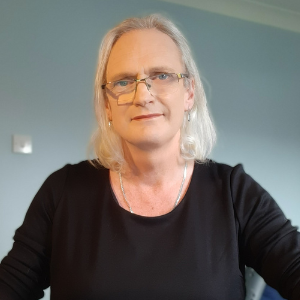
“I’d thought about talking to somebody for several years before I first came out to someone at work. Afterwards, the relief was immense – a weight lifted off my shoulders, and I felt I could breathe again. I’ve slowly come out to more colleagues, and I’ve recently come out to my peers and seniors. The reaction from everybody has been amazingly positive.
Since then, Jacobs have introduced a specific Trans HR rep. Jacobs’ action during lockdown, enabling and encouraging working from home was a huge help to me. Working from home over the last 18 months enabled me to find my true self, and find a balance that I’m happy with, allowing me to be me.”
Nic, Design Manager in Water and Environment at Jacobs Engineering Group
2. Healthier working cultures make for more confident employees
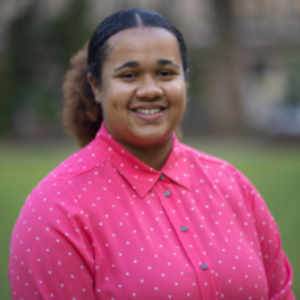
“I've never had any abuse directed at me, but there are times when I’ll be in a meeting a comment is made. I’m not ignorant to the fact that these mindsets are still the norm for some people, especially in construction.
But working in an inclusive workplace has definitely made me a little more confident in talking about my identity. I’ve also gained the confidence to talk to people I've connected with through the LGBT network. I know a lot of great people from a lot of different places in the business, that I wouldn't have met otherwise. That creates a good dynamic to be able to work in, where you feel like you can be yourself, as opposed to creating a facade at work.”
Ella, Consultancy and Project Management apprentice at Mace Group
3. Employees can discover and celebrate their authentic selves
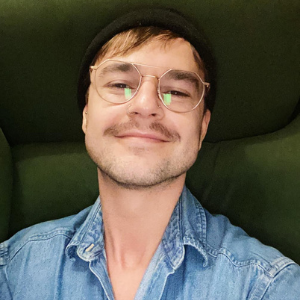
“At a previous workplace, I witnessed homophobic and transphobic comments from a manager. I didn’t feel safe working there, and I anticipated that being out about my sexuality might hold me back from progression.
Shame cast a shadow over much of my younger teenage years right through to my mid-twenties. Working in inclusive environments has been massively important in helping me to unpick years of compounded shame. Today, I feel like I can say that I have a really clear idea of who I am and what I stand for. I thank all of the inclusive workplaces I’ve ever worked for playing their part in my journey of discovery towards my authentic self.
If you’re feeling isolated at work, talk to somebody. Anybody. Don’t suffer in silence. There will always be somebody who will want to listen, even if it might not always feel like it.”
Sean, Student Voice and Engagement at University of Salford and Co-Chair of Salford Proud
4. Championing LGBTQ+ inclusion from the top down dramatically changes employees’ experiences
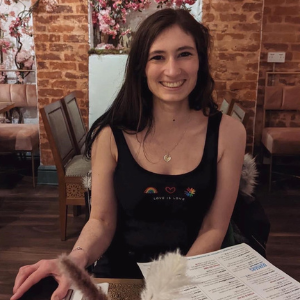
I joined Grant Thornton in August 2016, fresh out of university. I’d only had the courage to come out to a couple of existing friends at that time.
When a conversation came up about relationships at a work social and I said I was bisexual, one of my colleagues told me he would ‘love to have a threesome’ with me and another girl. Another told me that I was making it up for attention and started asking intrusive questions about my sex life. I began to actively hide this fact about myself.
A few years later, in the wake of George Floyd’s murder, people in the firm became more aware of the challenges faced by minority groups, and sessions to discuss ethnicity, gender, sexuality and many other topics sprung up. Grant Thornton championing inclusion in the workplace has dramatically changed my day-to-day experience in the office. I no longer feel like I am filtering out an intrinsic part of who I am, and being able to be myself day-to-day at work gave me the courage to come out to my remaining friends and family.
Syndie Simons, Manager, Tax at Grant Thornton
5. Embedding LGBTQ+ inclusion transforms the entire culture of an organisation
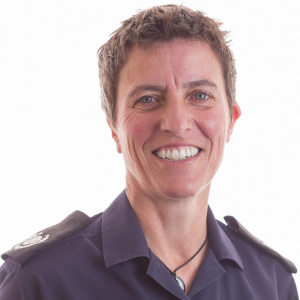
“I joined the fire service 28 years ago, when it was very male dominated. I was told by my Area Manager at the time that I had two problems as far as he could see – that I was a woman and that I was gay. I thought that the best thing that I could do was to just hide bits of myself and not to share the biggest part of my life – my personal life outside of work.
Fire and rescue services are in a very different place today. The inclusive culture at Kent is a big positive. People are very welcoming; we have a much larger, more diverse workforce. The best thing for me is that I have a real opportunity to influence everybody's behaviours, how we recruit, and who we recruit. It isn’t all about being macho and having the biggest biceps in the world anymore. It's about how you treat and respect people.”
Mani, Area Manager at Kent Fire and Rescue Service
6. LGBTQ+ employees bring unique perspectives across your work
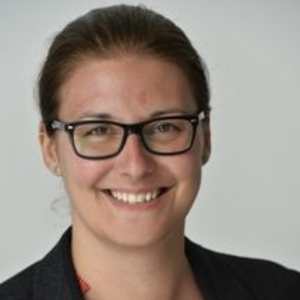
"I’ve had a really positive and seamless experience as a new LGBTQ+ parent at Macquarie. My wife and I adopted two older children at the beginning of lockdown and work was incredibly supportive, both my leaders and the work policies which were all gender-neutral and inclusive of adoption by same-sex couples. Life is much easier when you don’t have to worry about being treated differently.
I haven’t faced any barriers due to my identity as far as I’m aware. If anything, I think it's given me opportunities that maybe I otherwise wouldn't have. I am able to get involved in things like the Pride Network, which gives me access to talk to and have interactions with people that I otherwise wouldn't have met. My sexuality means that I can also see things through a different lens at times, and bring something different to the table."
Abby, Global Head of Finance for Macquarie Capital at Macquarie Group
7. LGBTQ+ inclusion means attracting and retaining excellent staff
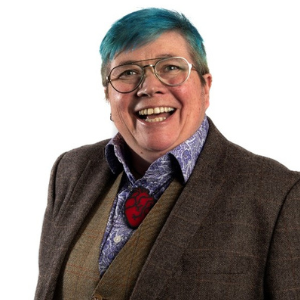
“I’ve faced quite a bit of workplace bullying around my gender and sexuality, and it has caused a lot of ‘short-term employment’. When I started at ThoughtWorks, I didn't expect stuff to change much. But as well as talking the talk on diversity and inclusion, they also walked the walk!
About 18 months in, I was misgendered by a client and I just shut down. But my team turned around and asked, “Are you okay? How can we support you?” By the end of it, I was just a wreck and had a breakdown – because I’d never been supported before. I had to tear down all the defensiveness and aggression that I’d built up over the years as coping mechanisms, and rebuild brand new ways of being me.
ThoughtWorks were wonderfully supportive in helping me get it right. They constantly saw the work that I was putting in on myself, gave me feedback all the time about how things were improving – it’s led to me being so relaxed.”
Dr J Harrison, Principal Consultant at ThoughtWorks
8. Inclusive workplaces give hope to isolated LGBTQ+ people
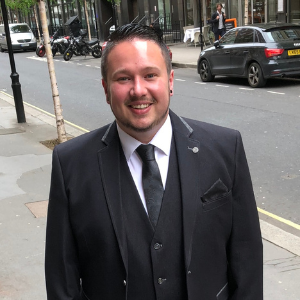
“In the part of the world that I live in, it's still very traditional. It’s not the norm to see same-sex couples walking down the street holding hands. The experiences I had as a young guy finding my identity were very poor. I really felt like my life wouldn't go anywhere. So, the fact that I found an employer that values me for me has just allowed me to grow.
The best thing about working in an inclusive workplace is that I feel as though I'm treated as an individual, and that my identity, my sexuality, or my point of view, is celebrated. When I joined, I had a preconception that to be successful, you needed to be a white straight man. But that isn’t the case at Santander.”
Tom, Community hub director at Santander
2024 has been a tumultuous year for LGBTQ+ people but one undeniably bright spark is this year’s Paralympic Games.
As a professional wheelchair basketball player, I’ll never forget the thrill of competing for Team GB in 2012 and 2016. I’m in Paris this year, as a spectator, to cheer on my teammates and watch my fellow athletes perform at their best. The atmosphere of joy, exhilaration and inclusivity is palpable.
Despite this, one thing that still nags at me is the lack of disabled athletes who are, like myself, openly LGBTQ+. While this year’s Summer Olympic games in Paris rightfully featured a record number of openly LGBTQ+ athletes, too many incredible sportspeople, including Paralympians, still feel that they have to hide an important part of their identity.
As an openly bi athlete, who came out in 2013, I know the strength and courage it takes to be your true self both on and off the pitch. Having been competing in international wheelchair basketball competitions since 2009, I remember the whirlwind of ‘what ifs’ that zoomed around my head as I decided to come out publicly. ‘What if my teammates were not supportive?’, ‘What if I lost out on professional opportunities?’, ‘What if my fans were not accepting?’
In the end, I was incredibly fortunate to have a supportive team, supportive management, incredible inclusive fans, and so many friends and family who will always have my back. However, the sad truth is, that many disabled LGBTQ+ athletes may not be as lucky. Wheelchair basketball has long been a pioneer in inclusivity, and I had teammates who were already out before I was. That reassurance and visibility that I received from the people around me made a huge difference in making a decision that meant I could finally be authentic myself while playing the best sport in the world.
Many of my fellow disabled LGBTQ+ athletes will not have seen any openly LGBTQ+ sportspeople in their sport – making them feel like they don’t even exist. I know that many feel the pressure of taking on dual identities of being disabled and being LGBTQ+, but these things can and do coexist.
This must change. I know that when covering or talking about people with multiple marginalized identities, it’s often convenient and easier to focus on one over the other – but all our stories are so much more interesting when we’re allowed to embrace all the things that make us unique, including being LGBTQ+.
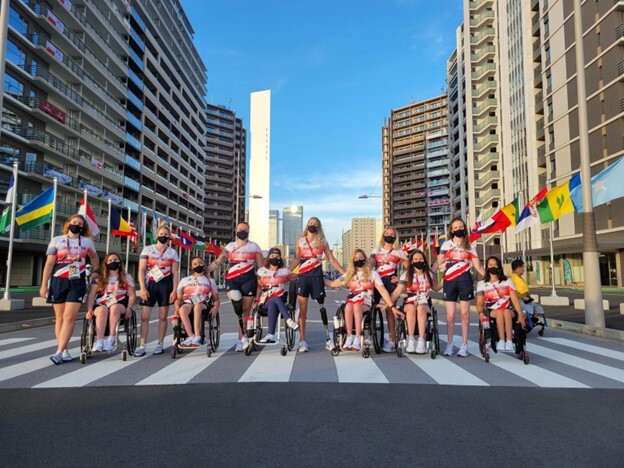
It’s only when we feel seen as more than a ‘superhuman athlete’ that my fellow LGBTQ+ athletes with disabilities might feel more empowered to be their full selves, both on and off the pitch.
I hope that this Paralympics represents a turning point in how Paralympic athletes are presented and talked about both on and off screen. Initiatives like Stonewall’s Rainbow Laces are a shining example of how open and inclusive conversations around sport help make sure that all LGBTQ+ feel that they can be their true selves when playing or cheering the sports they love.
We need to continue to move on from stereotypes to make sport more inclusive for all, including the amazing LGBTQ+ Paralympians who are currently inspiring so many of us.
Find out more about Rainbow Laces.
- A new report, Ace in the UK, by Stonewall and activist Yasmin Benoit uncovers for the first time the shocking experiences of healthcare, workplace and societal discrimination that ace people face in the UK and the need for better legal and policy protections
- The report reveals that ace people, an umbrella term used to describe people who experience little, fluctuating or no sexual attraction (including asexuality) are less likely to be open about their orientation to friends and family – with analysis of Government data showing that only one in four (26.1%) asexual people are open about their sexuality with friends
- The report highlights that ace people face hostile work and healthcare environments, with experiences ranging from sexual harassment, delays to vital healthcare, and intrusive questions about their sexuality from colleagues and healthcare professionals
- The report’s recommendations include ensuring that asexual people are protected under the Equality Act’s guidance and that ace people’s needs are included in wider LGBTQ+-specific training for healthcare providers.
A new report by Stonewall and Yasmin Benoit – two years in the making – explores in-depth the experiences of ace people when accessing healthcare and at work. Ace people make up between 1-2% of the general population but their experiences are not well understood by the general public. Ace in the UK reveals the alarming lack of understanding that they face throughout society – and the effect that has on their ability to go about their daily lives. The report highlights that, even within LGBTQ+ spaces, ace people are too often overlooked and their concerns ignored.
At work, half of ace people (49%) weren’t out to any colleagues, more than twice the rate of all LGBTQ+ respondents (18%).
And of those who were out, only one in six (17.6%) had a universally positive experience of being out – again half the rate of wider LGBTQ+ respondents (40.8%). With experiences of sexual harassment, disbelief and inappropriate curiosity from colleagues told through our focus groups and interviews, there is a clear need for action on workplace discrimination and harassment.
In healthcare settings, our analysis found that asexual people were around 50% more likely to have never told healthcare staff about their asexuality, with a quarter (24.3%) citing that they were afraid of a negative reaction, and 8.4% citing that they had had a bad experience in the past.
Indeed 18.1% of ace respondents said a disclosure had had a negative impact on their care. Issues in healthcare settings were principally in reproductive health, around smear tests, and inappropriately having their asexuality assessed as a mental health condition.
Amongst a range of recommendations, the report urges the World Health Organisation to end its classification of asexuality as a mental health condition, as it did for homosexuality and trans people, to include asexual people in the Statutory Guidance for the 2010 Equality Act, calls for increased training on supporting asexual people in healthcare settings, and a ban on conversion therapy to attempt to ‘cure’ ace people.
Robbie de Santos, Director of Communications and External Affairs at Stonewall, (he/him) said: ‘This report shines a long-overdue light on the barriers that ace people in the UK face. It’s vital that all LGBTQ+ people are allowed to go about their lives free from discrimination and prejudice. But – as our findings show – there are widespread societal misconceptions of what it means to be ace and how to best support ace people at work and in healthcare settings.
‘We hope that this important project will further people’s understanding of the very real challenges that ace people currently face and we urge political leaders to adopt our recommendations to better support ace people to get their basic needs met and thrive as themselves.’
Yasmin Benoit, Asexual Activist and Researcher, (she/her) said: "The ace community deserves legal recognition. We deserve protection. We deserve acceptance, and we deserve to be heard. With this report, I wanted to dig into the issues facing the ace community today and amplify the voices we never usually hear. This is a much-needed step in understanding what asexuality is, what asexual discrimination looks like and setting the ball in motion for actually doing something about it. It's time that the world paid attention. I'm grateful that I've had the chance to start this project with an accomplished organisation like Stonewall, and to use my platform and education to publish a report that is really going to make a difference."
Focus group participant describing their experience opening up about their asexuality:
‘I've tried to explain to someone that I am asexual, and they said ‘You know, there's something wrong with you. You probably need to pray about it’… I remember feeling inferior about [who I am].”
Every year on 8 March, we mark International Women’s Day: celebrating the social, economic, cultural and political achievements of women, and raising awareness of the barriers and discrimination they still face around the world.
Today, we would like to highlight and celebrate the work we are doing as part of the Out of the Margins project, aimed at supporting lesbian, bi and trans women (LBT+ communities) globally.
Across the globe, LBT+ communities are excluded by international movements and the systems that should serve them. The Out of the Margins project strives to promote and protect the rights of LBT+ women across the world, through strengthening the capacity of local civil society organisations. This work is informed by the UN’s Sustainable Development Goals (SDGs), developed in 2015 to create achievable steps towards peace and prosperity for people and the planet by 2030.
Out of the Margins draws on three specific SDGs: ensuring healthy lives and promoting well-being for all at all ages; achieving gender equality and empowering all women and girls; and promoting peaceful and inclusive societies for sustainable development, providing access to justice for all and building effective, accountable and inclusive institutions at all levels.
Using these SDGs as a framework highlights how the experiences of LBT+ women are inextricably linked to other issues happening globally - this is not often accounted for in international development programs.
LBT+ women experience multiple inequalities across gender equality, health, human rights and development spaces, resulting in high levels of stigma, discrimination and violence. For example, LBT women are more likely (31%) than gay, bi, and trans men (21%) to experience food insecurity.
There is also a high prevalence, and specific experiences of violence, against LBT+ women including intimate partner violence, family violence, sexual violence, and police violence. In recent times this has been exacerbated by the global anti-rights movement working to diminish the rights of women and LGBTQ+ people globally.
Out of the Margins was established in 2017, with the support of FCDO, to advance LBT+ rights through research centred on the SDGs and rooted in local communities, using network-building and advocacy.
In 2024, we have reactivated this network to tackle the impacts of the anti-rights movement and the rollback of LBT+ rights, and to seize opportunities of the SDGs in the lead-up to 2030. With three partners in the Caribbean, Southern Africa, and Eastern Europe, we will develop innovative local strategies to counter anti-rights movement tactics, focusing on SDGs priorities to advance LBT+ rights.
Local learnings will be shared with the global network through an interactive digital platform and peer learning events, to strengthen technical and legal knowledge and skills across civil society organisations. This will create a sustained network of informed, enabled community leaders linked globally on advancing LBT+ rights, and ensure they are part of development initiatives.
This network will share resources and toolkits to increase participation, effectiveness and impact of LBT+ organisations and across civil society globally. Their advocacy will raise awareness of LBT+ needs, and promote positive action by governments, donors and multilaterals to commit to LBT+ rights through the SDG 2030 opportunities.
Together, we’re fighting for a world where lesbians, bi women and trans people are fully included in their societies, and finally brought Out of the Margins.
Visit Out of the Margins for more information.
Stonewall's Chair of Trustees, Cat Dixon, on the power of visibility, representation, and creating change for the lesbian community.
As a lesbian, I sometimes feel caught between visibility and invisibility. My decision to come out at work which, I first did in the 1990s, and be openly lesbian and embrace my authentic self, was at the time, and still is, an act of defiance against societal norms and expectations.
I remember being asked questions like whether I was “the husband” and I suspect many struggled to know quite what to make of me! Despite, being “out”, I didn’t want my sexuality to totally define me – it is a fundamental part of me, but I have always preferred to be seen and judged on what I do and the person I am, as opposed to being “the lesbian”.
Being a visible lesbian and women leader in my role as CEO of Ciarb and Chair of Stonewall, however, is not just about being seen; it is about reclaiming space, challenging stereotypes, and advocating for LGBTQ+ rights. In a world that still, and increasingly, struggles with acceptance and equality for the LGBTQ+ community, visibility is a form of resistance and empowerment.
Visibility is not just about being seen; it is about being heard, represented, and respected. It is about breaking the silence and speaking out against discrimination, prejudice, and injustice and this is why I am the Chair of Stonewall. I have experienced direct discrimination at work because of my sexuality which resulted in me leaving the Army and other form of discrimination both in and out of work including exclusion, verbal abuse and, at times, the threat of violence.
Being a visible lesbian means living openly and unapologetically as a lesbian woman. It means refusing to hide or downplay your identity for the comfort of others. It means being proud of who you are and celebrating your queerness in all its forms.
One of the key reasons why visibility is important for me as a lesbian is therefore representation. Representation matters because it validates our existence, our experiences, and our identities. When we see other lesbians and others from the GBTQ+ community being visible and unapologetic, it sends a powerful message that we are not alone, that we are part of a vibrant and diverse community. Representation also challenges stereotypes and misconceptions about lesbians, showing the world that we come in all shapes, sizes, and colours.
Visibility also plays a crucial role in advocacy and activism. When we are visible, we have the opportunity to educate others about LGBTQ+ issues, raise awareness about the challenges we face, and advocate for change. Our visibility can inspire and empower other LGBTQ+ individuals to embrace their identities and speak out against discrimination. By being visible, we can create a ripple effect of change that extends far beyond our own lives.
My own experience as a visible lesbian has been both empowering and challenging. Coming out was a deeply personal and liberating experience, but it also came with its share of fear, shame and uncertainties. I have faced discrimination, prejudice, and microaggressions, but I have also found support, acceptance, and love within the LGBTQ+ community. Being visible has allowed me to connect with the LGBTQ+ community, share my story, and advocate for LGBTQ+ rights.
In my journey towards visibility, Stonewall has played a crucial role in supporting and empowering LGBTQ+ individuals. Stonewall, through advocacy, education, and campaigns, has been at the forefront of the fight for LGBTQ+ rights in the UK and beyond. Stonewall has changed laws, policies, and attitudes towards LGBTQ+ individuals, making the world a more inclusive and accepting place.
So for me, being a visible lesbian is about more than just visibility; it is about authenticity, advocacy, and empowerment. It is about embracing who we are, challenging the status quo, and fighting for a more just and inclusive world.
By being visible, we can inspire others, create change, and pave the way for a more accepting future. Together, we can make a difference and create a world where all LGBTQ+ individuals can live openly, proudly, and authentically.
Happy Lesbian Visibility Week.