
International
Every year on 8 March, we mark International Women’s Day: celebrating the social, economic, cultural and political achievements of women, and raising awareness of the barriers and discrimination they still face around the world.
Today, we would like to highlight and celebrate the work we are doing as part of the Out of the Margins project, aimed at supporting lesbian, bi and trans women (LBT+ communities) globally.
Across the globe, LBT+ communities are excluded by international movements and the systems that should serve them. The Out of the Margins project strives to promote and protect the rights of LBT+ women across the world, through strengthening the capacity of local civil society organisations. This work is informed by the UN’s Sustainable Development Goals (SDGs), developed in 2015 to create achievable steps towards peace and prosperity for people and the planet by 2030.
Out of the Margins draws on three specific SDGs: ensuring healthy lives and promoting well-being for all at all ages; achieving gender equality and empowering all women and girls; and promoting peaceful and inclusive societies for sustainable development, providing access to justice for all and building effective, accountable and inclusive institutions at all levels.
Using these SDGs as a framework highlights how the experiences of LBT+ women are inextricably linked to other issues happening globally - this is not often accounted for in international development programs.
LBT+ women experience multiple inequalities across gender equality, health, human rights and development spaces, resulting in high levels of stigma, discrimination and violence. For example, LBT women are more likely (31%) than gay, bi, and trans men (21%) to experience food insecurity.
There is also a high prevalence, and specific experiences of violence, against LBT+ women including intimate partner violence, family violence, sexual violence, and police violence. In recent times this has been exacerbated by the global anti-rights movement working to diminish the rights of women and LGBTQ+ people globally.
Out of the Margins was established in 2017, with the support of FCDO, to advance LBT+ rights through research centred on the SDGs and rooted in local communities, using network-building and advocacy.
In 2024, we have reactivated this network to tackle the impacts of the anti-rights movement and the rollback of LBT+ rights, and to seize opportunities of the SDGs in the lead-up to 2030. With three partners in the Caribbean, Southern Africa, and Eastern Europe, we will develop innovative local strategies to counter anti-rights movement tactics, focusing on SDGs priorities to advance LBT+ rights.
Local learnings will be shared with the global network through an interactive digital platform and peer learning events, to strengthen technical and legal knowledge and skills across civil society organisations. This will create a sustained network of informed, enabled community leaders linked globally on advancing LBT+ rights, and ensure they are part of development initiatives.
This network will share resources and toolkits to increase participation, effectiveness and impact of LBT+ organisations and across civil society globally. Their advocacy will raise awareness of LBT+ needs, and promote positive action by governments, donors and multilaterals to commit to LBT+ rights through the SDG 2030 opportunities.
Together, we’re fighting for a world where lesbians, bi women and trans people are fully included in their societies, and finally brought Out of the Margins.
Visit Out of the Margins for more information.
On this day 50 years ago, an uprising took place at the Stonewall Inn in New York City.
As it was raided by the police in the early hours, three nights of unrest followed, with LGBT people, long frustrated by police brutality, finally fighting back. Lesbians and trans women of colour were some of the key people involved in the act of resistance, including Stormé DeLarverie, Sylvia Rivera and Marsha P. Johnson. This anniversary is a reminder of the power of standing together in defiance of those who seek to divide us.
The Stonewall uprising took place in the context of broader civil rights movements. The Revolutionary People's Constitutional Convention in 1970 was a key moment in which activists from Black Power, feminist and gay liberation movements came together, saw common cause and learned from each other.
The Gay Liberation Front was the main organisation that formed out of the uprising and these wider movements. The GLF first formed in the US and were part of the original discussions to create the first Pride, which took place on June 28 1970 in New York City, a year after the Stonewall riots - then called the Christopher Street Day Parade.
Some UK activists were involved in some of these key moments in the US movement, and they came back to Britain to form a British chapter of the Gay Liberation Front, meeting for the first time at the LSE library in October 1970, with the first UK Gay Pride Rally taking place a few years later on 1 July 1972, in London.
In the UK, sexual acts between men had been partially decriminalised in 1967, but there was a huge amount of persecution of gay and bi men afterwards. Campaigning at the time was mainly led by the Homosexual Law Reform Society.
The 1970s were characterised by radical grassroots and community-based activism and support. There were many splinter groups from the Gay Liberation Front: the Campaign for Homosexual Equality was a key driving force, and the focus of activism was often explicitly focused on directly challenging heteronormative, conservative norms of family and gender roles; other community-led initiatives coming out of the 1970s included Gay News(set up in 1972), Switchboard (1974), and Gay’s the Word bookshop (1979).
The AIDS crisis dominated the 1980s for the LGBT community, first coming to public attention in 1981 when the first person died of an AIDS-related illness. A year later, a man named Terry Higgins was among the first people known to die of an AIDS-related illness in the UK: the Terrence Higgins Trust was set up in his name.
The prevalence of AIDS was greater in the USA than the UK, but in both countries there was a real lack of political and service support for people living with HIV/AIDS, leading to a huge emphasis on community activism and support. Lesbians and bi women provided critical support to gay and bi men during this time, and Act Up was the key campaigning group focused on challenging the lack of political and health support for people living with HIV / AIDS.
The LGBT community was politically and socially stigmatised throughout the 1980s, creating the hostile political context that allowed Section 28 to be passed as law. This piece of legislation effectively prevented teachers from talking about same-sex relationships in schools, forcing teachers back into the closet, or out of their job, and scarring a generation of LGBT people.
Stonewall was created to fight this discrimination in the UK, 20 years after the uprising.
On 11 September 1988, at a meeting held in Sir Ian McKellen’s house in Limehouse, the basic aims were drawn up in a document dubbed the Second Limehouse Declaration. The first Limehouse Declaration, announcing the launch of the Social Democrat Party, had been signed in the house next door.
On 24 May 1989, the new group sent a press release to the LGBT press announcing the founding of the Stonewall Group.
Over the past 30 years we’ve made a big difference to the lives of LGBT people here and around the world. In the UK, the LGBT movement has won employment rights. Parenting rights. Partnership rights. An equal age of consent.
Fifty years after the uprising, there's lots for us to celebrate – but there’s also a lot more work that needs to be done. We won’t stop, until everyone can be accepted for who they are - without exception.
How you can help:
- There is still so much left to achieve, donate today to help us make our hopes for the future a reality
- Read more about Stonewall's history
Today, Stonewall launches a report from the Out of the Margins network.
Between February and September 2019, the network documented the profound exclusion facing lesbians, bi women and trans (LBT+) people, showing the hardship, discrimination and violence experienced by their communities across the globe.
The network built through the Out of the Margins project spans 21 countries. Using the United Nations’ 17 Sustainable Development Goals (SDGs) as a template, they produced research covering five key areas: economic well-being, health, education, personal security and violence, and civic and political participation.
Watch the video to learn more about the project.
The network demonstrates the many ways in which LBT+ communities are discriminated against and how their needs are refused, ignored and/or unmet.
At the heart of this project and network is the desire to bring wide-ranging and meaningful change to LBT+ people, both in their own countries and internationally.
A crucial feature of the project was the direct involvement of marginalised LBT+ people in the research, and in the action affecting them and their communities.
Intersectional, feminist and queer perspectives were prioritised from the outset, in order to amplify voices that have been unheard or ignored in previous research projects.
Some findings will be challenging to read – throughout the report there are descriptions of violence and abuse. However, we believe that the discrimination faced by LBT+ people must be acknowledged if meaningful change is to be made.
The voices of the research respondents in this report show just how vital it is that Out of the Margins network members are able to continue with their essential work.
Nancy Kelley, Chief Executive at Stonewall, said: ‘This groundbreaking report shines a light on lesbian, bi women and trans (LBT+) communities across the globe whose struggle for equality continues to be largely ignored. Not only does it show the precarious position LBT+ people occupy worldwide, it’s also a testament to their bravery and the work they’re doing on the ground to tackle discrimination, often at considerable personal risk. At Stonewall, we’re working with these international activists to help fight for equality in their countries, and we want you to join us.'
The more research there is about the barriers these LBT+ communities are facing, the better able we are to come together to drive forward solutions that work for them. No one can be left behind in our fight for global LGBT equality. - Nancy Kelley, Stonewall CEO.
Download the full report here.
If you want to help, donate to the individual organisations that developed the research or support Stonewall.
As Northern Ireland celebrated its first same-sex marriages in January this year, we rejoiced in having made marriage equality a reality throughout the UK.
But, that’s not quite the case. In the Cayman Islands, a British Overseas territory, same-sex marriage is still banned, as it is for many British Overseas Territories. And in many there is no legal recognition of same-sex partnerships at all.
Last week (27th July 2020), we were concerned to hear that the Cayman Islands’ legislature failed to pass the Domestic Partnerships Bill, meaning that same-sex couples cannot have their relationship recognised by the state.
This is despite the Cayman Islands Court of Appeal ruling that the Cayman Islands Government must legislate for same-sex partnerships to meet its Constitutional duties.
Same-sex marriage is still banned in many British Overseas Territories.
Same-sex marriage is still banned in many British Overseas Territories.
Civil partnerships and marriage equality have been key milestones in our journey towards LGBT equality in the UK. There have been many other vital steps (and many more we need to take), but to have the state recognise your relationship as equal to any other, has enabled us to live more confidently and freely in our communities, at work and in every part of our lives.
At the time of their engagement, the Cayman Islands banned any form of legal union between same-sex couples.
That’s exactly what Chantelle Day and Vicky Bodden Bush wanted for themselves.
They have been together for nearly seven years, and got engaged in September 2017, but they quickly realised that because Chantelle was from the Cayman Islands – a British Overseas Territory – their relationship didn’t exist in the eyes of her government. At the time of their engagement, the Cayman Islands banned any form of legal union between same-sex couples.
The couple was faced with an impossible choice: to either get married in the UK and return to the Cayman Islands where their marriage wouldn’t be recognised; or stay and fight for the right to marry the person they love in the place they call home. With support from friends, including local LGBT advocacy group Colours Cayman, they decided to fight for themselves and for every other same-sex couple denied equality in Cayman.
Their initial application for a marriage licence was swiftly rejected.
But they didn’t give up and on 29 March 2019, they, along with the rest of the global LGBT community, celebrated as the Grand Court of the Cayman Islands ruled to legalise same-sex marriage with immediate effect. The Court concluded that the ban was not compatible with the couple’s rights under the Cayman Islands constitution or the European Convention on Human Rights, which has effect in British Overseas Territories because the UK Government is a signatory.
Thewas postponed following an interim court order.
In November 2019 the Cayman Island Government won their appeal to overturn the legalisation of same-sex marriage. But the Court of Appeal also said the Government was causing undue pain and suffering by not recognising Chantelle and Vicky’s relationship on an equal basis to marriage, and directed the Cayman Island Government to immediately legislate to offer civil unions which have a ‘legal status equivalent to marriage’ for same-sex couples.
Last week’s vote stopped this legislation from progressing, putting the Cayman Islands Government in clear breach of its own Constitution.
It is time for the UK Government to step up.
It is time for the UK Government to step up.
In their judgment last year, the Cayman Islands Court of Appeal said: ‘In the absence of the expeditious action by the Legislative Assembly, we would expect the United Kingdom Government to recognise its legal responsibility and take action to bring this unsatisfactory state of affairs to an end.’
Now that the Domestic Partnerships Bill has failed to pass, the UK Government must step in and ensure that citizens in the British Overseas Territory of the Cayman Islands are not denied the rights enjoyed by British citizens in the United Kingdom.
Many of the laws that exist in the British Overseas Territories are there because of anti-LGBT colonial laws introduced by Britain in the last two centuries. Despite self-rule, in the Overseas Territories the UK still has jurisdiction and a duty to LGBT citizens in those territories who are denied equal rights and equal treatment.
In fact, the courts in the Cayman Islands have made clear in their judgments that the UK is in breach of the European Convention on Human Rights in allowing this unequal treatment to continue in the Cayman Islands and other British Overseas Territories.
We should all have the right to marry the person that we love, and no one should be left alone in this fight. We stand in solidarity with the Day-Bush family and their supporters in Cayman and the UK. Now is time for the UK Government to act and fulfil its duty to LGBT citizens in all British Overseas Territories.
CW: asylum, mental health.
Today is Bi Visibility Day and we've asked Vaneet Mehta, a bi activist, to tell us what it means to him. This year, Vaneet's hashtag #BisexualMenExist trended worldwide and helped countless people see themselves reflected in society.
Today is Bi Visibility Day, a day that has been celebrated since 1999. This is a day to recognise bisexual history, celebrate the bisexual community, and talk about the issues and experiences that bisexual people face. While bisexual people have come a long way since 1999, there are numerous issues that still persist, issues that are rarely highlighted or discussed within the LGBTQ+ community.
According to Stonewall’s statistics, when looking at LGB people, bisexual people are more likely to experience anxiety, self-harm and suicidal thoughts when compared to their gay and lesbian counterparts. In every category, bisexual women were worse off by a fair margin. And these findings are replicated in numerous other studies in other countries, too.
Bisexual people experience both the homophobia that gay and lesbian people face, along with biphobia.
This disparity between different groups in our LGBTQ+ community often isn’t talked about but it is important that it is, as it shows the specific impact that biphobia has on bisexual people’s lives. Bisexual people experience both the homophobia that gay and lesbian people face, along with biphobia. And when they experience discrimination, there are fewer places for them to turn to.
The LGBTQ+ community often isn’t a safe space for bisexual people. Historically speaking, bisexual people were often shunned from these spaces. For example, the London Lesbian and Gay Centre banned bisexual groups from using the space. But this isn’t just a historical issue. According to Stonewall’s statistics, 27 per cent of bi women and 18 per cent of bi men noted the discrimination they faced within their local LGBTQ+ community because of their sexual orientation. This is compared to just 9 per cent of lesbians and 4 per cent of gay men.
This is likely to factor into why 50 per cent of bi men and 43 per cent of bi women stated that they never attend LGBTQ+ specific venues and events, compared to 33 per cent of lesbians and 27 per cent of gay men. The safety in these spaces just isn’t there; they aren’t made for bisexual people.
Bisexual people noted this and started creating their own spaces, and there are a ton of great spaces online and in person for bisexual people. The Bisexual Index, Bi Survivors Network, Biscuit, London Bisexual Meet-up, Bi Pride UK, Bi Community News, BiCon, to name a few. But then a new issue arises: funding. There are reports in the US that show that, despite bisexual people making up roughly half of the LGBTQ+ community, less than 1 per cent of funding goes to spaces specifically made for bisexual people.
While the climate has improved for bisexual people, we still see the same topics arising again and again. ‘Bisexual people are transphobic’, despite the fact that bisexual doesn’t mean attraction to cis men and cis women but simply attraction to more than one gender, inclusive of all gender identities. ‘Bisexual people are cheaters’, simply because our attraction goes beyond a single gender. ‘Bisexual people are secretly gay/straight’, perpetuating the idea that bisexuality is just a phase.
I have had my sexuality questioned, both in person and online, from outside and inside the LGBTQ+ community.
These are all things I have seen online, constantly. I have had my sexuality questioned, both in person and online, from outside and inside the LGBTQ+ community. I have been asked how I know I’m bisexual, had my dating and sexual history quizzed, and asked which gender I prefer like they’re trying to gauge my ‘true’ sexuality. It becomes exhausting and frustrating to deal with. I spent so long questioning my own sexuality and now I have finally come out, I have everyone else questioning me instead.
We experience constant discrimination, are robbed of our spaces and are denied our existence. And yet people still believe that bisexual people have it easier. They think of bisexuality as a duality, a combination of gay and straight. They believe that our partial straightness gives us a level of privilege, but as all these statistics (as well as many others) show, this couldn’t be further from the case.
But this issue is so prevalent, it can even lead to death. Due to these stereotypes around bisexuality, bisexual asylum seekers are less likely to be granted asylum in the UK. There is this idea that if the person in question is capable of hiding their same-sex attraction in any form, they can return home and live out a safe existence. But in fact, they are sent home to their deaths. This fundamental lack of understanding on bisexuality puts lives at risk, especially for bisexual people of colour.
I spend a significant amount of my time within the community trying to educate people on bisexuality. I try to use my platform to dispel the myths and create awareness on the struggles we face. I do my best to support bisexual people, creating visibility in any way I can. This year, my hashtag #BisexualMenExist trended worldwide and helped countless people see themselves reflected in society. I’m hoping that my book on bisexual men, along with the T-shirts I helped create, will amplify this further. There’s a lot of work that needs to be done, but to ask bisexual people to do all of it isn’t good enough.
Those who claim to be allies to the LGBTQ+ community need to interrogate which members they are helping and how.
It is time for change. Those who claim to be allies to the LGBTQ+ community need to interrogate which members they are helping and how. Other members of the LGBTQ+ community outside the B need to show solidarity to their bisexual siblings.
Bisexual people need help, support and resources to continue to help some of the most vulnerable people in our community. Bisexuality is not a phase. For many, it is their end point. For others, who knows? Sexuality is a spectrum, it is fluid, it’s free, and it is time we embrace and accept that.
Vaneet's book 'Bisexual Men Exist' is out now!
Visit our Bi Hub.
The coronavirus pandemic has had devastating effects on most aspects of society.
One consequence that’s perhaps not so obvious is that it’s meant news stories that might normally have made the front page are not being reported at all. There’s a concern that this allows governments to simply overlook matters of huge importance without anyone noticing or questioning them. The experiences of asylum seekers in the UK and the rest of Europe who are searching for safety due to their sexual orientation or gender identity (SOGI) need to be talked about.
There are still far too many people in Europe experiencing homophobia, biphobia and transphobia.
Europe has legal systems which offer great protection to all kinds of minorities such as those who make up the lesbian, gay, bisexual and transgender (LGBT) community. Yet despite many parts being relatively liberal, there are still far too many people in Europe experiencing homophobia, biphobia and transphobia. Consider then escaping from a country which gives you no legal protection at all and could stone you to death for simply being who you are.
Research carried out by the University of Sussex discovered that in the UK and across Europe, almost thirty per cent of those seeking asylum on grounds related to their sexual orientation had their claims dismissed because their interviewers did not believe them.
When a person is not believed, it can compound an already fearful and stressful predicament.
In Britain, this is a good fit with the government’s ‘hostile environment’ policy on immigration. It’s not difficult for officials to reject those ultimately seeking British citizenship because applicants may find it impractical, or impossible, to produce evidence endorsing their claims. When you live in a country that effectively forces you to hide your identity, you’re unlikely to be able to come up with a stack of photos or intimate messages which provide proof of past relationships, for example. When a person is not believed, it can compound an already fearful and stressful predicament.
Researchers also uncovered evidence that the burden of proof is often unfairly skewed against the applicant. International law related to refugees requires that evidence-gathering is the equal obligation of both applicants and those who decide their claims. However, immigration officials often sat waiting to be persuaded rather than beginning proceedings with an open mind.
The experiences of some claimants make harrowing reading. One woman from an African state which gives no legal protection to gay people told of how she was frightened for her life after being discovered by police in bed with another woman. She had already suffered a forced marriage to an abusive husband and was subsequently raped by two men who claimed they were trying to ‘straighten her out’.
Her account of a seven-hour interview by a Home Office representative is disturbing. It was claimed that there had been nothing to prevent her from having a relationship with another woman once she was in the UK. She was asked why she hadn't taken advantage of this opportunity, and why then did she identify as being a lesbian? Her answer is heartfelt. Her identity came into being due to the feelings that she felt, she said, and in the past, she had not been given the freedom to live out her sexuality.
Being forced to prove something so personal as one’s sexual identity to a stranger is in itself potentially traumatic.
Being forced to prove something so personal as one’s sexual identity to a stranger is in itself potentially traumatic. It is unjust to compare the emotional trajectories of those who identify as gay, bi or trans, but who grew up in countries which may have very different laws and social attitudes, with the experiences of those who have lived in western Europe all their lives.
And yet applicants are having their applications for asylum rejected because they appear unable to provide sufficiently emotive language or thoughts that led to a realisation about their sexuality. Having one’s identity forensically picked over and then disbelieved puts intolerable psychological strain on applicants. These are people who are already likely to have been marginalised and suffered the prospect of violence or death in the countries they have fled, just because of who they are.
The UK should be standing up against homophobia, biphobia and transphobia at every opportunity.
The UK should be standing up against homophobia, biphobia and transphobia at every opportunity. Instead, when it comes to asylum seekers, the government seems to want to look the other way. By rejecting claims based on SOGI, there’s a quick and easy ‘win’ for the Home Office in its determination to reduce immigrant numbers with a policy of disbelief.
Content warning: discrimination, mentions of death and abuse.
Today is IDAHOBIT, or International Day Against Homophobia, Biphobia and Transphobia.
Founded in 2004, this aims to raise awareness of violence and discrimination against LGBTQ+ people to drive positive change, and is now celebrated in more than 130 countries around the world.
IDAHOBIT reminds us that there is still a long way to go until all LGBTQ+ people are free and safe from harm. Here are some reasons why it is still needed in 2021, and ways you can help:
1. Poland
In Poland, anti-LGBTQ+ rhetoric has become widespread in recent years, stoked by President Andrzej Duda, who recently stated that LGBTQ+ people are an ideology ‘even more destructive’ than communism and pledged to ban the propagation of this ‘ideology’ in public institutions.
More than 80 local governments in Poland have declared themselves ‘LGBT-free zones’
More than 80 local governments in Poland have declared themselves ‘LGBT-free zones’, pledging intolerance of LGBTQ+ people and banning LGBTQ+ events.
This government campaign fuels hatred and fear of LGBTQ+ people amongst Poland’s wider population: in a 2019 survey, when asked what they thought was the biggest threat facing them, the most popular response amongst Polish men under 40 was ‘the LGBTQ+ movement and gender ideology’.
How to help: You can donate to support the work of the Polish charity KPH (Campaign Against Homophobia), which works nationwide to advocate for LGBT people and distributes funding to smaller grassroots organisations.
2. Brazil
Brazil’s President Jair Bolsonaro has attacked what he calls ‘gender ideology’, has openly stated that he would rather his son die than be gay, and has advocated physical abuse of LGBT children.
Brazil has been ranked the deadliest country for trans people.
Brazil has been ranked the deadliest country for trans people, with 175 trans women murdered in 2020 alone. Indianare Siqueira, a trans woman activist and politician in Rio de Janeiro, told Stonewall that ‘trans people in Brazil live in a context of total abandonment by a society that attacks and kills us’.
During Bolsonaro’s 2018 election campaign, two trans women were killed in attacks where attackers used Bolsonaro’s name. With more elections next year, campaigners are concerned that this violence will intensify further.
How to help: CasaNem, Grupo Arco-íris, and Pela Vidda are all grassroots organisations working on the ground with trans people in Brazil, and all are currently accepting donations.
3. Hungary
Hungary’s far-right ruling party Fidesz has signalled its intention to change the constitution to defend so-called ‘Christian values’. They recently banned the legal recognition of trans people and LGBT people from becoming parents.
How to help: There are numerous Hungarian organisations working to support LGBTQ+ people, such as the Hungarian LGBT Alliance, Háttér Society, and Transvanilla Transgender Association, all of which welcome donations and support.
4. Chechnya
Since 2017, at least 100 men have been targeted and detained by police on suspicion of being queer, and three have been killed. Chechnya’s leader, Ramzan Kadyrov, has been described as waging a “blood-cleansing operation” to eliminate all LGBT people’, and has been defiant in the face of international condemnation, claiming that there are no LGBT people in Chechnya.
While queer men have been the primary targets of these ‘gay purges’, queer women are also subject to coercion and abuse from families and in healthcare settings, such as in the government-linked Boyev’s Clinic, which provides ‘psychiatric treatment to those rendered unfit to the Chechen society’. Data is not available for non-binary people, but it is likely they would also experience intolerance and abuse.
How to help: You can donate to support the work of the Russian LGBT network, which has successfully evacuated over 100 LGBT people from Chechnya through its Rapid Response programme.
5. UK
It is easy to see homophobia, biphobia and transphobia as something that happens ‘elsewhere’ but IDAHOBIT prompts us to look closer to home, too.
Transphobia is so prevalent in the UK that in 2017 a trans woman was granted residency in New Zealand because of the persecution she suffered here.
Transphobic hate crimes have quadrupled in the last five years.
Transphobic hate crimes have quadrupled in the last five years, with 4 out of 5 trans people experiencing a transphobic hate crime, and 1 in 4 experiencing physical assault or the threat of physical assault. Some UK media outlets frequently carry articles by anti-trans hate groups that are active in seeking to undermine trans people’s rights.
The number of homophobic attacks is also increasing, with data suggesting that these have risen by 22% in London in the space of one year.
One of the women subject to a homophobic attack on a London bus in 2019 linked her attack to an ‘open season on the bodies of… people of colour, indigenous people, transgender people, disabled people, queer people, poor people, women and migrants’, and called on people to ‘stand up for yourselves and each other’.
How to help: You can support Stonewall’s work fighting for LGBTQ+ acceptance, by donating or signing up for our newsletter.
This year we’re also amplifying the voices of LGBTQ+ people in the UK and internationally in partnership with TikTok: visit our channel to view and share.
This International Day Against Homophobia, Biphobia, and Transphobia (IDAHOBIT) we reflect on the historical and continued criminalisation of and discrimination against LGBTQ+ people around the world.
Despite hard-won successes, there still remains an overwhelming need to increase awareness and galvanise action amidst rising hate crimes, and a concerted and global legislative pushback against LGBTQ+ rights. Here are just some documentaries that illuminate the varied struggles, experiences, and perseverance of LGBTQ+ people across the globe, past and present.
1. Welcome to Chechnya (2020)
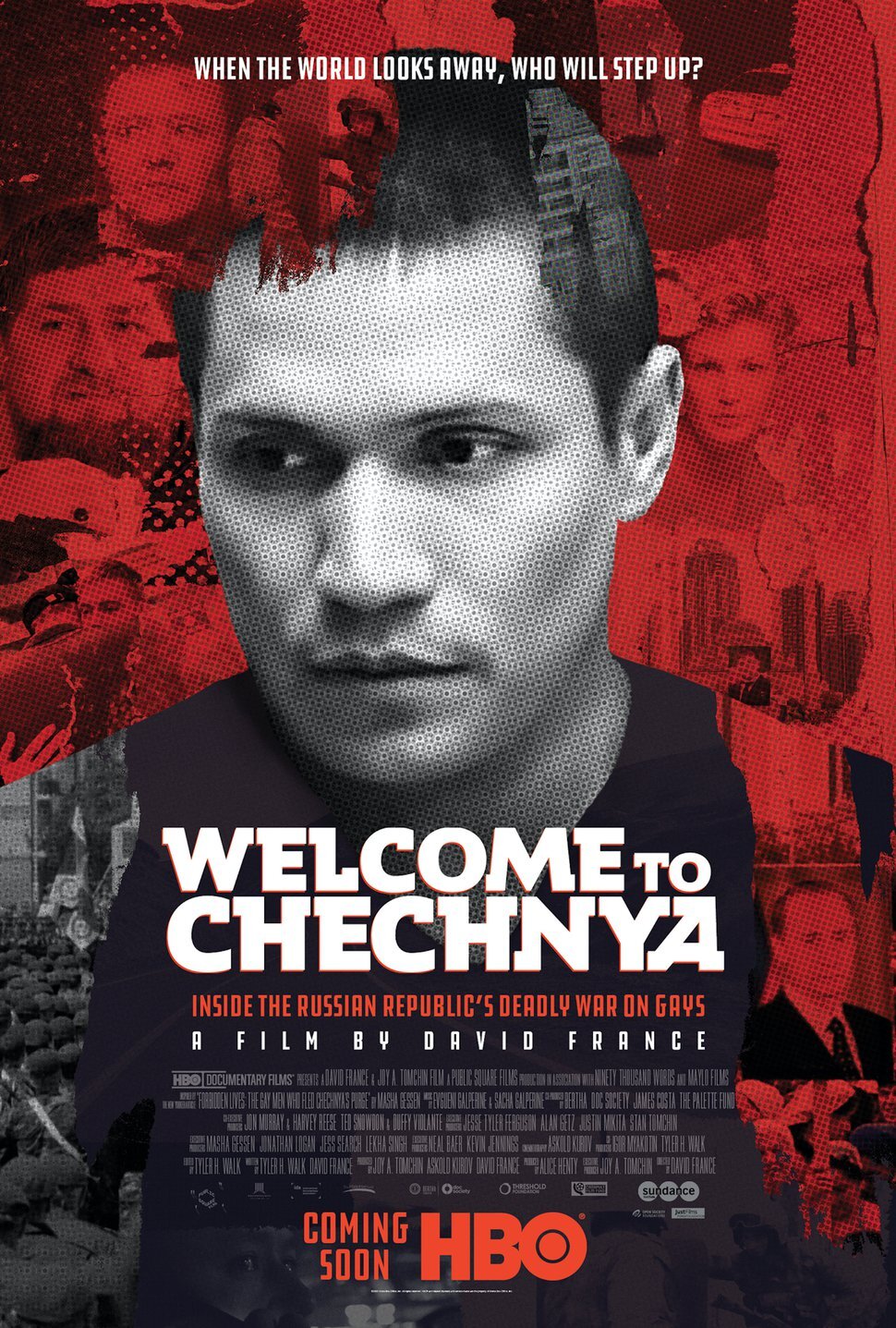
This heartbreaking and vital look into the spiralling wave of homophobic violence and anti-gay purges spreading through Chechnya as of the late 2010s. It follows LGBTQ+ Chechen refugees - mostly anonymised for their own safety - using hidden cameras as they fled out of Russia through a network of safehouses aided by activists and good samaritans.
2. Portrait of Jason (1967)
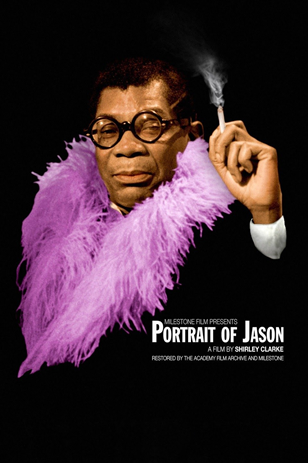
In this candid and spirited documentary interview - incendiary even by today's standards - aspiring cabaret performer and self proclaimed 'hustler' Jason Holliday waxes and reflects on the art, life and trials of 60s America, from his point of view of a Black, gay man.
3.Olly Alexander: Growing up Gay (2020)
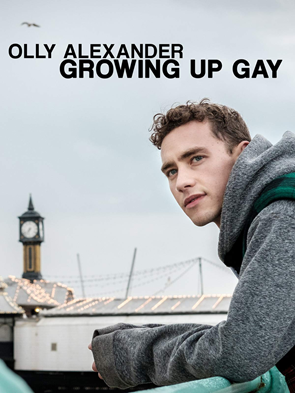
Years and Years leading man, queer pop icon and friend of Stonewall, Olly Allexander, explores the mental health issues faced by members of the LGBTQ+ community, as well as his own relationship to his identity.
4. Defiance: Voices of a New Generation (2020)
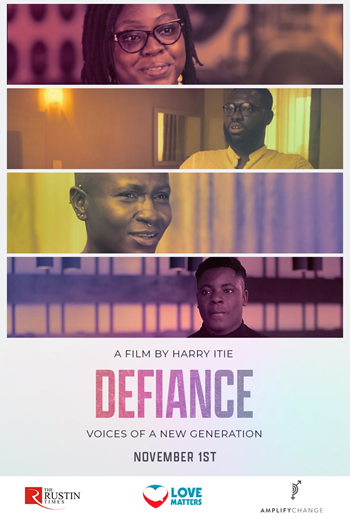
These compelling stories from Nigeria's LGBTQ+ community are set against the backdrop of their struggle against enduring colonial-era homophobia, renewed and bolstered by a contemporary wave of religious and social conservatism that has seen LGBTQ+ people in Nigeria fall victim to an onslaught of legislative and literal violence. In a society where existence and community is criminalised, their bold activism and visibility is undoubtedly an act of defiance.
5. Paris is Burning (1990)
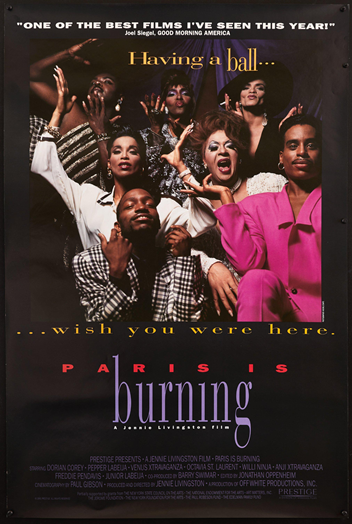
This landmark documentary, exploring the fire, fervour, and cultural innovation of the 80s New York Ballroom scene, a predominantly QTIPOC and working class community, as told through the enduring eyes of some of its most charismatic and glittering figures.
Its cult following and impact on both LGBTQ+culture (RuPaul's Drag race springs to mind) and in wider media would turn subjects such as Octavia St Laurent into queer household names. But it's impact is a heavy contrast to the sad story of exploitation that underpinned its production and direction, with many of those who appeared on camera going on to face increasing deprivation and violence.
6. Free Cece (2016)
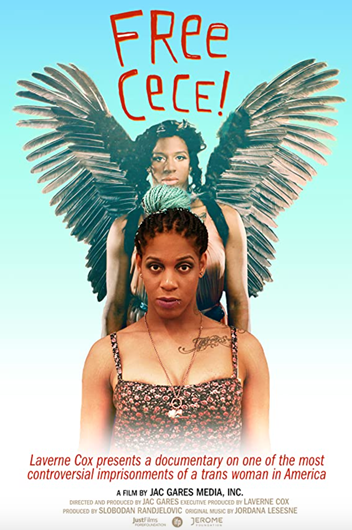
Produced by Black trans icon, actor and activist, Laverne Cox, 'Free Cece' follows the titular CeCe McDonald through her personal and the collective struggle against her unjust criminalisation and incarceration, following an act of self defence against a transphobic attack, and confronts the culture of violence surrounding trans women of color in America.
7. How To Survive A Plague (2012)
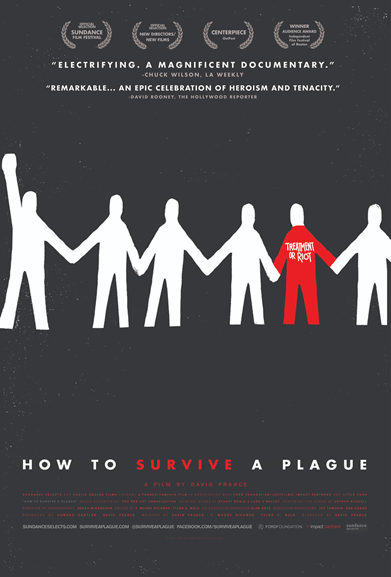
'How to Survive a Plague' is a moving documentary about the harrowing early years of the AIDS epidemic, and the efforts of activist groups ACT UP and TAG to resist an establishment that had abdicated all responsibility and duty of care to the LGBTQ+ community as it was decimated by the HIV/AIDS epidemic.
8. Are You Proud? (2019)
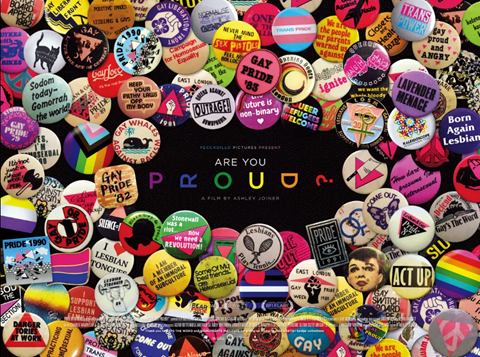
In this moving documentary from Ashley Joiner, rare archive footage and interviews across a spectrum of historical campaigns and current activists in the United Kingdom celebrate and contextualise the LGBTQ+ Pride movement's landmark achievements.
9. Tongues Untied (1989)
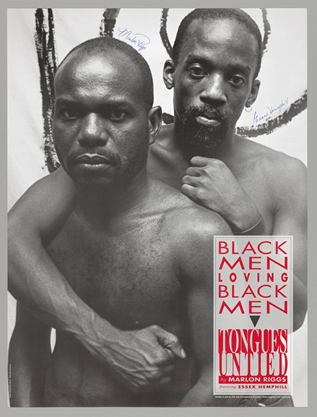
A seminal, influential and stunning work from filmmaker Marlon Riggs that aimed to give a voice and platform the the experiences, culture, intimacies and perspective of Black gay male communities, and in his own words, to "... shatter the nation's brutalizing silence on matters of sexual and racial difference." Featuring renowned 'poet-warrior', Essex Hemphill, 'Tongues Untied' is a must-see, unreplicated by any LGBTQ+ documentary work in the three decades since.
10. Disclosure (2020)

Described by the team behind it as "an unprecedented, eye-opening look at transgender depictions in film and television, revealing how Hollywood simultaneously reflects and manufactures our deepest anxieties about gender," 'Disclosure' provides a nuanced, analytical and accessible breakdown of trans representation in some of Hollywood’s most beloved moments and the off-screen real world repercussions of a failure to represent trans lives and stories authentically, accurately and without prejudice.
Presented via the opinions, reactions and perspectives of leading trans thinkers and creatives. Featuring Laverne Cox, Lilly Wachowski, Yance Ford, Mj Rodriguez, Jamie Clayton, Chaz Bono, and more.
Today we set out a new chapter for Stonewall as we launch our 2021-5 Strategy: Free to Be.
It’s almost a year since I took up the role of Chief Executive here at Stonewall. I’ve had so many rich and powerful conversations with people from across the LGBTQ+ movement, both here in the UK and among our many global partners, about what matters to our communities, what change is desperately needed and how Stonewall can be a great activist and partner in the movement.
I’ve reflected a lot on what we need to do and be at Stonewall to fight for – and build support for – our communities.
At the heart of it, we at Stonewall believe that LGBTQ+ people have limitless potential, and we imagine a world where all LGBTQ+ people of all identities experience not only equal opportunities, but equitable outcomes. Where our governments, communities, faith institutions and families don’t merely allow us to exist, but actively shield us from harm and help us thrive.
To create the world we imagine, our new strategy focuses on three pillars: Freedom, Equity and Potential. And the only way that we can make real progress is by working in partnership across the movement, in the UK and globally.
Over the coming four years you can expect to see us can expect to see us working on:
Freedom
- A legally enforceable ban on conversion therapy
- Laws that help prevent hate crimes and support LGBTQ+ asylum claims
- Legal recognition for LGBTQ+ people and our relationships
Equity
- Accessible and high-quality healthcare for all LGBTQ+ people
- Strengthening relationships with faith communities and communities of colour
- Supporting and represent LGBTQ+ people across our lives
Potential
- Expanding our workplace and empowerment programmes
- Championing LGBTQ+ inclusion in sport and schools
- Supporting Pride in all its forms
You might also notice that we look and sound a bit different. The wonderful and very clever Revolt (a purpose consultancy) and activist agency and Jones Knowles Ritchie (a design-led creative company) have helped us build a strong and clear message about who we are and what we stand for, alongside a fresh and confident new look. We have moved away from ‘Acceptance without Exception’ which no longer feels like the right focus for us. Today we stand for the freedom, equity and potential of all LGBTQ+ people.
We are so grateful to Revolt and Jones Knowles Ritchie for their generous support. And we are so grateful to the photographer Ally Schmaling, who has allowed us to use their beautiful portraits of LGBTQ+ people. We hope you love their work as much as we do.
So, now you know about the world that we imagine at Stonewall, I want to ask: do we imagine the same world?
If you can imagine a world where there is freedom, equity and limitless potential for every LGBTQ+ person, we want you to stand with us.
Whether you’ve supported us since 1989; you’re just coming out; you want to be a champion for your LGBTQ+ friends, relatives or colleagues; you’re concerned by the rise of anti-LGBTQ+ hate groups; you’ve felt overlooked by us in the past; you want to step up as a role model or leader – we can’t create the world we imagine, the world our communities deserve, without you. Join us.
How can we create a better world for LGBTQ+ people?
A newly released collection of stories and essays, We Can Do Better Than This: 35 Voices on the Future of LGBTQ+ Rights, tackles the question by giving voice to LGBTQ+ activists and creatives from across the globe – including countries where prejudice and stigma around LGBT people are still very much prevalent.
But this is a book of solutions, not problems. Each of the 35 voices featured within challenge our view of the world, and collectively they explore the ways in which we can create a world where all LGBTQ+ people can be free to be themselves – one where they can not only survive, but also thrive. Compiled and edited by journalist Amelia Abraham, this book takes us on a journey through six overarching themes – safety; visibility; dating, love and family; health and social care; beyond the binary; and community and organising – to make us think more deeply about the future of LGBTQ+ rights and to inspire positive change within our communities. Following on from Amelia’s first book, Queer Intentions: A (Personal) Journey Through LGBTQ+ Culture, the book also uplifts the diverse voices of our community to educate and motivate.
Tom/Crystal Rasmussen, author of Diary of a Drag Queen, shares their experiences with wearing make-up in public places as a queer person; while Phyll Opoku-Gyimah (Lady Phyll), co-founder of UK Black Pride, writes about how her ancestors’ resilience inspires her activism. Activist Mazharul Islam explores LGBTQ+ rights in Bangladesh; and writer Travis Alabanza imagines the joys – but also the peace – of a world free from gender policing. Through using vulnerability, reflection. Discussion. Reflection, and good humour, all 35 contributors imagine a better future for the LGBTQ+ community and provide guidance on how best we can get there, together.
We spoke with Amelia Abraham about her experiences of compiling her new book.
1. Many people can look at the rainbow-coloured logos of their favourite brands or see photos from corporate Prides across the world and think we don’t need Pride any longer. How do you challenge this narrative through your book?
Corporate acceptance can be very divisive. Some people view it as positive visibility, others think that it dissolves the political messages of Pride; some corporate Pride activities raise huge amounts of money for LGBTQ+ causes, which is great, others equate to what we might call pinkwashing. I explore this tension in my first book, Queer Intentions: A (Personal) Journey Through LGBTQ+ Culture – there’s a whole chapter where I travel to Pride events across Europe to look at the commercialisation of Pride. At Prides like Berlin and Amsterdam, there is a lot of corporate presence in the form of logos and branded campaigns, but in Serbia, there is no corporate sponsorship because businesses don’t want to be affiliated with the LGBTQ+ community within a wider anti-LGBTQ+ climate.
We haven’t come as far as we might think.
In this sense, we can see that corporate Pride does demonstrate relative acceptance, however this still doesn’t actually mean our most urgent needs are being met. We Can Do Better Than This is a collection of stories all about what still needs to change to make life better for LGBTQ+ people – from better trans media representation and healthcare, to ending HIV stigma, to third gender options on passports – and it shows there is so much more to do. I think the book demonstrates that we haven’t come as far as we might think in terms of ‘LGBTQ+ equality’ and that we therefore need Pride more than ever, as a moment for visibility, protest and general awareness raising.
2. Why was it important for you to include voices from the global LGBTQ+ community?
In places like Bangladesh and Nigeria, where some of the contributors come from, homosexuality is still criminalised. As Mazharul Islam writes, the criminalisation of homosexuality sends out a societal message that queer people should be punished for being who they are. This increases the threat of violence. Then, when that violence occurs, you cannot go to the authorities in case you are arrested.
It’s really important to hear from queer people in other parts of the world.
The lack of safety occurs as a cycle and one that must be broken – not just through decriminalisation, but through education, visibility, organising. So I think it’s really important to hear from queer people in other parts of the world in order to learn more about their experiences and remind ourselves that we are part of a bigger, global, LGBTQ+ family, as well as to then facilitate the sharing of information, support and finances – a kind of global solidarity.
3. You say in your introduction that you chose the contributors because they are all ‘fabulous’, and link this thinking to madison moore’s book. Could you expand on what this means to you?
madison moore wrote an amazing book called Fabulous: Rise of the Beautiful Eccentric all about how queer people and particularly the most marginalised queer people – like gender nonconforming people and queer people of colour – harness style and ingenuity as a mode of political resistance. Think ballroom culture, for example. It’s all about thriving and being creative in a world that tells you that you shouldn’t exist – fabulousness as protest, a way of taking up space and refusing to be erased.
I think this applies to all the contributors, and actually most queer people I know!
4. What do you think are the links between 'everyday, interpersonal gestures and change on a much broader scale', as you write in your introduction?
I think to improve life for LGBTQ+ people we need incremental or individual change coupled with top-level change. So for instance, when it comes to improving the inclusion of the non-binary community, we need people to understand and use they/them pronouns on an interpersonal level and a gender-neutral option to be made available on passports, say. Both changes, to me, indicate base level respect and recognition.
I think everyday and broader changes also hopefully beget one another – if non-binary people were acknowledged by the government, then more people might accept that gender-neutral pronouns are here to stay. Vice versa, if more people made the effort to be inclusive with language and behaviour – in the workplace, schools etc – it might one hopefully one day lead to a society in which institutions do not constantly operate on the presumption of binary gender.
I hope We Can Do Better Than This is full of dozens of practical suggestions – bigger, and smaller – for changes we can make.
5. This year, our Pride campaign is all about our community being Prouder Together. What do you think is the importance of community, solidarity, and teamwork in achieving equality and liberation for the LGBTQ+ community worldwide? How does your book demonstrate this?
I think by assembling so many LGBTQ+ voices side by side, it draws new connections between our experiences. I also hope that the bigger voices – Olly Alexander and Lady Phyll etc – will draw people in to the unexpected stories from lesser known activists.
We Can Do Better Than This is also full of stories about how community and solidarity have created the blueprint for progress. From homeless queers coming together at Stonewall in 1969, to networks of queer people protecting one another from online catfishing in Nigeria today. Kate Bornstein’s essay, ‘When It Comes to Sex and Gender, You’re Right’ even makes an amazing case for how we can prevent divisions within queer communities going forwards – particularly divisions between L, G, B and T.
6. What’re three key messages or three actions do you think everyone can take away from this book?
We still have a lot of work to do to make life better for queer people. There are always people who need our help. There are many things we can actively do to help them.
Some of those things are: Having conversations to shift attitudes (I hope the book equips readers the arguments to do that). Supporting queer people beyond the West, financially and in other ways like sharing their stories or uplifting their voices. And finally, educating ourselves around the needs of disabled, intersex and asexual people, in order to be better allies.