
Blog
Too many LGBTQ+ people still have to hide who they are in the workplace. Our new campaign, Bring Yourself To Work, shows how LGBTQ+ people thrive when they’re free to be themselves.
Our workplace can have a huge impact on our life. Most of us rely on work for our financial livelihood, of course, but for many it means so much more. It’s where many of us spend most of our waking days. It’s where we build networks and friendships. And our career choices often form a very fundamental part of our sense of self.
There’s an old adage that your boss has a bigger impact on your health than your doctor. If you’re LGBTQ+, there’s a good chance you’ll see the truth behind this. Most of us have, at one point or another, endured the emotional struggle of having to hide who we are at work, or the turmoil of not knowing if we can access the same benefits and opportunities as our coworkers.
That’s why workplace inclusion matters. It's more than just a tick-box exercise or a negotiation of HR policy – workplace inclusion is about providing LGBTQ+ people with the same opportunities to thrive as anyone else. It’s about allowing them to unlock their full potential and to live their lives freely and openly.
But, unfortunately, this is far from the reality for too many LGBTQ+ people. Confronted with exclusionary policies, language, and attitudes, more than a third of LGBT staff hide who they are at work in fear of discrimination. Many feel isolated and are forced to withdraw from their colleagues because they’re scared of being ‘found out’ for who they really are.
Because of subtle anti-LGBTQ+ sentiment in some cases, and outright bigotry in others, many LGBTQ+ individuals find themselves caught in a work environment that is not only unsupportive, but also directly harmful. Our research shows that almost one in five LGBT staff (18%) have been the target of negative comments or conduct from work colleagues because they're LGBT. Moreover, one in eight trans people (12%) have been physically attacked by customers or colleagues in the last year because of being trans, and one in eight LGB people wouldn’t feel confident reporting homophobic or biphobic bullying to their employer.
Employers have long understood the benefits of true inclusion, rather than superficial representation, when it comes to morale, retention, and creativity. That’s why, for 18 years, workplaces across the UK have entered our Workplace Equality Index, and each year we report on the Top 100 most inclusive employers. This year's Top 100 list launched today.
LGBTQ+ inclusion makes the workplace safer and happier for everyone. Accepting workspaces allow a more different set of opinions to emerge, and harbour more innovative, caring, and thoughtful environments for all. In this way, the entire organisation can grow and innovate, and carry out more effective work.
And, of course, individual employees benefit. Inclusive work environments mean LGBTQ+ employees can talk openly about their lives and experiences without fear. They attract diverse employees to build a more understanding culture, ensuring everyone has the chance to shine. And inclusive HR policies give peace of mind to all employees, who know they can enjoy the same benefits as their colleagues.
That’s why this year, we’re putting employees centre-stage and asking them what it means to bring their whole self to work.
Speaking to Stonewall about their workplace, Bron (they/them) said, “I’m now more open with my identity at work than I am in everyday life – it might sound weird, but I do find that it’s more of a safe space. There's so much procedure in place at work where I know that I'm going to be supported. Being a part of this network has made me a lot more confident in myself. And while there are still spaces where I’m not 100% out, I feel I’m a lot more myself on a day-to-day basis.”
So, how do you bring yourself to work? Let us know using the hashtag #BeingLGBTQAtWork.
Find out how you can fundraise for LGBTQ+ equality at work.
Whether you’re LGBTQ+ or an ally, whether you head up your organisation or you’re in an entry-level role, everybody should feel able to make their workplace a little more inclusive.
Here, we’ll share five top tips for kickstarting LGBTQ+ inclusion at your organisation, no matter its shape or size.
Workplaces should be inclusive for every employee. For LGBTQ+ people, that means more than simply being protected from discrimination while at work – it’s about the ability to be fully themselves. It means not needing to omit information when talking about their relationships and living situations, not having to formulate excuses if they need transition-related medical leave, being able to take advantage of the same family leave policies as their non-LGBTQ+ counterparts without having a tricky conversation first.
You might want all of this to be the case in your own organisation, but know that it’s not quite there yet. So, what can you do to help? We’ve gathered some great tips from our Workplace team on how to take your first steps towards LGBTQ+ inclusion. Whether you take on one or all of them, with these pointers you’ll start to improve the lives of LGBTQ+ employees in concrete ways. And if you really end up on a roll, implementing some of these changes will set you in good stead for entering Stonewall’s Workplace Equality Index, where you can win Bronze, Silver and Gold awards to recognise your inclusion efforts.
1. Improve your policies.
Policies might not be the first thing you think of when it comes to making LGBTQ+ people happier at work, but they’re crucial to creating a truly inclusive environment.
As a starter, ensure you have policies that include explicit bans on discrimination, bullying and harassment based on sexual orientation, gender identity and gender expression. Take it one step further by introducing a transitioning at work policy. This will work best if it includes guidance for employees who are transitioning, and for managers and HR supporting a transitioning employee.
2. Let prospective LGBTQ+ employees know they’ll be accepted at work.
One of the best ways of doing this is to write a strong statement about how your organisation values diversity, making sure to explicitly mention LGBTQ+ people. If you ensure that statement is visible across your job packs and recruitment pages, you’re sure to attract a wider range of applications.
3. Keep inclusion high on the agenda when training new staff.
When new employees are being inducted, make sure they receive an explicit message about your organisation’s commitment to LGBTQ+ inclusion. Take this one step further by providing training to all staff about your discrimination, bullying and harassment policies, and how they help create a supportive atmosphere for everyone.
4. Diversify your internal comms.
Once staff have been inducted and trained, they’ll understand that your organisation is committed to creating a supportive environment for everyone. But keep these messages going for all employees – new or not. You can do this by celebrating awareness days, highlighting information about LGBTQ+ identities and experiences, or platforming LGBTQ+ trailblazers in your sector.
5. Set up an employee network group.
Creating a dedicated space for LGBTQ+ colleagues from across the business to connect and share peer support can make an enormous difference to the experiences of your LGBTQ+ staff. We’ve created a whole range of free resources to help you get started with establishing a network.
Content warning – mental health, eating disorders, weight loss
This year, our trustee Jean Vianney is running the London Marathon to raise money for Stonewall.
During the 1990s, when I was growing up, I heard a lot of hate speech about gay men and the broader LGBTQ+ community from across society. While the daggers from the outside world were sharp, it was the comments in my own household that cut deepest. I grew up in a very conservatively religious family. As a closeted gay man, it seemed that my only option was to live a lie.
I repressed my sexuality for years. Because I couldn’t be myself, the stress and pressure manifested as obsessive eating. Comfort could be found on the plate. Every bite was a morsel of distraction. I eventually ate away my emotions to the point of becoming clinically obese.
I can still feel the sheer relief that washed over me when she accepted me.
A weight-related injury in 2014 caused me to hit reset. And after many years of personal struggle, I decided to take the daunting step of coming out for the first time. I told my former boss over a seemingly unassuming lunch. I can remember physically shaking as I worked up the courage to say the words. As I trembled, I realised: it’s now or never. The time between me saying the words and her response couldn’t have been more than a few seconds. It felt like an eternity. I can still feel the sheer relief that washed over me when she accepted me for who I am. This is when life as I know it now truly began.
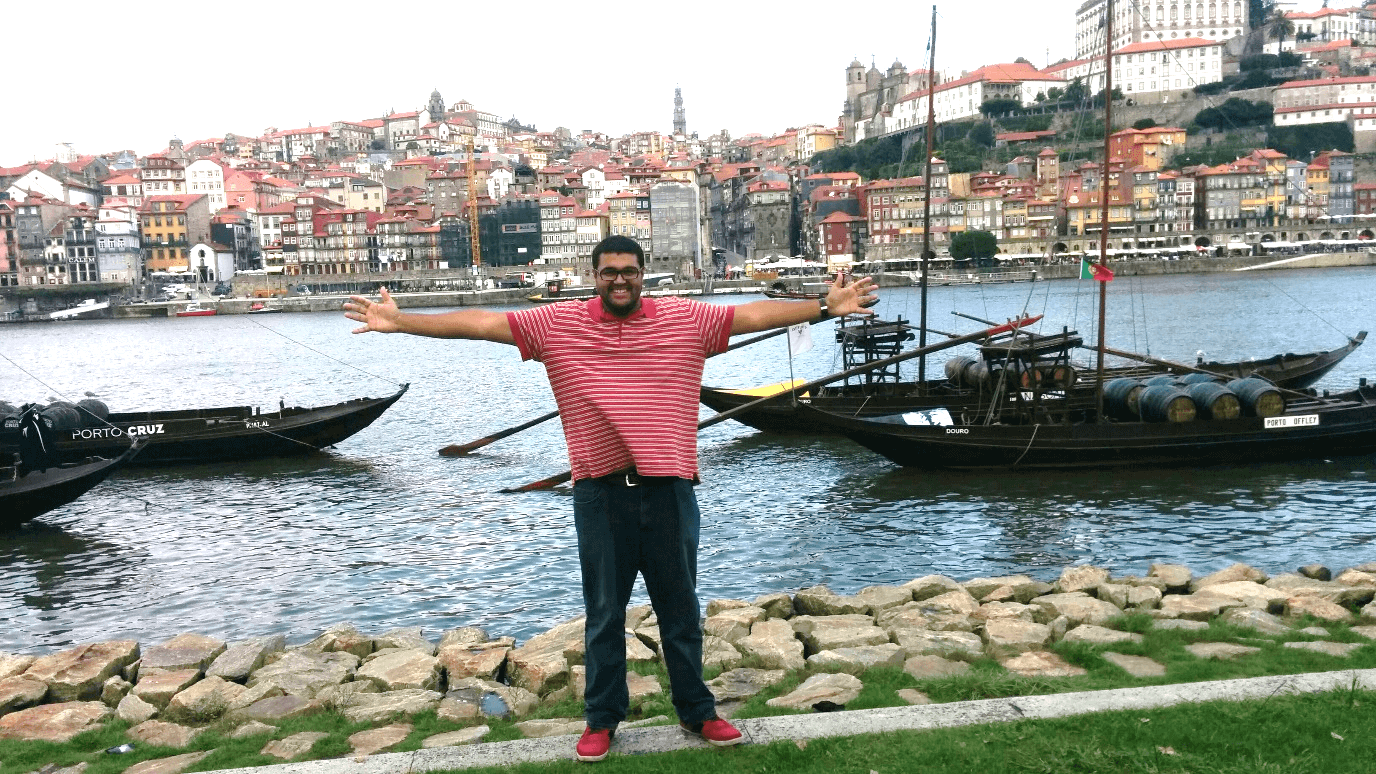
Throughout the next year, I gradually came out to friends and family members. Some conversations were easy – friends and family who were swift in their affirmation of love and support for me. Other conversations were difficult – people who felt betrayed that I hadn’t shared this earlier, or in some cases, didn’t believe me. If you think the words “I’m gay” are difficult to get out once, try repeating them over and over when people keep asking, “You’re gay?”, thinking you are joking.
All of this helped build resilience and shape the person I am today. After a few years on this journey, I came out to the final people of import in my life: my parents. I practiced repeatedly, mulled over the right words, planned my retreat if it went south, even going so far as to ask my brother to have his car keys ready in case we needed a getaway vehicle. No matter how many times I practiced, the nerves and anxiety of that moment still got to me. I somehow managed to get the words out. And although it has a difficult journey with many tears, my parents have come to accept me for who I am.
My physical health improved when I stopped living in the darkness of a lie.
As I came out to more people and my stress levels dropped, my eating disorder started to fade, and I lost weight. Comfort was no longer found on my plate, but rather in a deep loving and acceptance of myself. People ask how I did it: “what diet?” or “what exercises?” was I doing. The answer is that I started embracing my authentic self, inside and out. For me, my physical health improved when I stopped living in the darkness of a lie. Overall, I lost about 9 stone (120lbs or 55 kgs). I wasn’t trying to hit a target – I was just finally being me. The external weight loss was tied to an internal acceptance of who I am.
In December 2020, I joined the Board of Stonewall. Founded by Sir Ian McKellen, Lord Michael Cashman, Lisa Power and other trailblazers, Stonewall has led fights on behalf of LGBTQ+ rights since 1989. Their many UK successes include an equal age of consent for gay and bi men, the end of Section 28 in Scotland and England and Wales, the right for same-sex couples to get married and, more recently, getting LGBTQ-inclusive teaching in the national curriculum and helping evacuate LGBTQ+ refugees from Afghanistan.
It’s organisations like Stonewall that help move the needle, supporting every one of us to embrace our true selves. That’s why, on Sunday 2 October, I will run the London Marathon in support of Stonewall. (If you have a place for this year’s marathon, you can use your place to fundraise for Stonewall, too!).
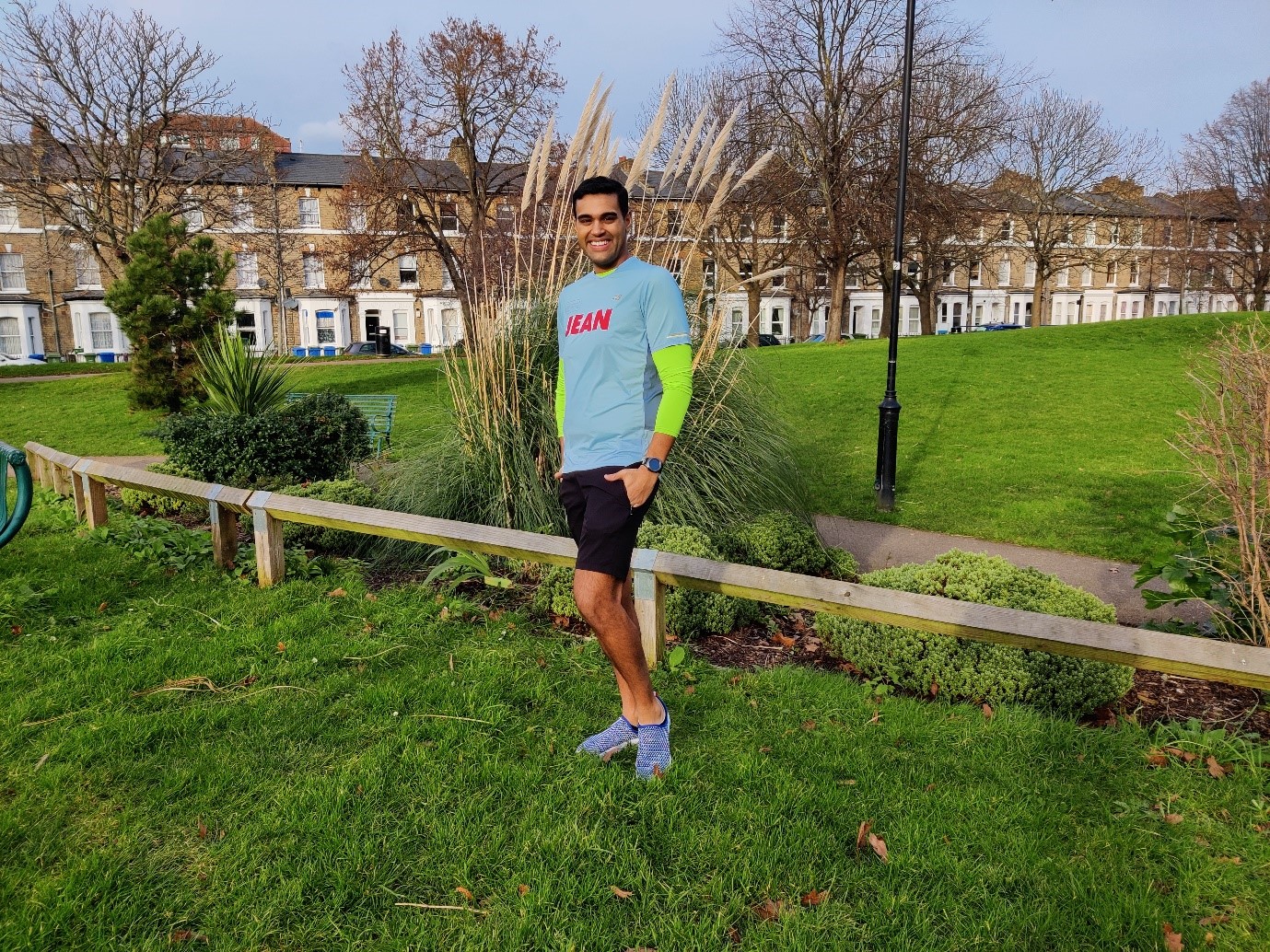
Standing on the shoulders of giants and with your support, I will fight my way through 42.195 kilometres (that’s 26 miles, 385 yards). With each step that I take, I’ll remember my journey, I’ll remember my pain, and I’ll finish my story – it does have a happy ending!
Until then, please consider donating and sharing this story with your own networks. I’ll see you at the finish line!
#londonmarathon #freetobe #youunlimited
Inspired by Jean’s story? Donate to his Just Giving page, or get involved in your own fundraising event!
The UK Government committed to banning conversion practices in England and Wales in 2018, yet seven years have passed without a ban.
But across the world, many places already have bans in place. In fact, there are 28 countries with some form of national ban on conversion practices. Of these, 14 countries have bans applying to all individuals, seven ban it only for medical professionals, and another seven have indirect or partial bans via mental-health diagnosis restrictions. In this article, we’ll look at where conversion practices are banned, and what those bans look like.
Starting in 1999, Brazil introduced a trailblazing ban on conversion practices relating to sexual orientation – the first conversion practices ban in the world! Their ban came through the Federal Council of Psychology, and it was extended to cover gender identity as well as sexual orientation in 2018.
Jumping ahead to 2007, Samoa passed a law stating that people cannot be considered ‘mentally ill’ because of their sexual orientation, preventing registered health professionals from practising conversion practices. Fiji followed suit in 2010, followed by Taiwan in 2018 – with the latter introducing a criminal ban for health practitioners. In Argentina in 2010, and Uruguay in 2017, mental health laws implemented a ban on conversion practices on the basis of both sexual orientation and gender identity.
Several countries have introduced criminal bans for those found to be practising conversion practices, including Ecuador in 2014 and Malta in 2016.
In 2020, Germany banned conversion practices for minors, as well as protecting adults undergoing conversion practices because of force, fraud or pressure.
When it comes to provinces, regions and territories, Spain and Australia continue to make progress.
In Spain, Murcia has implemented a ban on registered health professionals practising conversion practices, and Madrid, Valencia, Andalusia and Aragon all introduced criminal bans in 2017 that would apply to conversion practices in all settings. In 2020, Queensland State in Australia made conversion practices in healthcare settings a criminal offence, followed by Victoria, which banned conversion practices in all settings in 2021. And since 2013, bans of varying forms have been implemented across 20 states, two territories, and multiple local counties or municipalities in the United States.
In 2021, Chile introduced a medical ban, with a bill under discussion that would ban conversion practices in all settings. In the same year in India, the Madras High Court issued directives to prohibit conversion practices in India, along with other sweeping reforms to respect LGBTQ+ rights.
Conversion practices bans for minors were already in place across several Canadian territories but in December 2021, Canada’s House of Commons voted unanimously for a federal ban. This protects both adults and minors from conversion practices to change their sexual orientation, gender identity or gender expression. Days later, France’s parliament also voted to pass a ban.
In 2022, New Zealand banned conversion practices, introducing two new criminal offences for attempts to change the sexual orientation, gender identity or gender expression of anyone under 18.
In 2023, we saw Belgium, Cyprus and Iceland all introduced full national bans on conversion practices. In 2024 , Norway, Portugal and Mexico followed suit.
In 2025, New South Wales and South Australia both passed bans. The Dutch parliament also voted to criminalise conversion practices in September.
All LGBTQA+ people deserve to be protected from the lifelong damage inflicted by conversion practices. But unless we keep pressure on the UK Government, we risk lagging even further behind other countries in the world.
All LGBTQ+ people deserve to be protected from abuse. Find out how you can support a ban on conversion practices that leaves no one behind.
For Lesbian Visibility Week, we asked seven lesbians what it means to them to be a lesbian in 2022, and what message they'd like to share with other lesbians.
This week, we want to celebrate the diversity and lived experience of lesbians worldwide, and help us all feel proud of who we are.
1. “Growing up, I never saw people like me.” – Katie
Since 2018, many things have changed for me: I’ve adopted a dog, bought my first home, and got engaged to my girlfriend of five years. I never imaged all of these things would happen to me.
Growing up, I never saw people like me – I knew no LGBT people until my early twenties. And what I learnt from TV was that all lesbians looked one way, and we largely all got killed off in the end.
That’s why lesbian visibility days are so important: it shows the diversity of our community, from the incredible and ground-breaking, to the beautiful every day.
2. “You never know who you could help, just by being yourself.” – Jo
In the early 90s, I went to an all-girls secondary school not far outside of London. At that time, one of the worst accusations you could receive from your so-called classmates was of being a ‘lezzzzzbian’. The word itself was always elongated, always said in a certain tone and always accompanied by a look of, at best, distain, at worst, disgust. It seemed like so many of the girls were determined to attach the ‘lesbian label’ to someone else as fast as possible, so that they wouldn’t be ‘lumbered’ with it themselves.
I remember one maths class when I had a new metal ‘Friends’ pencil tin featuring a photograph of the whole crew sipping milkshakes. The girl who sat next to me spent the whole lesson telling me it was really weird that I had women on my pencil case. That having women on my pencil case must mean I was a lesbian. Why was a lesbian? Why? Why did I want women on my pencil case? Did I have a thing about girls? I binned the pencil case that day and replaced it with something innocuous.
I often think about the huge difference it would have made for me to have had even one visible lesbian role model at that time – ideally in real life, but even just on TV! That’s why I strive to be proud and visible as much as I can. You never know who might need it and you never know who you could help, just by being yourself.
3. “My gender, my sexuality, they’re just that: mine” – Liz
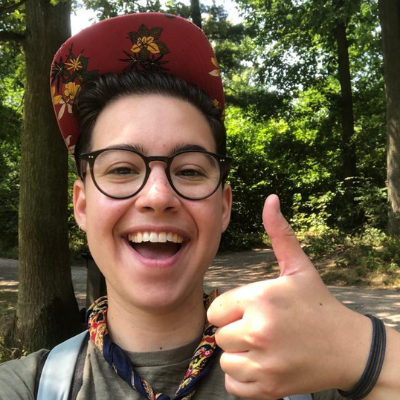
Eight years ago, I was sitting next to my mom on a plane avoiding eye contact at all costs before sputtering out 'just so you know Ma, I’m pretty gay'. This was at a time when I had been dating my first girlfriend for six months, wore way too much tie-dye, and was obsessed with The L Word – so it probably didn’t come as a big surprise.
Claiming a lesbian identity was exciting and terrifying as I learned what it meant to be a part of an incredibly diverse and supportive community, but also what it meant to be shouted at for being 'those lesbians' in bars and on the street. I came out to my mom again this year when I told her I was non-binary, and tried to explain I was still me and I was still a lesbian. Some people don’t understand how I can be both, but it’s not for those people to understand. My gender, my sexuality, they’re just that: mine.
4. “I was lucky enough to have lesbian role models growing up but not everyone does.” – Adelaide

For me, Lesbian Visibility Week is about the joy of seeing younger girls expressing themselves in a way that I never could at their age (despite my history of wearing Extremely Gay Outfits from birth!).
In the last year I've been high-fived by teenage girls at Pride, sat next to kids waving LGBT flags at a Taylor Swift concert, and watched baby lesbians cry watching 'Ring of Keys' at Fun Home in the theatre.
I was lucky enough to have lesbian role models growing up but not everyone does, so I try to be as visible as possible. I want to be someone who young girls can look at and think, 'I’m safe around her and she celebrates who I am', whether that’s because I’m holding my girlfriend’s hand in public or just standing on my own, wearing my lace-up boots and a ring of keys.
5. “It means choice and freedom. It is about sisterhood.” – Yassine
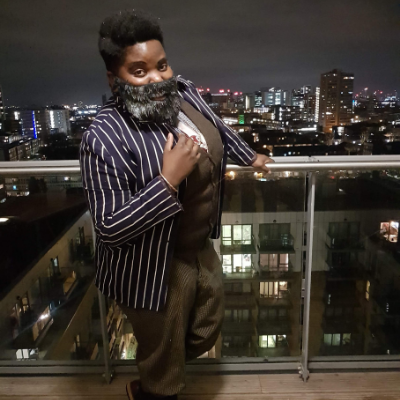
To me, being a lesbian in 2022 is about coming up from the basement, smiling at one another in lesbian spaces, having hipsters steal our haircuts and plaid shirts, yummy mummies steal our diets, and getting to hate on the L Word (yet watch it religiously) a second time around!
It means choice and freedom – of identity, expression, to love, marry, have families, be political, be sexual, be powerful, to empower, to exist. It is about sisterhood.
It can still be hard: the world over lesbians remain some of the most vulnerable people in societies that deny, erase, punish, forcibly attempt to convert, fetishise, and condemn. And there are lesbians who wish to weaponise our sexuality against others in the community. Being a lesbian in 2022 to me means that I can be proud and secure in my gender and sexuality, and that doesn’t have to invalidate anyone else’s.
6. “It is possible to thrive in life as a lesbian.” – Megan

It took me years to accept ‘lesbian’ as a label. Even now it can make me feel uncomfortable, but I try to embrace it as an act of defiance.
When I was younger, ‘lesbian’ was always spat at me as a slur in a spiteful and disgusted tone. Otherwise, it was seen as a dirty word – highly sexualised and muttered under your breath.
It’s so important that young people are exposed to positive representations of lesbians in the media so that they don’t feel the same stigma. When I realised that I was only attracted to women, I thought the sky would fall in. I couldn’t see myself having a wife or a family, being successful, or finding happiness. I now realise that those premonitions were completely unfounded, and that it is possible to thrive in life as a lesbian.
7. “I was finding my home in the camaraderie and friendship of team sport.” – Erin
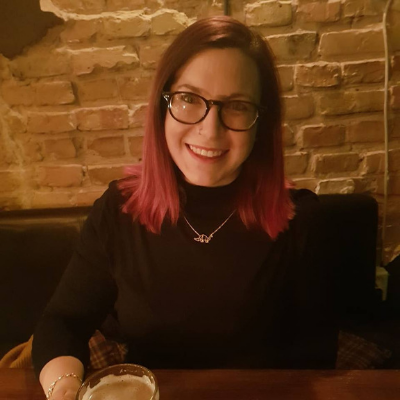
At the same time as I struggled with my sexuality as a teenager, I was also finding my home in the camaraderie and friendship of team sport. I had a safe environment where I could express myself physically and support my friends in a common goal.
The first people I came out to were teammates. Some were queer women themselves; many were allies. They supported me the same way we supported each other on the pitch: with loyalty and a lot of laughter.
I’ve been lucky to enjoy success with sport at the international level – which brings its own challenges - but sport has always continued to provide confidence and accomplishment that otherwise would have been lacking. I'm very aware of the privilege I’ve had to have such a positive experience with sport. But I sit here now – living the lesbian dream with my wife of five years and our cat – I can point directly to the power of sport as a huge part of my journey.
Visit our Lesbian Hub.
This Pansexual Visibility Day, we’re exploring what it means to be pansexual, and debunking 5 common myths about pansexuality.
With our understanding of the diversity of human experience expanding – and people feeling more able to live as their true selves – it’s so important for those with more marginalised identities to be visible.
While visibility alone won’t solve everything, it can go a long way towards helping individuals understand their feelings, and to feel seen. Visibility and representation can help the mental wellbeing of LGBTQ+ people who might feel isolated, and open doors to finding community.
Sexual orientation, like all other parts of our identities, is very personal and varies from one individual to another. For me, being pansexual means that my attraction to people has no correlation with their gender.
The concept of gender doesn’t relate to the ways in which I’m attracted to others – I’m simply attracted to those with the right energy. I see beauty in someone’s entire being, just like I see beauty in nature and in the world around me. This doesn’t mean that I don’t find people physically attractive – just that this attraction doesn’t fall into categories that are related to gender. Using the term “pansexual” allows me to revel in the expansive nature of my being, and acknowledge that I form connections with people, regardless of the gendered ways in which they might be perceived by society.
Pansexuality is just another shade in the colourful spectrum of human diversity, existing in harmony alongside all the other palettes. But – as with many other terms – pansexuality has long been misunderstood.
So today, on Pansexual Visibility Day, I’m going to explore and debunk some of the common misconceptions about this beautiful segment of the LGBTQ+ community:
1. “Aren’t pansexuality and bisexuality the same thing?”
While there are many overlaps between pansexuality and bisexuality, the official definitions differ in their approach to gender. The prefix pan- means “all”, so pansexuality is an attraction to all gender identities or attraction regardless of gender identity, while bisexuality is the attraction to multiple gender identities.
There may be individuals who align with the way pansexuality is defined yet identify with the term ‘bisexuality’, and that’s completely valid. Others may use pansexual and bisexual interchangeably. Our identities are personal and specific to each and every one of us – that’s what makes us all unique!
2. “I’ve heard that pansexuality is transphobic.”
One of the biggest misconceptions about pansexuality is that pansexual people are somehow being transphobic by stating that they’re attracted to trans people while bisexual people aren’t, because they don’t see trans people as men or women. This is a dangerous and untrue myth! Pansexuality is attraction regardless of gender, so a pansexual person’s attraction to someone has nothing to do with whether they are trans or cis.
Similarly, the existence of pansexuality does not mean that bisexual people are only attracted to men or women. Bisexual people can be attracted to people with the same gender identity, and with different gender identities from their own – including non-binary people. The recently emerging term “bi+” now makes it even more explicit that bisexuality isn’t limited by binary definitions of gender and sexuality!
3. “How can someone be attracted to everyone? Pansexuals are just greedy!”
Just because someone has the potential to be attracted to anyone doesn’t mean they are any more or less likely to be attracted to an individual. And it especially doesn’t mean that they’re automatically attracted to everyone. This is a myth that mirrors the homophobic notion that all gay men or lesbians are automatically attracted to every man or woman they meet.
It isn’t “greedy” for someone to have the potential to be attracted to people of all genders. Someone identifying as pansexual doesn’t mean they are constantly pursuing others, are more likely to cheat, or are incapable of committing to relationships. How adults decide to build consensual relationships is nobody else’s business!
4. “Pansexual people are confused – they can’t make up their mind about what they want.”
Like bisexuality, pansexuality is often erased and labelled as “sitting on the fence” or a “stepping-stone to being gay”. This misconception is commonly presented in a gendered way, with women labelled as “straight but experimenting”, and men assumed to be “gay, but too scared to fully come out”. Aside from being inherently queerphobic, these ideas are just another way in which the patriarchy manifests within our social culture.
When we make the above gendered assumptions, we’re centring men in our understanding of sexuality. We’re suggesting that it’s not possible for an individual to be attracted to people with multiple gender identities without their primary attraction being towards men. This just isn’t true: pansexual people know who they are, and they don’t need to pick between people of different genders to prove it.
5. “Pansexuality is just a new fad!”
The term pansexual is, in fact, not a new term. The word has been included in the Oxford English Dictionary since at least the early 1900s, and has been used in its current definition since at least the late 1960s. While LGBTQ+ people have long been using a range of different terms to describe their identities, we’re simply more aware of them now due to increasing social acceptance, as well as access to diverse experiences through the internet and social media.
Even if it was a new term, however, this would not invalidate pansexual people’s experiences, or suggest that they were being inauthentic. As public perception progresses, it’s likely that our language will expand and evolve to include the vast diversity of human experience – and that’s beautiful!
Research tells us that in 2022, the United Kingdom is a country that is proud to be inclusive; one where its people are increasingly embracing their LGBTQ+ neighbours, colleagues, family and friends.
However, with intolerant, minority viewpoints being presented as fact in our media and in our politics, it’s never been more important to show up to protect our rights.
As we look back on 50 years of Pride in the UK, we can reflect on how LGBTQ+ acceptance has seen one of the fastest and most dramatic changes in public attitude in post-war Britain.
According to the British Social Attitudes survey in 1987, at the height of the AIDS epidemic and the dawn of Section 28, three-quarters of the public said they felt that a same-sex relationship was either ‘always’ or ‘mostly’ wrong. These attitudes were often fuelled by sensationalist, homophobic reporting in our press.
35 years on, the world has changed, even if the headlines haven’t.
Our research shows that today, the UK public is significantly more likely to take pride in supporting the LGBTQ+ community than it is to find them ‘wrong’. One in three people reported they actively ‘respect’ us, and one in five declared ‘admiration’. Less than one in 20 reported feelings of ‘envy’, ‘resentment’ or ‘fear’.
[resource1]
This report adds further colour to the beautiful picture being painted by other pieces of research. YouGov polling shows more than seven in ten Brits would support someone close to them who came out as LGBTQ+, and greater numbers of people now feel comfortable being out as their true selves.
Despite this, the hard-won rights of LGBTQ+ people are under threat. In the digital age of misinformation, we’re facing new, often underhanded, challenges that threaten to weaken the foundations on which we’re building a safer future for all. Through attacks in our politics, online, and in our media, who continue to promote what are now demonstrably minority viewpoints uncontested, the LGBTQ+ community finds itself under a near-constant deluge.
And the real harm is already being felt.
This year, the UK Government reversed its promise to implement a trans-inclusive ban on conversion practices, acting against international medical and human rights consensus, and instead acting on rhetoric. The result is a ban that, in its current guise, will ultimately end up protecting no-one from abuse.
Additionally, the UK Government’s own research has shown that reported LGBTQ+ hate crime has grown at double the rate of other forms of hate crime over the past two years. And with four in five anti-LGBT hate crimes going unreported, these figures are likely only the tip of the iceberg. Words have an impact, and the debates on LGBTQ-inclusive education and trans equality in the media, online, and in the street are creating an environment where an LGBTQ-phobic minority feel emboldened to make us less safe.
And the world is noticing. The Council of Europe approved a report by the Parliamentary Assembly which condemns “extensive and often virulent attacks on the rights of LGBTI people for several years” in the UK. And our country has dropped down ILGA-Europe’s annual ranking of LGBTQ+ rights across Europe for the third year running, plummeting from 1st to 14th since 2015.
None of this is the will of the UK public.
That’s why it’s now more important than ever that we, as a majority movement of people who support LGBTQ+ equality, make our voices heard. We’ve fought and won before, and we can do it again. Over the past 50 years – since the first Pride in London marched against police pushback – we’ve witnessed a host of dramatic changes that have improved countless LGBTQ+ lives. We’ve been fearless in our demand for progress in the face of ongoing anti-LGBTQ+ sentiment. But our work is never done.
Now is the time to act. Together.
As long as LGBTQ-phobia threatens our ability to thrive as our true selves, we must all stand up for LGBTQ+ rights and resist attempts to drive us back into hiding. We’re stronger together, but we must not stand passively by as a silent majority. So, let’s speak up and act now to show the world – and our leaders – that we are a country that is proud to be inclusive.
Find out more about our campaigns.
In certain parts of the press and political discourse, trans issues are sometimes portrayed as the most pressing concern for the British public. But does this reflect the broader reality, or is it more the product of a perspective shaped by a particular group of influential voices?
Whether it is in healthcare, sport, education or the workplace, the existence of trans people, and their continued participation in society, continues to be the source of much debate in the British press.
And this has bled over into our politics. In a worrying (and increasing) trend, we have seen some politicians build their profile on a platform of anti-LGBTQ sentiment; repeating trans-hostile soundbites as part of a wider ‘war on woke’.
But does this level of coverage, really reflect what the British public think and feel about trans people?
The short answer is no.
The UK public is clear and consistent: trans issues are not a cause of national concern.
Whenever the British public is polled on the issues they want to see action on, trans people consistently rank at, or near, the bottom of the list.
For instance, a YouGov poll saw trans people finishing rock bottom of a closed list of 16 issues that the public felt most strongly about, with just 2% of the general public identifying trans people as their top concern. And interestingly, that dipped to just 1% of people who voted Conservative at the last General Election.
And in July 2022, the research group Opinium presented more than 500 Conservative members with a closed list of 28 issues and asked them to choose up to four they are passionate about. Trans people, and trans participation in sport, came in at 26th and 27th respectively.
So what do the British public want to see action on? The same things that they have wanted to see action on for the last 40 years: health, education, security and housing.
At a time when people are worrying how they will heat their homes, it comes as no surprise that the general public has little time for culture war techniques as a smokescreen for inaction.
Today, one in four British people is close to a trans person – attacks on trans rights are attacks on our friends, family and neighbours.
While the British public doesn’t think trans people are an issue, we need to be clear that they also don’t think that people being trans is an issue, either.
The truth is, the recent story of our nation is one of growing acceptance and love for LGBTQ+ people. We’ve come a long way since the dark days of Section 28 – when Margaret Thatcher banned the teaching of homosexuality in our institutions. Back then, Thatcher was backed by public opinion – in 1987, three-quarters of people felt that same-sex relations were ‘mostly’ or’ always’ wrong.
But today, three-quarters of people personally know a lesbian, gay or bi person, leading to a dramatic turnaround in public opinion as people got to know us as people, rather than through the lens of media stereotypes or press scandal.
Greater awareness and visibility means are now going through this same process of understanding trans people and their lives. And the effect is already being felt. Despite relentless media scaremongering, the British public is today four times more likely to feel positively about trans people as they are negatively.
Women consistently poll as being more supportive of trans people than men, showing just how out of touch with reality much of the media discourse really is.
Waging war on trans people doesn’t win votes.
Don’t believe us? Take a quick look at Scotland, where both the Alba and Scottish Conservative party are still licking their wounds after badly misjudging the public mood and campaigning on anti-trans lines. Both lost votes and seats to trans-inclusive parties.
Public support for trans people is strong – as is support for trans policy action. 62% of the public want conversion therapy aimed at trans people banned. And 41% think schools should have a specific policy to tackle transphobia.
All of which combines to show that the current moral panic around trans people doesn’t even qualify as a moral panic. Every time you take the conversation outside of a narrow circle of elite media commentators and politicians who obsess about trans people, all evidence shows that public support for trans people is strong.
This is a fake, manufactured moral panic. Yet this misinformation campaign poses a very real risk to the safety of trans people, and to the policies and laws that keep them safe and ensure they can enjoy the same rights as everyone else. We must ensure the voice of the majority of people who simply believe ‘live and let live’ is heard.
Visit our Trans Hub.
We believe that every LGBTQ+ person deserves a safe, welcoming workplace, where they are free to be themselves and bring their best to the role.
Organisations up and down the country are committed to creating the most inclusive supportive workplaces they can for their LGBTQ+ colleagues. They are committed to leading the way, open to feedback and learning, and they strive for incremental improvements that make the world of difference.
The Stonewall Workplace Equality Index is a fantastic tool to support organisations who want to improve their impact on LGBTQ+ colleagues, as it offers a comprehensive framework to help them target their actions. We offer feedback to all entrants, so that they can see their successes, and use the gaps identified to develop an inclusion strategy relevant to their context.
One of the key features is the anonymous staff survey. In the 2022 Index, we surveyed 79,040 employees of organisations that entered the Workplace Equality Index. It provides rich, organisation-specific insights on how LGBTQ+ staff feel and how your initiatives are working in practice. This data adds to the expert feedback the Stonewall team provide to help organisations as they strive towards being the best workplace they can be for LGBTQ+ colleagues.
Last year it helped organisations identify issues as diverse as low confidence, barriers to progression, and concerns about being open about being LGBTQ+ in the workplace. The intersectional data – looking at factors such as race, gender and different LGBTQ+ identities – helped organisations identify, for example, where LGBTQ+ people of colour had poorer experiences, or where trans people or bi people were more concerned about being ‘out’ with all of their colleagues. Those organisations could then develop their inclusion strategy with a laser-like focus on both the known and unknown barriers LGBTQ+ colleagues experience.
Together with our feedback on a wide range of policies, activities and programmes, taking part in the Workplace Equality Index gives organisations a vital chance to reflect, learn and commit to action that drives their inclusion strategy forward. Other benefits include:
- The opportunity to be publicly recognised as a Top 100 Employer
- The opportunity to be publicly recognised with a bronze, silver or gold award
- A deeper understanding of how to support LGBTQ+ colleagues, partners, and stakeholders
- The insight to improve levels of staff moral and confidence at work
- Insights from your own and other sectors on leading inclusive policies and practices
Don’t miss your chance to lead the way over the next year.
Enter this year’s Workplace Equality Index today through Stonewall Submit. The deadline for entering is Tuesday 20 September. We look forward to supporting your efforts to lead the way for your LGBTQ+ colleagues.
- Rainbow Laces celebrates its 9th anniversary as Stonewall urges sport to continue to Lace Up and Keep Up the fight to make sport everyone’s game.
- Iconic brands in TeamPride, including Sky Sports, Adidas and the Premier League, as well as grassroots clubs and fans are celebrating changing attitudes – and coming together to renew their commitment to LGBTQ+ inclusion in sport.
- New research* from ICM/Walnut and Stonewall shows that over the last five years the proportion of sport fans who think homophobic remarks in sport are acceptable has almost halved - dropping from 25% in 2017 to 14% in 2022.
- The Rainbow Laces campaign is highlighting the plight of LGBTQ+ people in Qatar as we gear up for the World Cup. The World Cup is an event where the global sporting community needs to stand up and call out the criminalisation and persecution of LGBTQ+ people in Qatar.
Stonewall, the UK’s leading lesbian, gay, bi, and trans equality charity, is launching its award-winning Rainbow Laces campaign for its 9th year and calling on fans to Keep Up the fight for LGBTQ+ inclusion in sport – despite the significant progress in that time, there is more still to do.
New research from ICM/Walnut and Stonewall shines a light on the transformative impact of the iconic Rainbow Laces campaign. Over the last five years, the proportion of sport fans who think homophobic remarks in sport are acceptable has almost halved - from 25% in 2017 to 14% in 2022. This follows five years of dedicated campaigning by Stonewall and sporting bodies such as the Premier League, FA, Premiership Rugby and leading sponsors who are part of TeamPride.
Together we have made fantastic progress, but there is still a way to go before all LGBTQ+ people are truly welcomed as equals in sport and are able to be ourselves both on and off the pitch. This year, a number of openly LGBTQ+ athletes have taken prominence and inspired the nation. Whether it’s Jake Daniels coming out or the proud lesbian and bi inclusion of the Lionesses in this year’s Euros-winning England Women’s Football team, LGBTQ+ people in sport have never been more visible.
Despite this progress we know that many LGBTQ+ people still feel unsafe and unwelcome at sporting events and fitness facilities. The research shows that sport fans are not confident that competitive sport is a welcoming environment for LGBTQ+ sport personalities. Just 4 in 10 sport fans think competitive sport is welcoming for gay and bi men (40%) or lesbian and bi women (43%). Just 3 in 10 fans (29%) think competitive sport is welcoming for trans sport personalities.
So, although it’s been heartening to see brave athletes like Jake Daniels, Zander Murray and Josh Cavallo comfortable playing as their authentic selves, our campaign to make sport everyone’s game is far from over.
The campaign is encouraging people to continue to lace up, speak up and keep it up. We need everyone to push for change year-round. because inclusion has no off season.
Liz Ward, Director of Programmes at Stonewall, (she/her) said: “Sport has the unparalleled ability to bring us together. From Premier League Clubs to grassroots teams and local gyms, it’s been fantastic to see so many people coming together to fight for a more inclusive sporting world this Rainbow Laces season.
‘Since the beginning of the Rainbow Laces campaign, we’ve seen awareness grow and grow, with more than one million laces modelled in boots across the world’s pitches and, as a result, we’ve seen attitudes fundamentally shift – the majority of Britons are now supportive of LGBTQ+ athletes.
‘However, we cannot become complacent. This new research shows that the public recognise that there is more work to do to create a world where LGBTQ+ people are free to be themselves both on and off the pitch.
‘So, this Rainbow Laces season, it’s vital that we all ‘Keep it Up’ and truly make sport everyone’s game.”
The value of inclusion in sport has never been more critical as we approach the Qatar World Cup. Liz Ward said: 'As we approach the 2022 Men's World Cup, we must remember that Qatar is country where LGBTQ+ people are persecuted simply for being themselves. Sadly, this year’s tournament is not safe for everyone, which is why it's so important to see players and fans stand up to be counted.
'The World Cup is a vital moment for the global sporting community to stand up and call out the criminalisation and persecution of LGBTQ+ people in Qatar.'