
Blog
Like everyone, the team at Stonewall are thinking through how we adapt to the situation we find ourselves in.
The safety of our staff, the people we support and work with always comes first. As a result, we have closed our offices and our staff are now working from home.
The situation is developing daily and we’re working to understand the options available to deliver programmes and events safely and effectively. We want to get this right, which takes some time, but we will share details about our contingency plans as soon as we can. If you have already bought a ticket for one of our programmes or events, we will be in contact soon.
However, this doesn’t mean that our work stops, far from it. In challenging times such as these, the inequalities and hardships already faced by some lesbian, gay, bi and trans people can deepen, particularly for those with multiple marginalised identities.
In uncertain times, human rights and equality must be seen as an essential, not a luxury. Our work together is never more important than in times of crisis.
Please consider donating today if you can, to allow us to continue our work in workplaces, school and communities through digital technology.
We are also celebrating the solidarity we see in LGBT communities across the country. In times of trouble, we must support one another in whatever way we can.
Stonewall staff are here for you and contactable as normal as we continue our work through these challenging times to reduce the discrimination that LGBT people face and build acceptance of every LGBT person, wherever, or whoever they are.
Thank you for your continued support.
Celebrating Trans Day of Visibility without the constant vitriol aimed at the trans community for the first time in years is a strange experience.
It’s a breath of oxygen we needed. A moment where we’re not the target and we can live and be our authentic selves. It’s staggering to me that a global crisis, unprecedented in the modern world, had to be the catalyst for this cessation in hostilities.
Unfortunately, we can’t discuss the beauty and vitality of the trans community this year, without also touching on the pain and distress this crisis is causing trans communities. This is a difficult situation for everyone, we need to come together as a global community and show solidarity and love. Especially those of us in marginalised communities.
However, there are issues facing our community which are exacerbated by inaction and “debate” over recent years. Our healthcare systems are still complicated and put unnecessary hoops for trans people to jump through. Our system of legal gender recognition is overly bureaucratic and expensive.
Unfortunately, we can’t discuss the beauty and vitality of the trans community this year, without also touching on the pain and distress this crisis is causing trans communities.
In times of crises, these needlessly knotty systems can’t function and that leaves trans people to fend for themselves. The barriers we have to overcome, which for decades we’ve been told have been designed to protect us, now leave us in painful uncertainty.
Those of us who have spent years in the system trying to access the hormones and healthcare we desperately need may now face delays with an uncertain end. Indeed, as the NHS pivots to support those suffering with COVID-19, it’s unclear how, and for what period, these services will be impacted.
The NHS must move to look after COVID-19 patients. That’s not even a question. They are doing incredible work and I hope each and every one of us will remembers the personal risk taken by every NHS staff member at this time to keep us safe.
This Trans Day of Visibility I ask allies to my community to reach out. Reach out, make yourself available and show love.
My concern though is that due to overly complicated systems, created with little input from trans communities, our community is now experiencing huge levels of distress. Once this crisis has passed it’s time to simplify and humanise healthcare and legal processes so trans people can live to our full potential in British society.
This Trans Day of Visibility I ask allies to my community to reach out. While tweets of support and sharing of positive media is always appreciated, right now trans people, like many of us, are isolated. Trans people who have faced rejection from friends, family and neighbors are vulnerable. Trans people who rely on their local support group, who rely on that weekly, fortnightly or monthly face to face contact are vulnerable. Reach out, make yourself available and show love.
To trans communities, look after yourselves. If there’s anything the trans community is famous for it’s our ability to persevere. It’s sad that we’ve struggled, but I really feel our ability to overcome is something to take great pride in. We as a community have overcome, through kindness and understanding, for generations. This Trans Day of Visibility look after yourself. Practice self-care, and remember, now more than ever, it’s okay not to be okay.
We as a community have overcome, through kindness and understanding, for generations. This Trans Day of Visibility look after yourself.
My final word of advice to everyone this Trans Day of Visibility, while we’re all in isolation with brains full of worry and concern, read up on our history. I think we can all, trans and cis people, take some courage and comfort from reading the histories of the trans community at this time.
When I feel worried, I always take great strength from the people who built the foundations we work from today. I hope this Trans Day of Visibility you can too!
Like millions of people across the country, Stonewall staff are working from home for the foreseeable future.
We’re adapting to social distancing, but we’re not finding it easy!
Something we have found helpful is sharing with each other hints and tips about what’s keeping us busy, and what’s cheering us up, during this difficult and uncertain period.
So today we’re launching a new hashtag – #StayInForLGBT – and asking you to tell us how you’re spending your time while we’re all social distancing.
Here are some of our ideas to get you started:
1. Nick
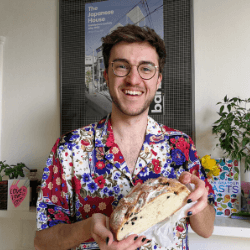
Nick said: ‘Baking has been a big comfort and source of mindfulness/self-care for me during isolation. It’s a non-screen-based activity, it takes up lots of time, it’s a creative output, it makes the flat smell great and it doesn’t matter if it goes wrong because it’s only you eating it!’
2. Jai
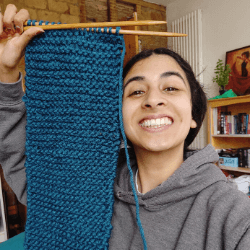
Jai said: ‘I've got a running Hangouts call with some friends while we WFH. I’m also helping out people in my community with my local mutual aid group, having cups of tea in the garden, rearranging my bookcases, and knitting!’
3. Adelaide
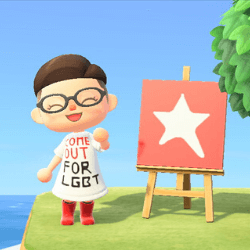
Adelaide said: ‘Like many people, I have been escaping into peaceful video games to take my mind off things. My little character on Animal Crossing makes sure everyone knows that her island is an LGBT-friendly space!’
4. Ez
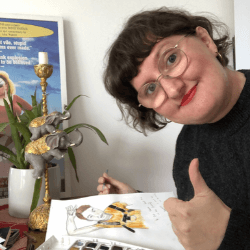
Ez said: ‘I have taken up doing watercolours of butches. I paint during the daily Government update. It’s a way to calm my mind as I process the information as well as helping me deal with how much I am missing all the butches from the Stonewall office.’
5. Yeme
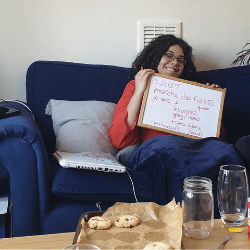
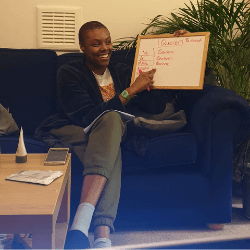
Yeme said: ‘We’ve been keeping busy by having skill swaps. Tajah is teaching Spanish, Mae is teaching French, I’m teaching German, and Tajah and Marcus are teaching sign language. I’ll be teaching some origami soon as well! I’m also moving away from the comfort of knitting scarves to basically knit everyone in the flat a hat, and maybe some gloves if I dare …
We’ve also been learning dances together. We were quite proud of our ‘All in this Together’ dance from High School Musical and we’re now tackling famous KPOP dances.’
6. Tom
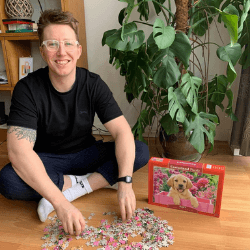
Tom said: ‘With the world on lockdown, losing myself in the simple joy of a puzzle helps me take my mind off things. This one has an adorable puppy on it, and is deceptively hard because of all the blurry foliage in the background.
Sometimes I put on a podcast to puzzle along to – I’m a big fan of the Reasons to be Cheerful podcast with Ed Miliband.’
7. Erin
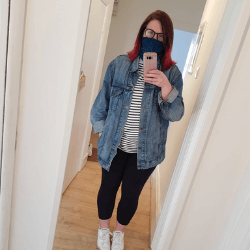
Erin said: ‘I have no plans to shave my head, but I did bleach my hair and then dye it pink. Here’s the evidence – along with a demonstration of the 90s lesbian classic bandana being used in a 2020 way. Perfect for daily walks.’
8. Max
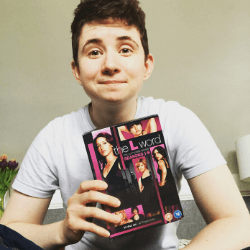
Max said: ‘Me and my flatmates have been dedicating (some of) our evenings to re-watching the L Word. It’s the perfect distraction – we’ve never needed to live vicariously through Shane more than we do now. I also learned how to use self-timer to take this photo, which is another new skill for me!’
9. Ted
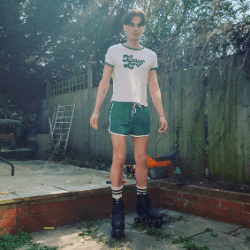
Ted said: ‘During isolation I have been filling my time by bedazzling everything, making beautiful food, and partying with my friends every Friday for Queer House Party. I also learnt how to roller-skate in the garden!’
10. One final suggestion, from our Fundraising team: get your pets involved in meetings!
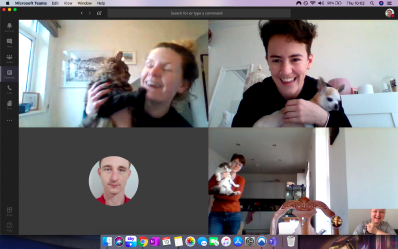
What will you be up to this weekend? Let us know using #StayInForLGBT – we’re all ears.
The COVID-19 pandemic has affected every aspect of life, for everyone in our society.
We are all working and interacting with each other in a way that would have been unimaginable even weeks ago.
Like many other charities, restrictions on Stonewall’s activities and on our ability to raise funds has had a dramatic impact on our organisation.
To ensure Stonewall survives and can continue our vital work through and beyond this pandemic, we are furloughing just over 40% of our staff from this week. This means these members of the Stonewall team will be on temporary leave from work, but we can continue to pay them and keep their jobs in place with the support the Government is offering under its Job Retention Scheme. The Stonewall staff being furloughed work in areas where we are no longer able to continue with our normal activity during the current restrictions the Government have put in place for our safety.
Let me be absolutely clear: the need for our work has not disappeared. In fact LGBT communities, like other minority groups, face unique challenges over the coming weeks and months. That’s why we are ensuring our core services are still there for those who need them. We will still be providing online signposting and support, resources and direct support for teachers, parents and workplaces, and working with LGBT communities and groups throughout this time. Our work with politicians from all parties across the UK similarly continues, ensuring that the voices of our diverse community are heard right at the heart of all the governments across the UK as we find our way through this situation.
It’s a challenging time for all of us. But I know how strong our community is when we pull together, and there is no doubt in my mind that we will come through this stronger than ever. Donations to help us weather this storm are more valuable than they have ever been right now. Donate to help ensure we can keep supporting LGBT communities through this crisis and help rebuild as fast as possible.
Content warning: homophobia, hate crime. The author has asked to remain anonymous.
A few years ago, my wife and I were the intended victims of a neighbour’s pre-meditated but thwarted homophobic attack. Because of a variety of circumstances, we ended up isolating for three weeks whilst the police and others held an investigation.
It had been many years since I had come out, and over that time I had a long journey with my lesbian identity that has included reluctance, shame, intrigue, pride, confidence, and acceptance (not necessarily in that order!). By the time this incident happened, I’d settled into a nice place of self-acceptance and happy visibility. I was happily married, an LGBT network representative at work, and had spoken about my lesbian identity in various media outlets.
But because of the incident, I became all too aware of my identity in another way—it was my visibility as a lesbian that nearly led to physical harm. My ownership over my identity, and thus the visibility surrounding it, was taken away from me – I didn’t have control over how people, even those helping, saw me.
I didn’t want to be The Lesbian Who Escaped the Hate Crime. I wanted to go back to being my office’s LGBT Network role model, the woman who proudly wore her #LwiththeT shirt at Pride, and the team sport coach with the Rainbow Laces, creating a safe space for young players to come out. But that was not safe to do.
Facing new circumstances, my wife and I realised that the best way to regain this ownership – to be safe, at that moment, in the best way possible – was to support each other. In the very acts of loving each other, we were visible, even if only to each other. Even if she was only one who saw me cooking dinner, finding new shows on Netflix, sorting out paperwork, and being me, it was still impactful.
Facing new circumstances, my wife and I realised that the best way to regain this ownership – to be safe, at that moment, in the best way possible – was to support each other.
I realised something important during that time, something that has helped me a lot over the last few weeks: being visible varies. Visibility does not need to be a big public profile or social media post. Sometimes, in some crucial moments, being visible is simply to be. You are visible simply by existing – and that visibility is worth celebrating.
In whatever form it takes, positive visibility can bring huge benefits. Having visible role models in professional fields, entertainment, sport, politics gives us something to aim for. Knowing that other people have survived the same struggles you’re facing can be empowering.
And being celebrated for who you are is an amazing feeling. But all these benefits can only be accessed if there is safety. That’s why Lesbian Day of Visibility is so crucial this year: whilst we want to enjoy all the benefits of being visible as a community, we must be safe in doing so.
As the world battles Covid-19 and adjusts to the challenges it brings, many of us are finding our traditional ways of being visible impossible.
Prides and other community events have been cancelled. Sports clubs or theatre groups which may usually provide us with friendship and safe space cannot meet in person. University classes are cancelled, ripping many LGBT people from safe living spaces. Many LGBT people are isolating in households where it is unsafe to be themselves.
As the world battles Covid-19 and adjusts to the challenges it brings, many of us are finding our traditional ways of being visible impossible.
Visibility takes on a different meaning in these times. Visibility can be writing a blog post. It could also mean reading an article and taking in its points—but it doesn’t have to mean sharing it. Visibility can be checking in with friends.
Visibility can be reaching out to LGBT groups, joining a webinar, participating in online spaces, or accessing aid. It could be leading discussion groups, volunteering in your community, or donating. It could simply be self-care.
Visibility takes many forms. Whatever form it takes for you, your visibility, your pride, and your identity are still valid.
If you can, please donate to Stonewall so we can continue our vital work.
An interview with Sheldon Mills, Stonewall's new Chair of Trustees.
Why did you first apply to become a Stonewall trustee?
For starters, I’d always been attracted to Stonewall because of the fundamental role the charity has played in opening up the possibility that we as LGBT people could be ourselves at work and in the community.
Then, when I was working for the Office of Fair Trading in the early 2010s, I was lucky enough to be sent on Stonewall’s Leadership programme.
Over those two days, I learnt so much about authentic leadership and how as a gay, black man I could be myself in the workplace.
What really struck me was seeing an organisation that could not just hold our community together, but support it to create a social change movement.
It was there and then I decided I wanted to be more involved with Stonewall, so I applied to be a Trustee and was accepted in January 2013.
What makes LGBT equality such an important issue for you?
LGBT equality is really personal for me. For most of my life, I’ve dealt with feeling that I’m different from the rest of society.
Being LGBT is part of this, but it’s also because I come from a mixed heritage background and was one of the first in my family to go to university.
Trying to find my place in the world as an outsider taught me a lot, but also took an incredible amount of energy.
What makes the movement for LGBT equality so powerful is that, at its heart, is a desire to get rid of the barriers we all face to being able to be ourselves, so we can feel like we belong.
So every one of us, regardless of our race, ability, class, gender and sexual orientation, can exist together as a united community.
Even though my family was incredibly supportive of me when I came out, I’ve had challenging moments being myself both at university and at work.
LGBT organisations like Stonewall and the wider community became such invaluable sources of support for me.
I want to do all that I can to make sure LGBT people feel free to be themselves in all areas of their life, all the time.
What are some of the things you’ve been most proud to have been involved with at Stonewall during your time as a trustee?
When Stonewall moved to become trans-inclusive it was a huge moment and I’m so grateful I was a part of making this happen.
If we want our movement to be the strongest it can be, we have to learn from our differences.
As a cis person, it’s important I listen to and learn from the experiences of our trans siblings. In the same way, I hope white LGBT people listen when I talk about what it’s like being a black, gay man.
If we understand all our struggles are connected that’s when real change starts to occur.
For that to happen, we need to share our platforms and bring in the voices in our movement who traditionally have been kept on the margins.
That’s why I’ve also been particularly proud to be involved in our international work, along with our activity to reach a wider set of diverse communities.
The more Stonewall can share our space with as many LGBT communities as possible, the more we can learn and start to find a collective spirit that achieves true equality for all of us.
You’re the first person of colour to be Chair of Stonewall’s trustees. How does that make you feel?
Without a doubt, it makes me feel proud. It’s always scary to be ‘the first’, so I’m grateful that I can look around me and see Lady Phyll leading Kaleidoscope Trust.
I want to use this opportunity to genuinely reach into diverse communities and groups to make Stonewall’s work reflects their voices, experiences and needs.
But at the same time, when you’re a person of colour taking on a senior role, you feel this extra pressure and responsibility to prove you cannot just do the job but do it extremely well.
The fact that I feel this way shows we still have a way to go in getting people of colour into leadership positions across our society.
What have you learned from Jan’s leadership over the past 7 years?
Jan is a phenomenally strong, ethical leader driven by values. She’s incredibly caring and consummate in the way she works with different people and that really matters.
She’s fearless and once Jan decides something is the right thing to do, she will see it through. So, what I’ve really learnt from her is to be clear about what you want to achieve, commit to it and be resilient.
What are some things you hope to achieve as Chair?
Over the past few decades, we’ve achieved an incredible amount of progress when it comes to LGBT equality. From the equal age of consent to civil partnerships and marriage equality, right up to the introduction of LGBT-inclusive Relationships and Sex Education (RSE) coming this September.
In many ways, life has improved for LGBT people in ways that the founders of our movement would have thought were impossible.
However, it’s clear that our work is far from done.
Anti-LGBT bullying remains rife in our schools, hate crime against LGBT people is on the rise and we’ve seen some alarming moves to roll back the hard-won rights of LGBT people in some countries.
We cannot be complacent. Stonewall needs to redouble our efforts to be a beacon for LGBT equality and fight to make sure that LGBT people everywhere can live freely and openly.
We’re all also living through extraordinarily challenging times. The Covid-19 pandemic is affecting us all in different ways, which means Stonewall needs to find new and innovative ways to support our community.
Minority groups are among the hardest hit during a crisis, so our work as a charity over the next year or two is perhaps the most vital it’s ever been. It’s my job to guide the organisation through this difficult period.
What do you think will be Stonewall’s biggest priorities in the coming months and years?
We’re undergoing a change in leadership at a time of global crisis. But that means we have an opportunity to think about the direction of Stonewall for the years to come.
The new Chief Executive and Chief Operating Officer are going to create a new path for this organisation with an energy and spirit that builds on the legacy left by Ruth Hunt, our other previous chief execs and our founders.
Nancy Kelley is the new Chief Executive of Stonewall, and will start working with us in June 2020.
She comes to us from the National Centre for Social Research (NatCen) where she was Deputy Chief Executive and Director of the Policy Research Centre. Throughout her 20-year career, Nancy has built up a diverse record of policy and leadership experience working across the third sector and in Government, including at the Department for Work and Pensions, Refugee Council and Barnardos.
She lives in London, with her wife and two young children as well as two naughty dogs.
Can you tell us a bit about your involvement in LGBT issues up to now?
I’ve not worked inside the LGBT+ sector before, so I’ve got a lot to learn from colleagues at Stonewall and our partner organisations – something I’m really looking forward to. I come from a broad social justice background.
I’ve worked across a range of sectors: mental health, children and young people, refugee rights, poverty and social exclusion.
So professionally LBGT+ issues have been a cross cutting theme: I’ve worked with LGBT+ young people, LGBT+ asylum seekers etc.
More recently, at NatCen I’ve done a lot of work on public attitudes, including public attitudes to LGBT people, as well as supporting research teams to think about approaches to collecting data about LGBT+ communities in a robust and respectful way.
What do you see as the biggest challenges facing the fight for LGBT rights at the moment?
Like other liberation movements (feminism I think is in a similar place) we are at a point where the gains the movement has made aren’t equally felt, or even aren’t equally relevant across our communities.
Some of us have benefited far more from progress in LGBT rights than others. So thinking about how we are genuinely intersectional in our approach, and how we campaign passionately and effectively for the things that matter to distinctive minoritized communities feels essential.
Secondly, it feels like we are simultaneously at a point of great potential and great danger for trans and non-binary people.
Visibility is growing exponentially, and research shows us that the population as a whole has broadly positive attitudes to trans folk: there is real potential for positive change.
But at the same time not only are there huge barriers to trans and non binary people living their lives safely, there are worrying noises coming from government and from the legal system that have the potential to push trans rights backwards.
Those are the issues that are top of my mind as I step into this new role – I’m looking forward to having lots of conversations with colleagues, partner organisations and supporters over the next weeks and months to shape our strategy for the coming years.
Taking up such an important new role in the middle of a pandemic must be challenging. How are you approaching it?
With compassion for myself, for the staff team, and for all the people we are working hard to support.
This isn’t home working, it’s surviving a pandemic, and I think it’s really important to remember that.
That said, there is lots of potential to learn from the way in which organisations and individuals are adapting right now - and every reason to believe that Stonewall will come through this experience stronger and more connected than ever.
Personally, I thrive on relationships so I'm trying to accept that the process of getting to know the Stonewall family might take a little longer and feel a little different than it would if we were meeting and talking face to face.
Above all, I feel incredibly excited and privileged to join this groundbreaking organisation and start working as part of the LGBT+ rights movement.
When did you first become aware of Stonewall and its work?
I can’t remember! I came to live in London in my mid 20s, and had friends who worked at Stonewall (I was a mental health worker, working for MIND), but I knew about the organisation well before I met them.
I can remember volunteering at a Stonewall party to celebrate equalisation of the age of consent. I spent most of the night shaking a bucket to raise money, and spent the end of the night in the VIP area chatting to Jimmy Somerville!
What is your favourite thing about Stonewall?
So many things – and I don’t even know the staff team yet! But it’s a fact that this organisation has made my life possible.
My wife is American, we can live here because of the Civil Partnerships Act. Even more, we have two sons, who are the absolute fulcrum around which I spin.
They’re adopted, because Stonewall made that into something that people like me (and you) can do.
The last few weeks have seen people of faith mark significant annual festivals.
The last few weeks have seen people of faith mark significant annual festivals. Pesach, Lent and Easter, Ramadan and Eid, and Beltane to name just a few. These are usually times for people to join together, to share food and worship, and to feel connected as a community. But this year, celebrations have had to change due to lockdown and restrictions on public meetings or visiting family.
As a member of Stonewall’s staff faith and belief network, I wanted to find out how other LGBT people of faith were managing lockdown and what was sustaining them. But I also discovered how their experiences have something to offer us all.
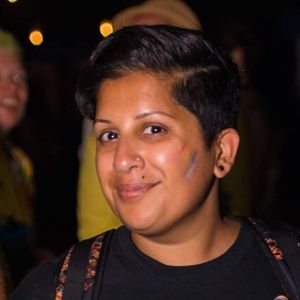
Farina
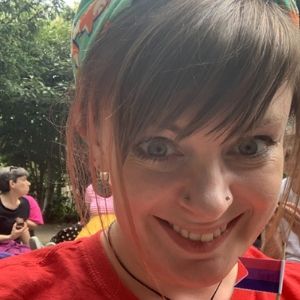
Kathryn
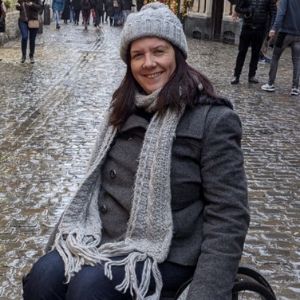
Naomi
What difference has lockdown made to how you practice your faith?
“I think that my faith is what's most been impacted by lockdown. Being a Jew is about being part of a community. It's very hard to be a Jew in isolation, without access to my typical routine of synagogue on Shabbat. Pesach was particularly hard, as I'm currently staying with my partner's family who aren't Jewish. While they would have been happy to have a proper Seder, it didn't feel the same and the week passed mostly unobserved.” (Sascha)
Church, which in the past I rarely felt brave enough to attend, is now coming to my home.
“Attending church has always been difficult for me, and often painful, as I have dealt with exclusion from churches not only as a queer Christian but as a disabled Christian too. In some ways, lockdown hasn’t changed much for me. In other ways, it has changed everything. My local church has been the one bright spot in this difficult time, while I’m completely self-isolating because I’m high risk. Church, which in the past I rarely felt brave enough to attend, is now coming to my home. No steps or closed doors bar the way to worship anymore. And being autistic during a streamed Sunday service is much easier than being in a physical church.” (Naomi)
“As a Pagan, community is very important to the way I celebrate, so being apart has been difficult. Celebrating Beltane via video call was odd, but seeing everyone in their houses, with candles instead of a fire, was quite special. Having a nature-based faith, and not being able to get out in nature is challenging. I am lucky to have access to a garden, to grow things and feel the seasonal shift. When it’s safe to do so, I’m looking forward to getting out into the hills, the woods, and lochs and sharing that with folk from my community, even if we have to keep two metres apart.” (Kathryn)
“Lockdown hasn't affected me personally as much in terms of how I worship, however it has made me seek more virtual connection than normal. What's been more challenging during Ramadan is not being able to move freely or to share experiences with fellow Muslims who may also be fasting. Eid is normally a time of being around family and friends, visiting one another's houses and eating a lot of food! So having to spend Eid alone, would have been very difficult for some.” (Farina)
What can LGBT people of faith offer to wider faith communities, or LGBT people, struggling with lockdown or isolation?
LGBT people of faith offer hope, a way to connect with God on a level that takes people away from lockdown.
“LGBT people of faith offer hope, a way to connect with God on a level that takes people away from lockdown and all it brings. We also offer spirituality and opportunities for people to take their mind off work, mental health stresses and any other restrictions they may be facing. I’m involved with [LGBT Muslim group] Hidayah, who have been offering a valuable online space during this time, including a virtual Iftar, film nights and an online informative session on the importance of Ramadan.” (Farina)
“I think LGBT people of faith offer perspective in how to handle difficult circumstances. I find solace in seeing faith groups organising food for NHS workers, and planning contributions to online Pride celebrations. There is strength in the intersectionality of LGBT people of faith, and the manifests in an openness and willingness to help our wider communities during this crisis.” (Kathryn)
We see a lot of misinformation and ‘debate’ about trans people. But actually when it comes to the data, it is clear. The majority of people, and specifically women, support trans rights.
As Stonewall’s new Chief Executive, and one with a penchant for data, I want to show you how the numbers – which show that most people, particularly women, are supportive of trans people - do not add up to the narrative we see in the media.
I will be using data from the British Social Attitudes (BSA) Survey, which is the highest quality available data on the general public’s views of LGBT+ people and relationships (full disclosure: I helped write and edit the report I’m referencing in a previous role).
The first thing to note from the BSA data is that the public do not like to see themselves as being transphobic – 83% say they are “not prejudiced at all” towards transgender people, compared with just 15% who describe themselves as “very” or “a little” prejudiced’’.
What does this tell us? Well – it tells us people don’t think being prejudiced against trans people is a desirable characteristic, and that proud transphobes are a minority group.
About half of us (49%) think prejudice against trans people is “always” wrong, compared with just 6% who feel it is “rarely” or “never” wrong. A third (34%) have more mixed feelings and say prejudice against trans people is only “mostly” or “sometimes” wrong.
So, the majority of us don’t want to be seen as transphobic, but when it comes to prejudice against trans people in our society we are less clear that it is always a bad thing.
A good example of how this plays out in practice can be seen in some older BSA data, where despite an overwhelming majority describing themselves as ‘not at all prejudiced’, just four in ten supported the idea that a suitably qualified trans person “definitely should” be employed as a police officer or primary school teacher (43% and 41% respectively).
And this isn’t a new phenomenon. In fact, what we can see happening for trans people now is very similar to how many people would have seen lesbians like me a few years back: we don’t hate you, but we don’t really want you teaching our children.
And while I’m using ‘us’ and ‘we’ here a lot here to talk about the British people, there are some really important differences in how people respond to these questions based on other things about them.
In line with other public attitudes (to lesbian and gay relationships, to abortion, to sex outside of marriage), some groups have more socially liberal views about trans people. Who are they? Well, younger people, non-religious people and people with higher level educational qualifications are all more likely to have positive views of trans people.
Oh, and women. Yes, women are more likely to have positive views of trans people. This is neatly illustrated in the earlier data, where 72% of women said that they were “very” or “quite comfortable” sharing a toilet with a trans woman, compared to 64% of men who were “very” or “quite comfortable” sharing toilets with trans men.
Let’s just sit with that one for a minute shall we? The current narrative of ‘women feel threatened by trans rights’ that is the cornerstone of anti-trans rights campaigns, simply doesn’t stack up with the evidence we have.
So, this is the bigger picture, backed up by solid data, that we are having these hard, heated and often deeply toxic conversations within. I also want to send my love to trans folk living in the UK right now who are seeing their existence and identity picked apart and debated across the national media.
It won’t take away the hurt, but I want trans people to know that the real picture is very different to what we are led to believe. The British public don’t like transphobia (even though sometimes members of the public can be transphobic), and half (49%) of the public feel that prejudice against transgender people is always wrong.
Despite the media narratives, misinformation and toxic debate which is making daily life harder and more gruelling for trans people – this evidence does shows that we are making progress. We can’t have equality unless it is equality for everyone, and we need trans allies to show up for our trans siblings now.
If you are in support of trans rights, please be loud and proud about it. While the Government has confirmed they won’t be rolling back trans rights, they will be announcing their plans for legal recognition for trans people over the ‘summer’.
So, it’s really important that MPs understand why supporting trans equality is important. You can help build support by contacting your MP this summer and asking them for a meeting to talk about trans equality.
Please call your MP’s office and ask for a meeting this summer. Together we keep up the pressure on the Government to support trans equality.
Today, all of us at Stonewall are celebrating RSE Day.
If you haven’t heard of it before, that’s OK! RSE Day was created two years ago by Nottingham City Council and now, with the support of the Sex Education Forum, it seeks to improve the quality of relationships and sex education provided for children and young people by highlighting best practice in this area.
RSE is a subject very close to our hearts here. We were founded back in 1989 to oppose Section 28 – the devastating law that banned local authorities from ‘promoting homosexuality’.
Without any recognition or inclusion, and with teachers essentially banned from reprimanding those used anti-LGBT language, bullying flourished and scarred a generation of young people. Schools couldn’t even acknowledge our existence, let alone talk about the challenges we faced.
The struggle to repeal Section 28 took years and Stonewall was there every step of the way. It only left the statute books in 2000 in Scotland and 2003 in England and Wales.
The damaging impact of this legislation is still felt in school hallways and classrooms across Britain. Stonewall’s 2017 research showed that two in five (40 per cent) of LGBT students are never taught anything about LGBT issues.
Our 2020 Shut Out report also revealed how unwelcoming school environments can contribute to young LGBT people not being in education, employment or training.
Teaching about LGBT families not only means children from these families see themselves reflected in what they learn, but also helps all young people understand that there’s nothing wrong or unusual about being LGBT.
For years, Stonewall’s Education and Youth team has worked to bring lasting change to education institutions and wider children and young people’s services.
Our aim is to create LGBT-inclusive environments, free from anti-LGBT language and bullying. It’s through our School & College Champions Programme that we provide LGBT-inclusive research, resources and guidance for schools and colleges and work with staff and students alike to help them understand what steps they can take to celebrate difference in their hallways and classrooms.
We know this work is absolutely vital as nearly half of LGBT young people (45 per cent) are still bullied for being themselves in school, while the majority of LGBT pupils (86 per cent) regularly hear language like ‘that’s so gay’ in school.
What makes this year’s RSE day extra special for us is that we’re coming to the end of our decades-long campaign to get an inclusive education system in England.
New regulations for RSE in English schools were due to come into force by September 2020, however, due to the COVID-19 pandemic, this has been delayed, where schools will now be expected to have begun this teaching by the start of the 2021 Summer term.
When this happens it will be the dawning of a new era – a whole generation will attend schools that not only accept LGBT people and same-sex relationships, but also celebrate and offer support on the issues that young LGBT people face.
By teaching about LGBT families in primary Relationships Education and building on this work in secondary RSE, schools are helping prepare young people for life in 21st century Britain
However, we should be under no illusions that this all will be plain sailing and there won’t be groups trying to derail progress.
A vocal minority seek to spread misinformation and play on old-fashion fears that ‘impressionable’ young people will be influenced if LGBT issues are discussed openly. Today and every day moving forward, we must be vigilant to this and re-affirm the importance of this teaching.
Inclusive teaching is an affirmation that you exist, and that your identity is valid. It’s about acceptance for people from all backgrounds – be that race, gender, sexual orientation, faith, class and/or disability.
Inclusive education helps to create inclusive communities. If all schools teach acceptance – no exceptions- then that would be a good first step to heal some of the division that we’ve seen in society over the past decade.