
Blog
This Bi Health Month we spoke with Hafsa (she/her) about her experiences in healthcare and heard about why bi inclusion is crucial for bi people’s wellbeing.
This article talks about biphobia, and mentions mental illness, suicide, domestic violence and sexual abuse.
My name’s Hafsa, I’m a bi Muslim woman and I work as a Client Account Manager at Stonewall. I’m also disabled and a person of colour. All of these adjectives together have affected the type of healthcare I have received. From being told I was a ‘bad Muslim’ for trying to end my life, that I’m going to hell for loving another woman, and many, many speculations about my perceived sexual activity. All by medical professionals.
When I was younger, I had more belief in the authority of medical professionals. I trusted their words, without question. As I have gotten older and been more open about my identity as a bi Muslim, that perception has changed. I can no longer deny that who I am is unacceptable to some in the care of the health and wellbeing of others. I can no longer deny that to many, I am a curio. An oddity. An exotic bit of gossip over lunch. I am often stripped of my personhood, for existing as the person I’ve always been.
I can no longer deny that to many, I am a curio. An oddity. An exotic bit of gossip over lunch. I am often stripped of my personhood, for existing as the person I've always been.
The LGBT in Britain – Bi Report found that over 20% of bi people in Britain have experienced inappropriate curiosity from healthcare professionals when trying to access care. And that’s us bis that got as far as trying. Some of us have had such bad experiences that our faith in medical professionals has all but diminished. Trans and non-binary people report having the onus put on them to educate their GPs, with one activist and community expert stating, ‘at best you’re being misgendered, but at worst people don’t know how to engage with your body.’ (TRANSforming Futures, Trans Healthcare Report.)
I have been treated as ‘crazy’ for struggling with depression and suicidal ideation. Because that’s not what good Muslim women do. I have been told to pray more and drink water by the same Doctors that denied me anti-depressants as a teenager. And unfortunately, I am not alone in that experience. Bi people are more likely to report mental health problems than gay and lesbian people (LGBT in Britain – Bi Report). And most damning of all, 50% of bi people reported that life wasn’t worth living. That’s half of us. Half of us are in crisis, and we’re not talking about it enough.
And most damning of all, 50% of bi people reported that life wasn't worth living. That's half of us. Half of us are in crisis, and we're not talking about it enough.
I am not some niche case. When people hear ‘bi Muslim’ they assume there’s about 3 of us in the UK, so what’s the big deal? The Bi Report found that 30% of our bi respondents identified as people of faith. You don’t often hear about people like me, because we are forced to stay or go back in the closet from the biphobia around us. And when it permeates our healthcare, that effect is tenfold. Biphobia is not ‘homophobia-lite’. It is omnipresent and actively harmful, especially when it prevents us from accessing the healthcare we need. For example, in a focus group about PrEP (pre-exposure prophylaxis) with gay and bisexual men, some participants held the attitude that PrEP users are ‘promiscuous, irresponsible, immoral and naïve’. These words are often used to stigmatise bi people.
The Bi Report found that 30% of our bi respondents identified as people of faith. You don't hear about people like me, because we are forced to stay or go back into the closet from the biphobia around us. And when it permeates our healthcare, that effect is tenfold.
Promiscuity has been part of the ‘bi discourse’ for a long time. Some people say bi people are greedy, overtly sexual, and indiscriminate about who we sleep with. But even if those things were true, why is that a bad thing? Surely those of us with multiple sexual partners should be encouraged to seek better sexual healthcare, not shamed for needing such care in the first place. And these stereotypes erase bi ace people completely. Even raising these issues with a healthcare professional can prompt unhelpful discussions about what is or isn’t an ‘appropriate’ level of sexual activity.
Some people say bi people are greedy, overtly sexual, and indiscriminate about who we sleep with. But even is those things were true, why is that a bad thing?
As bi people, we are at a higher risk of domestic violence and sexual abuse than LG people, with 13% of us having experienced unwanted sexual contact (LGBT in Britain – Bi Report). Biphobia makes it that much harder for us to seek vital support. It is more difficult for us to be taken seriously when the very existence of bi identities are still being called into question.
If you’re reading this and want to help bi people, here are ways you can be an active ally for us.
If you’re bi and you’re reading this, know that you’re not alone. You’re not ‘overreacting’. Your feelings are valid. Switchboard is here to listen, and if you wish to speak to an LGBT+ mental health professional, there are resources available.
Let’s do better for the bi community.
Visit our Bi Hub.
Content warning: conversion therapy.
New research, overseen by an independent research monitor, has revealed that gender diverse people – normally children or young adults - are severely harmed by so-called “conversion therapy”.
The ground-breaking study was conducted last year by a coalition of LGBT+ charities in conjunction with Richard Matousek, an independent research monitor, and shows that Gender Identity “Conversion Therapy” (GICT) is more widespread and often more violent than has previously been understood.
Many respondents reported going through conversion practices as children, in some cases when respondents were younger than 12. Whilst many of the respondents who went through GICT did so in a religious context, there were also historical reports of some NHS providers recommending certain conversion practices.
The research involved 450 respondents who stated that their gender identity did not match the sex assigned to them at birth. This included 170 respondents who identified as non- binary. In total 64 people had been offered Gender Identity “Conversion Therapy” and 39 had undergone it. Of those, nearly half had been forced through it.
This research shows the devastating impact of so-called “conversion therapy” on gender diverse people.
Jayne Ozanne, who was responsible for forming the coalition, explained: “This research shows the devastating impact of so-called “conversion therapy” on gender diverse people, and the harm that they have so often been forced to endure. We are particularly concerned about the role that religion has found to have played, both in terms of motivating an individual to pursue to and also in terms of those practising it. It is critical that any future government legislation gives clear protections to gender diverse people.”
The UK Government must not leave these people out in the cold.
Commenting on the results, Eloise Stonborough, Associate Director of Policy and Research at Stonewall said: “The survey findings are eye-opening and heart-breaking. Those who had gone through Gender Identity Conversion Therapy experienced a range of harmful practices, including isolation, forced feeding, beatings, and sexual violence. This is happening to both children and adults, with over half being under-18 at the time they underwent so-called ‘conversion therapy’. The UK Government must not leave these people out in the cold. We urge them to make good on their commitment to ban conversion therapy and ensure no more gender diverse people have to go through such damaging, demeaning and degrading practices.”
Richard Matousek volunteered as an Independent Research Monitor for the project and provided a framework for the results to be analysed. Commenting on the findings he said: “This report presents ground-breaking data on the effects of Gender Identity Conversion Therapy (GICT) in the UK. The data (which should be approached as qualitative and demonstrative rather than as statistically robust quantitative data) give important, rich insights into what some gender diverse people have been suffering up to now.”
The research is consistent with the government’s own 2018 LGBT Survey, which found that “trans respondents were much more likely to have undergone or been offered conversion therapy (13%) than cisgender respondents (7%)”. The Secretary of State, Rt Hon Liz Truss, has promised that the UK government will bring forward legislation for a ban on “conversion therapy” shortly.
Together we can put an end to conversion practices. Donate today and help us secure a legislative ban on this damaging practice.
This Trans Visibility Day we’re shining a light on five fights for trans equality. In this article you will hear from trans individuals and organisations about their experiences, their resistance to transphobia and their vision for trans equality.
Please note that this article talks about transphobia, transphobia and racism in healthcare, the impact of transphobia on young trans people and conversion therapy.
In the last few years, we have seen attacks on trans rights in government, the media and on the streets. But trans people and their allies have been fighting for a long time and will continue to build strong communities and speak up against transphobia.
1. The fight to simply be ourselves!
Tara, one of Stonewall’s Trans Staff Network co-chairs shared that "most trans people have fought hard to live as their authentic selves. The world has a long way to go to ensure trans people are treated equally in society, from protecting us by law to ending transphobia in our day to day lives. Cisgender people do not have to fight to be accepted in this way.
Despite the challenges, however, trans people can and do prosper. Trans people live full and happy lives. People fight for what holds value to them, and nothing is more valuable than the right to define who you are, and to be treated equitably not despite it but because of it.”
2. The fight for trans Black, Asian and Minority Ethnic and People of Colour’s (BAME/PoC) access to support.
Inequalities that already existed have ramped up during the Coronavirus pandemic for the most marginalised LGBT+ people. In an article from BAME/PoC working at Stonewall, it says: ‘Appropriate therapy is also difficult to find. This is particularly worrying when LGBT+ people are at a higher risk of experiencing common mental health problems than the general population. For instance, 52 per cent of LGBT+ people experienced depression in the last year, increasing to 62 per cent of BAME LGBT+ people. QTIPOC experience a lack of support from the predominantly white staff of health professionals, who aren't only guilty of racist and heteronormative microaggressions, but simply fail to understand or be sensitive to the specific needs of QTIPOC.’
Groups and organisations like the Black Trans Foundation, have provided essential support to Black trans people throughout the Coronavirus pandemic. They are a Black trans-led non-profit organisation offering free four-month courses of therapy to Black trans and non-binary people aged 16+.
If you can, donate to Black Trans Free Therapy fund and follow their page on Instagram.
3. The fight for trans-inclusive education.
Koda (he/him) is a young, working class LGBT+ person speaking up about bullying in schools. He spoke to us about how important it is that young people within the LGBT+ community are informed and supported through inclusive relationships and sex education and across the curriculum. Read his full story.
He shared, ‘I always felt like the school was told to keep our [trans people’s] existence on the down low. Even a simplified explanation of the LGBT+ community, just “we’ll accept you and help you”, could bring down suicide rates for young trans people…I just want people like you- yes, you who’s reading this- to feel safe being who you are.’
We have much more to do, to protect and support young trans people. Read and share Koda’s message of inclusion, acceptance, and safety for all LGBT+ young people.
4. The fight for access to healthcare.
A TRANSforming Futures report on trans people’s experiences of healthcare details many problems faced by trans people in healthcare and highlights participants’ proposed solutions. Nim Ralph, an activist and community expert said, ‘at best you’re being misgendered, but at worst people don’t know how to engage with your body.’
Even accessing support from a GP for general or trans-specific healthcare can be a challenge. One participant in the trans people of colour workshop said, ‘you have to think 20 steps ahead, which creates anxiety. You have to police yourself in how you present information, and minimise your feelings.’
Everyone should feel safe and supported when accessing healthcare and be able to trust they will be heard. Read the full report.
5. The fight to be protected against conversion therapy.
The campaign to Ban Conversion Therapy is working. Recently, Liz Truss committed to ending medical, psychiatric, psychological, religious, cultural or any other interventions that seek to erase, repress or change the sexual orientation and/or gender identity of a person.
It is still legal for LGBT+ people to be emotionally, mentally abused through so-called ‘conversion therapy.’ Trans survivors of conversion therapy like Carolyn have shared the impact of this cruel practice and new research highlights trans people’s stories of surviving conversion therapy.
The LGBT in Britain – Health report found that 7% per cent of LGBT+ people have been offered or undergone conversion therapy, with trans respondents almost twice as likely to have undergone or been offered conversion therapy (13%.)
You can help secure a full, legislative ban which includes the protection of trans people against conversion therapy.
The fight for trans equality continues, and it will take all of us to secure a better future for trans communities.
Koda Sparkes (he/him) is a young, working class LGBT+ person speaking up about bullying in schools.
He spoke to us about how important it is that young LGBTQ+ people are informed and supported through inclusive education and across the curriculum.
Koda is proudly part of Reclaim’s Change Makers, a group of young working-class people fighting for change. Koda wants to make sure young, working class trans people’s voices are heard.
What made you want to campaign for LGBT+ inclusion in schools?
First off, the fact I hit 20 and have only just learnt about the process for getting T-shots (Testosterone.) I had to do a lot of my own research to find information about transitioning, and came across a lot of misinformation. But I have a feeling I’m campaigning because the amount of bullying I went through in high school from people who didn’t understand.
I got the usual questions, like 'how do you know you’re trans?' and 'how do you know you’re Bi if you haven’t slept with anyone”. I was the subject of name calling, I got called it all. Every time the teachers and parents would always say ‘boys will be boys’ and ‘they’re just being kids’. I want people to understand that those words snowball in our minds and can lead to young trans people’s suicides. Nearly half of trans people have have had suicide behaviours (Stonewall’s School Report). I want people like you- yes, you reading this- to feel safe being who you are.
How do you hope things change for the better?
I want to be able to teach students, teachers and parents about the LGBTQ+ community, even if it’s just an extra PSHE (Personal, Social, Health and Economic) lesson. Sure, we learn about knife crime and bullying, but the only hate crime I ever learnt about was the Sophie Lancaster case (may her soul be at rest), but that was it. We went straight to learning about time keeping. I always felt like the school was told to keep our existence as trans people, and all LGBT+ people on the down low.
Even if young people hear a simplified explanation of the LGBT+ community or the message that 'we’ll accept you and help you,' we could get those suicide percentages down, even if it's by a little.
I want to change the way schools handle homophobic, biphobic and transphobic bullying too. I get where they’re coming from with zero tolerance rules, but it doesn’t make a real difference if the bullies are not educated about LGBTQ+ people and the impact of their actions. There should be assemblies too, talks by people in our community about their life experiences including trans people. All of this would make LGBTQ+ youth feel more accepted.
What message would you give to other young LGBT+ people?
As a final message to all of you: you will be heard, you are being heard, we are all listening, and we all accept you. We are here for you and you’re not alone.
Stonewall School and College Champion members can access resources and e-learning. Share this article to support Koda’s message of inclusion, acceptance, and safety for all LGBT+ young people.
If you are a trans young person or have a trans young person in your life, and want to learn more or seek support, you can contact Mermaids.
You can also read our Q&A about trans people’s experiences in the Truth About Trans guide.
How much do you know about asexuality, and how can you be a good ally to asexual people?
What is asexuality?
Asexuality is a spectrum. Here are a few terms to know:
Somebody who is asexual does not experience sexual attraction to anyone.
A grey-asexual (grey ace/grey-a) person may experience sexual attraction very rarely or only under specific circumstances. Demisexual people only experience sexual attraction after developing a strong emotional bond with someone.
Similarly, somebody who is aromantic does not experience romantic attraction and a grey-romantic person only does very rarely. Demiromantic people are only romantically attracted to those they’ve emotionally bonded with first.
How does that work?
People experience lots of different kinds of attraction. When it comes to relationships, the main kinds of attraction we tend to notice and talk about are sexual and romantic attraction.
Most people experience both at the same time towards the same people – feeling romantically attracted to someone usually means also being sexually attracted to that person.
For those who are ace-identified, and for some bi people, sexual and romantic attachment is not always matched so neatly.
Asexual people may not experience sexual attraction but may still experience romantic attraction. Likewise, aromantic people may not experience romantic attraction, but may experience sexual attraction. It’s also possible to be both asexual and aromantic.
Is asexuality the same as celibacy?
Asexuality should not be confused with celibacy. Celibacy is a choice to abstain from sex, whereas for some asexuality is a lack of sexual attraction. Those who do not experience sexual attraction may choose to have sex for other reasons.
Some asexual people may find sex off-putting, commonly referred to in the ace community as sex-repulsed. They may abstain from sex, but others feel positively towards it. As with all other sexual encounters, consent is the part that counts.
Three common myths about asexuality
Ace people do not have relationships: people on the asexual spectrum may have relationships for a number of reasons, including romantic attraction. Grey-A and demisexual people may experience sexual attraction at times, while some ace people choose to have a close emotional intimacy with someone, beyond that of a friendship.
Ace people have intimacy issues: ace people are often told they're defective because they don’t experience attraction in the way others do. Some ace-identified people might choose to have close emotional or romantic bonds and others won’t – in either case, this is not evidence of them being broken or having a disorder.
People ‘grow out’ of being ace: like being a lesbian, gay, or bi, being ace is about orientation, not about behaviour. While people might change how they identify over the course of their lives, being ace isn’t a ‘phase’ and there are plenty of older ace people. One of the biggest myths about ace people is that they ‘just haven’t met the right person yet’, which can be particularly damaging to hear.
Six ways to be a great ace ally
There needs to be more research carried out, but surveys conducted by the international ace community show that a lack of acceptance and society’s misunderstanding of what asexuality is have a huge impact.
High rates of suicidal ideation and attempts, familial rejection, and attempts at conversion by friends and family are reported by ace people. By being an ally, you can help make things a little easier.
Here’s how to support the ace people in your life:
- If someone comes out to you as ace, believe them
- Read up on ace identities – you’re already on this blog, so that’s a great start! AVEN is another great online resource
- Don’t assume everyone needs sex or romance to be happy – let them choose their own path. Accept their relationship choices and support them as you would anyone else
- Remember that ace people may have an additional identity. An asexual person who is romantically attracted to people of the same gender may refer to themselves as gay. An aromantic person who is sexually attracted to all genders may identify as pan.
- Don’t ask intrusive questions about someone’s sex life. It’s not OK to do this to anyone, ace people included.
- Call out ace-erasure and acephobia where you see it and educate others along the way.
At Stonewall we’ve just started working towards ace inclusion.
We want to be ace-inclusive, but we want to do it properly.
We have an Ace Staff Network which is primarily for peer support but is helping to guide the organisation’s journey towards ace inclusion.
We know from our ongoing work to become trans inclusive that this will require significant time and attention, but we are determined to achieve ace inclusion in a meaningful way.
Last month, we were incredibly disappointed and concerned to see that the Rugby Football Union for England published a new trans and non-binary participation in rugby policy proposal alongside a consultation which asked for feedback.
It is extremely upsetting to see the Rugby Football Union publish this policy and consultation without input from trans players, robust evidence, and without any transparency into how these decisions have been made. It is even more upsetting that this policy and consultation was published on Wednesday March 31st, the date which marks Trans Day of Visibility.
In September 2018, we began a two year partnership with England Rugby to help make rugby an inclusive sport for all LGBT+ people. Our work together showed widespread support for trans inclusion across all levels and areas of rugby, and it is disappointing that this is not reflected in this proposal.
The new proposals would introduce rules based on height and weight monitoring for trans women, as well as exclusionary measures that would affect trans men and non-binary people.
Measuring anyone by their height and weight is reductive, but only asking trans women to be measured by this standard would be discriminatory and exclusionary. The research which forms a basis for these measurements took average measurements based on white cis women. We know that athletes, and those who play rugby regularly, typically have different body types than the average population. That means that in reality, this policy would result in trans women being required to be shorter and lighter than many of their cis teammates.
As well as this, measuring athletes by their height and weight goes against one of rugby’s core values - that bodies of all shapes and sizes are respected, welcomed and valued in the game. It is this environment of inclusion which attracts so many people, especially women and non-binary people to join the game in the first instance. That’s what makes rugby so great – and this policy so concerning.
We know the RFU can do better.
We know the RFU can do better. In our years of working with them we’ve commended players, staff and coaches for creating playing environments that celebrate what it means to be diverse. This proposal risks undermining the core principle of respect on which rugby is built upon. We love the game, and if you do too, there’s a way to help.
The Rugby Football Union are asking for feedback on these new suggested rules before their deadline of 5th May. We will be submitting a response to the consultation and continuing to discuss the principles of inclusion with the RFU – this is your time to get involved too!
Share the hashtag #RugbyForAll, and tell the RFU no to transphobia, and yes to inclusion!
Part of a rugby club and want to respond to the consultation? Get in touch with International Gay Rugby and support their statement.
Everyone deserves to be welcome and respected playing their sport.
Everyone deserves to be welcome and respected playing their sport, and no one should face additional barriers to the game just because of who they are.
At Stonewall, we will keep fighting with our community until every trans woman, trans man and non-binary player is supported and valued in the sport that they love.
The Scottish Parliament election is fast approaching and it’s crucial that LGBT+ people and their allies are counted.
Make your voice heard and ask your candidates to advocate for these five areas of LGBT+ equality.
We’re asking candidates to pledge their support for five key areas of LGBT+ equality. By making your voice heard, you can help us make sure that as many MSPs as possible in the next Scottish Parliament are committed to LGBT+ equality.
We’ve also worked with partners across the movement to publish a full manifesto which sets out our priorities for progressing and protecting equality.
1. Gender Identity Services
Unacceptably long waiting lists for trans people accessing gender identity services was a problem before the pandemic, with waits often taking two years for a first appointment. Since then, the situation has become even more critical. Some clinics now forecast 35-40 month waits.
Mason (they/them) is a cultural worker in Glasgow. They told us about losing access to their gender clinic during the pandemic. They said:
‘The redirection of efforts to combat the health crisis has left under-funded parts of NHS services even less able to cope with ongoing stresses of patient demands, and I am certain that the closure and postponement of services such as the gender clinic has contributed to additional and unnecessary pain, anxiety and poor health in my community.’
We know that the period of waiting for a first appointment is a time when trans people are more likely to experience high levels of distress, self-harm, and suicidal ideation. Scotland must take urgent action to address the waiting list crisis and the harm it causes to trans communities. We’re asking for reforms to NHS gender identity services, so they are fit for purpose and meet the needs of trans people, and for these services to be properly funded.
2. LGBT+ Rights
Whilst progress has been made for LGBT+ rights, Scotland has work to do.
We know that trans communities have fought long and hard to achieve the recognition, respect and rights that continue to be threatened. The unfinished business of Gender Recognition Act (GRA) reform must be taken forward in Scotland, so that all trans people are able to access Gender Recognition Certificates without intrusive, and drawn-out processes.
Conversion therapy also continues to cause pain and trauma to LGBT+ communities in Scotland. We are calling on candidates to commit to a full, legislative ban so that all LGBT+ people are protected from this abusive practice.
3. LGBT+ Mental Health
Evidence shows that LGBT+ people are more likely to experience poor mental health than the rest of the population. Yet, unfortunately, LGBT+ people do not always feel safe accessing support due to homophobia, biphobia, and transphobia in mental health services.
We’re calling on candidates to help tackle LGBT+ mental health inequalities and wider inequalities in access to health and social care services.
4. LGBT+ Inclusive Education
Scotland has pioneered incredible work on LGBT+ inclusion in schools, but it’s crucial that the implementation of the suite of recommendations on LGBT inclusive education continues, and is fully delivered with the funding it requires.
Effective implementation is vital for LGBT+ generations of the future to be safe and supported. That’s why we’re calling on candidates to support LGBTI young people to flourish in schools through backing the continued implementation of inclusive education.
5. Standing up for all LGBT+ people
We know that the experiences and outcomes of LGBT+ people across the community are not equal. For example, LGBT+ people of colour, disabled people and trans people often face poorer outcomes than the rest of the community. In taking action to improve LGBT+ equality, the specific barriers facing LGBT+ people across our diverse communities must be addressed.
We’re asking candidates to pledge that they will stand up for all LGBTI people, including the most marginalised – LGBTI people of colour, refugees, disabled people, older people, and trans people.
Use your vote and your voice to lift up the key issues for LGBT+ people, including those most marginalised and underserved, you can be part of putting LGBT+ equality on the agenda.
This Lesbian Visibility Week, take some time to get to know the lesbians of colour who are making history – in music, sport, comedy, writing, social justice and community organising to name but a few fields.
Let’s celebrate and support the work and creativity of lesbians of colour in the UK today. Like and follow their pages and listen to what they have to share. Use the hashtag #LesbianVisibilityWeek to uplift lesbians of colour in your life, or lesbians of colour you think others should know about.
1. Jackie Kay (she/her)
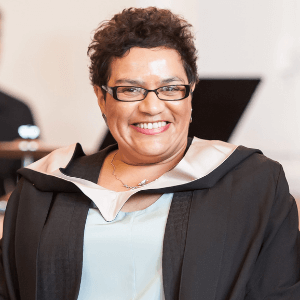
Jackie Kay is an incredible poet, award winning author and playwright, winning a CBE for her contribution to literature. As a Scottish lesbian, Jackie Kay is an icon!
Check out her work and follow her on Twitter.
2. Phyllis Opoku-Gyimah (she/her)
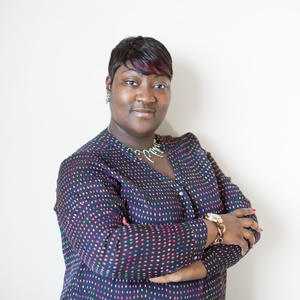
Phyllis, aka Lady Phyll is a pioneer and leading force as the founder of UK Black Pride. Lady Phyll is notably known for her activism around race, LGBT+ equality and intersectional experiences.
Find out more about UK Black Pride and follow Lady Phyll for empowering and inspiring content on Twitter and Insta.
3. Gina Yashere (she/her)
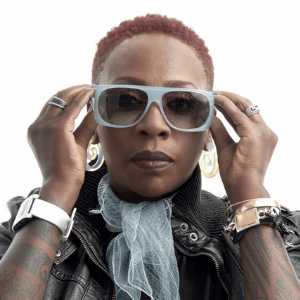
Gina Yashere is a hilarious and inspiring British-Nigerian comedienne who often includes experiences of racism and challenges faced as a Black woman in her sketches. Gina Yashere is not only a household name, but easily a fashion icon in the queer scene.
Check out her work and fill your feed with comedy gold by following her on Twitter and Insta.
4. Corinne Humphreys (she/her)
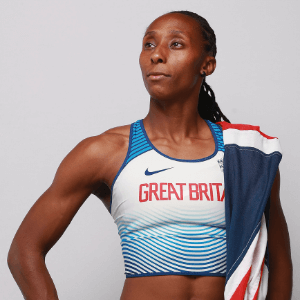
We are exceptionally proud of our very own Stonewall Sports Champion, Corinne. As a gay British sprinter, Corinne continues to advocate for LGBT+ equality and pushing to make sport everyone’s game, encouraging LGBT+ people to get involved.
Follow her on Insta for some sporting LGBT+ inspo.
5. Saima Razzaq (she/her)
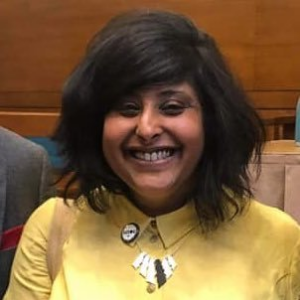
Saima is a leading community activist and founder of Boatel Birmingham “A floating hotel & kitchen in the heart of Brum City Centre.... providing waterways access for Black People & People of Colour”. Saima is notably known for advocating LGBT+ inclusive education and was the first Queer Muslim woman to lead a pride event in the UK. Follow Saima on Twitter.
6. Char Bailey (she/her)
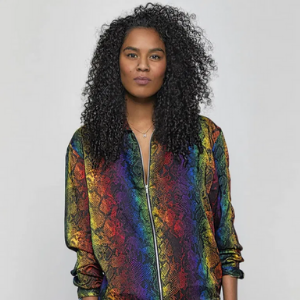
If there is anyone that wears multiple hats, it’s Char Bailey. Advocate for mental health and autism, personal performance coach and co-host to Apple award winning podcast Qmmunity. Char is also an Education and Inclusion Officer for UK Black Pride, as well as a workshop facilitator in schools, focusing on self-awareness, confidence and resilience.
Learn about the diversity of Char’s work.
7. Denise Henry (she/her)
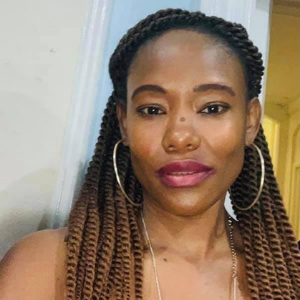
Co-founder of the National Education Union’s Black LGBT+ Educator's network, the only network of its kind. Denise (she/her) is a champion for working hard to show LGBT+ education staff are represented in their trade union and profession.
Check out her Twitter.
8. Amazin LêThị (she/her)
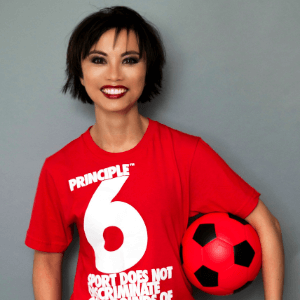
Another incredible Stonewall Sport’s Champion that we are proud to celebrate is Amazin LêThị. Amazin is one of the leading voices advocating LGBTQ+ inclusion in sports globally.
Read more about Amazin’s story and follow her on Instagram and Twitter.
Happy Lesbian Visibility Week to all lesbians of colour! Remember to lift up the lesbians of colour in your life using the hashtag #LesbianVisibilityWeek.
Visit our Lesbian Hub.
Since 2008, lesbians like me have been embracing the day of 26 April - Lesbian Visibility Day.
It’s 24 hours where our community comes together to celebrate and commemorate the achievements of a group of people which has for so long been marginalised.
Two years ago, I came to the conclusion that a single day for lesbian visibility was simply insufficient. We needed, and deserved, more time to shine a light on some of the amazing women in our community, and to celebrate who we are without fear of prejudice, harassment or vilification. As the publisher of DIVA, the leading magazine for LGBTQI women and non-binary people, I wanted to use our platform to create a unique space. I decided to look at extending the day to a week and, with the help of a brilliant team at DIVA Media Group, in less than two years the week has already become an unmissable event in the LGBTQI calendar.
Because DIVA is such an established brand – the magazine has been in print since 1994 – gathering support from other LGBTQI organisations was fairly straightforward. As a former board member for GLAAD, I was delighted when they became involved, alongside Stonewall, Kaleidoscope Trust, UK Black Pride, Albert Kennedy Trust, LGBT Foundation, Mermaids, the Peter Tatchell Foundation and many others.
Lesbians need to be given space to be visible and shown to the world on our own terms.
These organisations all agree that lesbians need to be given space to be visible and shown to the world on our own terms. For too long, we have been fetishised by the heterosexual male gaze, as little more than the stuff of fantasy. At the same time, a small number of cis lesbians, whose opposition to the rights of our trans siblings has become ever louder and more toxic, have led some to believe that the lesbian community is not an inclusive space. I can assure you that for the vast majority of us, this is not the case. That's why I am so committed to celebrating all under the LGBTQI umbrella this week.
I want us to use this time to not only celebrate our community, but to come together to uplift the L in LGBTQI. We must represent it as it is – an inclusive, diverse and joyful community full of people who continue to empower and support one another.
Among rumours that our numbers are being erased, the opposite is in fact true. Recent ONS figures show that young people more likely to identify as lesbian, gay or bi. In some disciplines, it is easier than ever for lesbians to be out and proud, and that is something to celebrate. The Visible 100 is indeed proof of that, featuring women and non-binary people from TV, comedy, politics, sport, business and more.
But still, in too many walks of life, LGBTQI women and non-binary people remain firmly in the closet. We often hear stories of those in music and film, for example, who are encouraged by management to suppress their gayness lest they sell fewer records or are refused auditions for straight roles. Go on – try to name five out, lesbian British actors: I think you’ll struggle.
I’ve long believed that IDAHOBIT – the International Day Against Homophobia, Biphobia and Transphobia – should surely be called IDAHOBLIT, to include lesbophobia. Women often experience a specific mix of misogyny and homophobia, which doesn’t fit neatly under the label of ‘homophobia’. We saw this back in 2019, when a same-sex couple were attacked on a London bus for refusing to kiss in front of a group of young men. This story struck a chord with me, and I'm sure with many other lesbians and bi women, who have experienced the prejudice behind this sort of attack.
This is a week for joy, to celebrate the progress that has been achieved.
But we must remember that this is a week for joy, to celebrate the progress that has been achieved. So we’re delighted to put on a huge range of panels and events, from our star-studded DIVA Awards, hosted by Adele Roberts and Kate Holderness with a performance from the iconic Heather Small, voice of M people, to Stonewall Presents GIGLESS, hosted by the fantastic Catherine Bohart.
It has become abundantly clear to me that having the platform of DIVA is a unique chance to embrace and nurture our diversity. At the start of the first UK lockdown, I created the DIVA Community on Facebook to help LGBTQI people stay connected during these unprecedented times.
I am delighted to have also used the DIVA platform to conduct a ground-breaking survey about LGBTQI women and non-binary people’s wellbeing. Some of the results were shocking, with 3 in 4 respondents reporting worse mental health due to the pandemic and subsequent lockdowns. I hope that now we have the results, we can use them to effect positive change.
There is so much more to do, but for this week it is important for us to honour, respect and uplift one another, and be truly proud of our lesbian identities. I, for one, will be simply delighted to hear the word ‘lesbian’ being said over and over again with absolute pride. Please join me and our allies in using the word ‘lesbian’ with pride this Lesbian Visibility Week.
Visit our Lesbian Hub.
Hearing the word lesbian all week has been a joy!
I love being a lesbian, I love being with lesbians and I love talking about lesbians, so Lesbian Visibility Week 2021 was a real gift.
Despite rumours to the contrary, this won’t be the year lesbians become extinct. In fact, young women are more (not less) likely to identify as lesbians, and dramatically more likely to identify as bi. As social acceptance for LGBTQ+ people rises more and more of us feel able to embrace who we are, and our community of LBTQ+ women gets richer and more beautiful (we recruit!)
Yet while we aren’t dying out, lesbians still don’t get the celebrated as much we deserve, so when Linda Riley, founder of LVW asked me if Stonewall could partner with DIVA to bring a week of excitement for Lesbian Visibility Week 2021, I couldn’t wait for it to happen – and wow, has there been a lot.
On Monday, to launch the week itself, DIVA published The DIVA Survey: LGBTQI Women and Non-Binary People’s Insight 2021, in partnership with Stonewall and Kantar. The report looked into the lives of lesbian, gay, bi, trans, queer women and non-binary people and the challenges they’re facing. What was most revealing about the survey this year was the clear impact that the pandemic and lockdowns have had on our community. The figures showed that 3 in 4 LGBT+ women and non-binary people (77 per cent) reported worse mental health as the result of COVID-19 and subsequent lockdowns. Over half (52 per cent) of respondents had accessed mental health services in the past 12 months, while a further 12 per cent had tried to access mental health services but were unsuccessful. We know that the LGBT+ community have been hit hard by the coronavirus pandemic, but there is still little evidence to show the extent of this impact. These statistics are a crucial start in showing the effects on our community and enabling us to access support.
What also struck me from the survey was that of respondents with children, more than 1 in 3 (36 per cent) experienced barriers or challenges whilst trying to start or grow their family. This statistic is a reminder that while things like getting married and starting a family are now possible for us, it doesn’t mean that its easy. Laura-Rose, lesbian mother and founder of LGBT+ Mummies Tribe spoke out about her own experiences as a lesbian mum on TikTok, and in PinkNews this week. As a lesbian mum myself to two wonderful boys, I feel passionately that all LGBTQ+ people should be treated fairly when it comes to starting a family, whether through IVF, surrogacy, or adoption and fostering. At Stonewall, this is something we will keep fighting for.
But our community is much more than the challenges we face, and this week has had no shortage of joy, love, laughs and inspiration – much of which I’ve felt privileged to be part of.
On Monday morning, I had the pleasure of being on the week’s opening panel; Why Lesbian Visibility is Needed beside Linda Riley, founder of the week, Lady Phyll, Executive Director of Kaleidoscope Trust and UK Black Pride, and chaired by Dawn Butler. Even though I am an out and proud lesbian every day of the year, it still felt SO good to have space to talk about our community, celebrate the strength, tenacity and visibility of the lesbians who came before us and paved the way, and to think about our role in doing that for the younger generations.
Since that panel, there have been too many events to mention throughout the week (more than 25!), all of them platforming incredible lesbians and LBTQ+ women and non-binary people. Together, we have discussed topics from allyship to leadership, including Lesbians Beyond the Binary, conversations about Faith and Sexuality, Housing Solutions led by Tonic Housing, and an incredible Queer Women of Colour panel chaired by Char Bailey. With so many to watch, you’ll be pleased to know that almost all of the sessions are available to watch on catch up at your own pace, and as many times as you like on this link.
On Wednesday evening, more than two hundred people virtually attended the laugh of our year at Stonewall Presents GIGLESS. The hour was packed full of belly laughs, hosted by the incredible Catherine Bohart, and featuring the brilliant line up of Jen Ives, Sophie Duker and Rosie Jones. Being in such a packed (virtual!) room of lesbians and allies really was awesome.
Thursday brought us the iconic DIVA Awards in a night full of well-earned celebration and recognition. When lesbians are so often over-looked, it feels even more important and exciting to come together and acknowledge the incredible work of individuals and role models, who do so much for us all. This year the Awards were live streamed and recorded for all who wanted to attend.
Yesterday, for those of us who love a Pride event, DIVA put on their own Pride - bringing us performances from Heather Peace, Horse MacDonald, the sensational Heather Small and many more.
Across social media, the reaction has also been incredible, from stories shared on TikTok, to lesbians across the globe sharing their own stories. If you thought it couldn’t get any better, Friday left my timeline filled with pictures of lesbians and their furry friends and canine companions using the hashtag #PetsOfLesbianTwitter – the moment my puppy Peggy has been waiting for!
Now that this uplifting week is coming to a close, I am left with a feeling of pure pride for our community. I am delighted at the restoration, energy and empowerment that LVW has channelled for us all, and I hope that we all take this energy with us into whatever next week brings.