
Communities
In this guest blog Bex Shorunke, Senior Media Officer at akt, details what needs to change in order for the third sector to become a truly inclusive place for Black people and people of colour.
How can the charity sector be more pro-black?
The third sector is having a reckoning about its shortcomings in achieving diversity. The Black Lives Matter movement has spotlighted severe racial discrepancies across all sectors – and charities are no exception.
The #charitysowhite hashtag originally emerged in 2019, however, it has since become emblematic of the ongoing struggle for minorities to be heard. And recently, it’s been a galvanising call to arms, the demands of which are simple: ethnic minority representation at all levels of seniority, respect for the experiences of those impacted and a commitment to disarming institutional racism, within and outside of the sector.
I am a senior media officer at akt. The charity works with LGBTQ+ young people experiencing homelessness, facing familial rejection, or living in a hostile environment. Sadly, the LGBT sector mirrors the same complex and sometimes problematic relationship with black and brown queer people.
Stonewall released a statement detailing that just over half of all black, Asian and minority ethnic LGBT people report experiencing discrimination or poor treatment within their local LGBT network. This rises to three in every five black LGBT people.
Organisations need to give black and brown people a seat at the table.
Unsurprisingly, these experiences carry over into the workplace when it comes to QTIBPOC working in the LGBT charity sector. It is for this reason that organisations need to give black and brown people a seat at the table. Aside from representation itself, it ensures practices are put in place to secure the fair treatment of black and brown people themselves, and their successors.
But what does that look like?
‘Charities need to redefine their diversity and racism policies to be in line with black people’s experiences,’ states Leigh, who is the London Services Manager for akt and the most senior black staff member.
‘They need to listen to current black and POC members of staff. That means paying attention to the impact microaggressions have on minority staff wellbeing and mental health.’
At akt, 66 per cent of the young people we work with are black and POC, rising to 77 per cent in London. Their stories and the barriers they exclusively face are voiced through the media work we do. It is therefore key that the experiences of our staff of ethnic minority backgrounds are valued to the same degree. So, in response to the Black Lives Matter movement, akt took some responsibility to act on racial disparities and put new measures in place.
We set up an Equalities, Diversity and Inclusion committee. Though this was set up prior to BLM, its mission fits into the framework of fighting anti-blackness. EDI strives to implement a culture that is institutionally anti-oppressive, anti-racist, anti-ableist, anti-misogynistic and trans positive.
‘EDIs only work if organisations fully commit to resource and understand the work it takes,’ affirms Leigh.
The EDI’s insightful survey and presentation in which staff were able to voice opinions on diversity, transparency and leadership has proven invaluable. They provided a refreshing and honest critique of processes and interpersonal relations – which may not have been achieved without it. No doubt the EDI’s plans to provide anti-racism training for staff will prove equally impactful. And in a less formal vein, a black and POC network was set up. This provides a safe space for us to connect and seek counsel with one another – a priceless necessity.
The next step in combatting racism was to agree on a set of commitments for each team to adhere to. These promised to prioritise the needs of black and brown queer folk and champion their work.
For the Communications team, these commitments meant ensuring at least 65 per cent of any paid content creators we collaborated with would be black or POC, supporting grassroots volunteer groups tackling racism or transphobia in a communications capacity, and engaging black and POC voices in our public affairs and policy implementation work.
This sentiment is also being channelled into our work for Black History Month. We are collaborating with black creatives such as Shah, Char Bailey and Li Benedetti. They will be teaching their audience about the foundations of storytelling within a podcast framework, speaking about the benefits of self-care during this time, and there will even be a much anticipated voguing masterclass. Black History Month also presents a chance for staff to reflect upon their lived experience, and where possible, use that for the benefit of inspiring others.
There is still much work to be done.
So there is progress being made at akt, but there is still much work to be done. This October will see charities observe the triumphs of black people with a renewed curiosity for 31 days. However, the dedication required by the third sector – by the LGBT sector – to disarm racist practices and equalise the playing field will take years – and some.
Black History Month x Stonewall hub.
In this guest blog Tobias Hunter, co-president of the University of Liverpool’s LGBT+ Society (at time of writing), speaks about their experiences of being trans and ace, and the media representation of ace people.
Going through puberty can be a struggle for anyone, but for a particular population within our society it can be hell on earth. I still remember the shock and horror I experienced when I began my first bleed and how I spent the week curled up in bed crying until the tears would flow no more – not because of any form of pain but from the confusion more than anything else. I didn’t understand why I was going through this ‘rite of passage into womanhood’ when I was so clearly a man.
‘Transgender’ wasn’t introduced into my vocabulary until many years afterwards and so I had no words to describe what I felt, except betrayal at what my body was doing to me. But while I slowly began to come to terms with my identity as a trans man, and later as non-binary, there were still parts of the puzzle that didn’t fit or align with the experience of the other trans individuals I met.
I had settled on describing myself as gay since I could imagine myself settling down with a masculine partner but not a feminine one. However, I never experienced the same urges as my peers seemed to, never had the drive to ‘jump someone’ as a classmate put it, and the thought of kissing or cuddling or even so much as holding hands with another person disgusted me. For a long time, I chalked this up to the repulsion I had for my own body and thought it no more than another form of dysphoria along with my hatred of my breasts, my height, and my hair.
Ace people growing up are left with no explanation as to why they don’t feel the same way.
If I had not been struggling with my gender identity and subsequent rock-bottom self-esteem and body image issues that followed, maybe I would have figured out my asexuality sooner. Or maybe not. Having met many more people on the ace spectrum since, it’s becoming ever clearer that the oversexualisation of celebrities in the media, the appearance of a sexual subplot no matter how irrelevant to the film (see Captain America’s kiss with Peggy’s great-niece in Civil War), and the ever-living societal pressure to get married and have children means that ace people growing up are left with no explanation as to why they don’t feel the same way. As a result, many of us end up questioning whether we ourselves are merely broken?
If you were to believe the few pieces of representation of ace people on screen, then you might be led to question that too. If Dr House from medical drama, House, is to be believed, you might too think that there is always a ‘medical reason’ for our asexuality. Were we abused or traumatised as children? Is something suppressing our libido?
But, searching for a cause implies that being ace is a ‘dysfunction’, and that there must be some reason for it - some way to explain away our ace identity, some way that doesn’t threaten the fabric of our heteronormative society.
Understanding your identity and knowing that it is valid means questioning what we are taught by society.
Understanding your identity and knowing that it is valid means questioning what we are taught by society. Just as being trans forces you to rethink what you thought you knew about gender, being ace means disentangling the expectation that your happiness depends on being in a relationship.
Gatekeeping is rife in both the ace and trans communities. Wherever you look, wherever you go, someone will be telling you how you must live your life and what you can or can’t identify as. Whether it’s rules around libido, porn, masturbation, and arousal, or rules around dysphoria, hormones, choices to transition or not, to have surgery or not… the list is endless, and no matter where you fall you will always come across someone who seeks to invalidate your identity.
One thing I have come to accept on my journey to discover where I truly belong is that we have no business attempting to police anyone’s identity. I so often hear the arguments that aces don’t face the same oppression or discrimination as others in the LGBT+ community. I hope the parallels I’ve drawn here in my experience as a transgender and asexual person will prove them wrong.
This Ace Week take a moment to consider and reflect on your actions and words. As members of the LGBT+ community, we should know how isolating and heart-breaking it is to face constant discrimination and erasure in our lives and why it’s so important that we show up as allies to each other. No matter who they may or may not love, whether they’re trans or not, or what their feelings are about sexual relations, all aces are a part of the LGBT+ community, and you may have more in common with us than you think.
In this guest blog, writer Parker Thorn speaks about their experiences of coming out as ace, and a lack of ace acceptance within the LGBTQIA+ community.
Content warning: emotional and sexual abuse
Sometimes I think the queerest thing is to be asexual in Western society. Capitalism’s biggest tool is the promise of bumping uglies with your chosen other, so it’s a lonely and alienating experience when you realise how little appeal that holds for you. I spent my teenage years wondering what illness I had or what trauma I’d repressed for me to feel so uninterested in the thing that everyone around me insisted I should be.
When I first came across the word asexual (in the author’s note of a Joker/Scarecrow slash fic) and I googled it, I had one of those moments I think many queer people can relate to, that instant flashing epiphany where you read a definition and think – that’s it, that’s me, there’s a name for this, I’m not alone.
Every coming out involved elaborate explanation.
Trying to explain this to friends and family was a different matter entirely. It’s not as simple as, ‘Mum, Dad, I’m gay’. Every coming out involved elaborate explanation – that yes, this was a real thing and not something made up from the internet, and no I wouldn’t change my mind later on, and yes I was very happy like this, and no this doesn’t mean I hate romance, and oh my God no this is not the same as celibacy.
I imagine this conversation for aro people takes some painful, dehumanising twists as well. It was exhausting, and every time I felt the drip-drip of other people’s doubt wearing away at my new understanding of myself. But I’d expected this reaction from my religious, rigidly heteronormative family. The real kick in the teeth happened when I went online and discovered the aggressive ace-phobia coming from the one place I was sure I’d find understanding and acceptance.
Aces are queer. So why do so many people within the LGBTQIA+ community insist we’re not?
Part of it, I think, comes from the aforementioned fact that we are a society obsessed with sex. For individuals who have had to fight for their right to have sex with the people they want to, the idea of not wanting to use that privilege might seem ridiculous, dismissive even. But far more sinister is the argument that ace people face no discrimination for their identity and have so much straight-passing privilege that they have no right to force their way into a community designed as a safe space for those who genuinely need it.
If you spend any time in any ace community, you’ll discover stories of abuse. Manipulation, emotional blackmail, outright assault, often at the hands of spouses, partners, and friends who refuse to understand that lack of sexual desire is real and not something to be ‘fixed’. My first relationship was with an older man who constantly used sex as a weapon against me and refused to believe that asexuality could be real. ‘Sex is natural, sex is normal, you’re too young and too inexperienced to know that you don’t want sex, why are you so frigid, our relationship would be so much stronger if you weren’t such a prude’. It went on and on, building and building until the gaslighting and emotional abuse turned into sexual abuse.
When did trauma become the mark of queerness?
That relationship was the most harrowing event of my life, and I constantly find I have to trot it out and use it as justification for my queer existence. But when did trauma become the mark of queerness? There are more stories about queer characters struggling with their identity than there are stories about queer characters happily living their lives, whose queerness is such an undisputed part of themselves that it leaves them free to experience other stories that aren’t centred around their struggles with identity. The happy queer is almost a mythological creature.
None of this is to say we shouldn’t acknowledge queer pain. Many queer people have been through hell in their fight for acceptance, and I would never try to dismiss that. But if the basis for belonging in queer spaces is measuring your trauma against a non-existent benchmark, where is this going to end?
Love without sex is a difficult concept for society to grasp. ‘Just friends’ still holds a sting, ‘friend zoned’ is the punch line of far too many jokes, and there are still people who believe that sex is a biological need of the same importance as food and water. Watch a movie, and sex is the pot of gold at the end of the rainbow, the hero’s reward at the end of the quest. You don’t have to have specific trauma to feel that special asexual exhaustion that comes from everything around you shouting that your existence as a human is lacking in the most fundamental of ways. So let us enjoy the label queer. We earn it every day.
If you have or are currently experiencing abuse of any kind, please reach out to those who can help:
- Rape Crisis England & Wales (provides support for women and girls affected by rape, sexual abuse or any form of sexual violence), 0808 802 9999, Live Chat Helpline
- Mankind (Provides one-to-one counselling, therapeutic groups and couple counselling to men (age 18+) who have experienced sexual abuse at any time in their lives)
Visit our Ace Hub.
CW: mentions of racism, police brutality, death
Reclaiming Black Horror – The stories are ours to tell
Three bold films by three Black-British writers, produced by Humblebee Creative’s Artistic Director Kamari Romeo.
George Floyd’s death triggered a ripple effect which was felt around the world. The brutal, senseless murder of a Black man by the very people who are paid to protect us has only been made worse by the fact we have had to view harrowing videos and images of his killing countless times on the news and social media. The rage, hurt and sadness that has been felt by Black people has been hard to bear. So, where do we put all of that pain? How can we channel it when it feels as if the white mainstream is still controlling the narrative, with films, documentaries and news of our suffering plastered all over social media, ready to trigger our trauma often without warning?
THE FLOYD EFFECT is a digital horror experience told through a series of three short films featuring stories told by Black-British writers who seek to highlight the horror stories that never make the headlines.
These films pose important questions investigating intersectionality, culture and historical racial trauma. Conceived by Kamari Romeo, THE FLOYD EFFECT is a response to allyship and how Black people are affected by this violence. Kamari said of the project: “I felt as if the reaction to the murders of Breonna Taylor and Tony McDade didn’t carry the same passion, interest and empathy as the killing of George Floyd. The resounding chant throughout the last few months has been that BLACK LIVES MATTER. But do all Black lives matter? Do Black women, Black disabled and Black trans lives matter? The thought that humanity is only reserved for specific people is terrifying but also hugely provocative.”
Kamari asked all writers at the beginning of the project what it is that they fear most and the conversations were the stimulus for all the pieces that were created. Horror was chosen as the genre for these films because horror allows us to connect with our truest and most innate feelings.
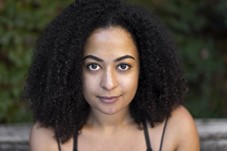
In Leah Kirby’s DUALITY, we find a trans origin story that explores what happens when a Black, trans, nonbinary person is pushed to their limit after years of being forced to be “palatable” by a society that questions their very existence on a daily basis. The narrative suggests that being trans isn’t about finding who you are, it’s about remembering; peeling back the layers of a cis, heteronormative society and discovering a truer version of yourself.
While working on the project, Leah discussed ideas around the tired tropes we are continually exposed to regarding trans people on screen, with so many of them ending up wrapped up in sex work or dying gratuitously bloody deaths: “This film came out of my desire to flip the trans narrative and reclaim power that often isn’t afforded to trans characters.”
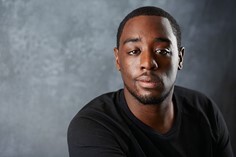
Reece Pantry’s DRIBBLE allows us to witness a microaggression at its most terrifying as he exposes one of the more exhausting and common daily traumas we all seem to face as Black people: Constantly having to prove ourselves – whether it’s being followed around a store by the security guard and always having to keep your receipt, making sure you never forget your work pass in case you are mistaken for a criminal instead of a barrister prosecuting one or, in this case, defending that you’re parked exactly where you should be.
In conversations about the film, Reece said, “Perception is personable. What we receive, interpret and give out can send shockwaves through society in more ways than one. DRIBBLE is intended to force the audience to question their own judgement, taking them on a journey that just may change their perspective entirely.”
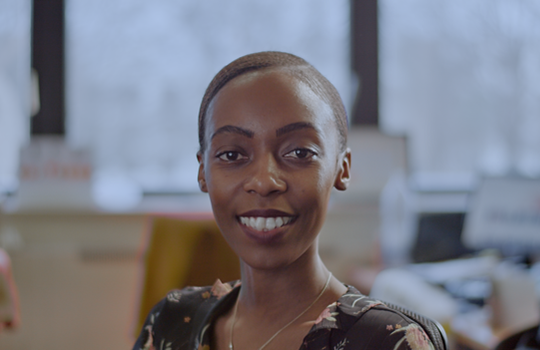
GATOR BAIT introduces us to the tradition of slave masters stealing the children of their workers and using them as bait in the hunting of alligators. Writer and director Ajira Bouchada casts her own mother and child in a chilling modern-day retelling of this horrifying history that sees technology lead a killer straight to the family home – with dire consequences. In creating this project, Ajira considered the lack of care and consideration afforded to slave mothers as they carried their children, still forced to work just as hard in the field, even close to full term, without comfort, rest and under constant threat of beatings and other punishments.
“There’s people who say, ‘This was four hundred years ago, can’t we forget? Can’t we move on?’... but there is a trauma that is carried down. My grandmother lived through colonial rule and there are certainly ways it affected her that would have influenced the way she raised my Mum and so, therefore, have affected me, maybe in ways I don’t necessarily understand,” Ajira said, when asked about the inspiration behind the film. “Gator Bait is about the fact that history is repeating itself, over and over again.”
As the terrified Black mother in Ajira’s film desperately tries to save her son from a white man with a gun (the Gator), parallels can easily be drawn to the grieving parents of young Black men killed by police officers in the US and UK.
THE FLOYD EFFECT was released on 1st November, the day after Halloween and a controversial “celebration’ for many Black people. This is particularly true for those who are from African cultures, grew up in the church and potentially for all of us who have continually witnessed the tired trope of “the Black guy being first to die” in countless mainstream horror movies.
Perhaps THE FLOYD EFFECT’s release is an opportunity for us to reclaim horror because even after the scariest day of the year, the horror isn’t over.
This year’s Disability Awareness Month runs from 18 November until 18 December 2020.
The theme is around Access: How far have we come? How far do we have to go? If you generally have access to stuff (like the physical environment around you, transport options, information and communication, services, and so on) then this is probably something you’ve never thought about consciously. But if, like me, you only have access to a lot of these things because of being efficient at hiding your identity, the whole subject becomes a lot more complicated.
Let me explain. I have a condition called Beale’s syndrome, which is related to Marfan’s syndrome – a genetic disorder that affects the connective tissues that hold all of the body’s cells, organs and tissues together. Simply put, my body does not produce enough of the protein needed for connective tissues in my body. This is most prevalent in my finger joints, which resulted in me being born with my fingers curled in towards the palm and unable to stretch out.
It’s a very odd feeling to realise that the only reason I’ve not been more impacted by my condition is because I had access to the right surgery, courtesy of the NHS. This surgery involved my hand tissue and joints being reconstructed, and helped me to gain about 80% of the movement in my fingers. As a result, I’ve got really, really effective at ‘hiding’ my condition.
It helps that unless you’ve sat with me for a while and paid very close attention to how my fingers never quite leave a ‘claw’ shape, you would never really guess that I had a disability. But I still try to hide my condition as much as possible. I use pointers in my presentations to avoid using my hands, and my penchant for fingerless gloves means I can hide the surgery scars that decorate my fingers.
In the same way, many people wouldn’t really guess that I was queer, which I use as a label for myself. I don’t hit a lot of the stereotypes that exist around LGBTQIA+ people – and even if I did, that shouldn’t be a negative thing. Plus, because my partner is a straight, cis man, I often get mistaken for not being part of the community. Depending on the circumstances, I would say I’m more confident at being ‘out’ as queer, rather than ‘out’ as disabled, but that’s probably just because I work for a big LGBT rights charity and have that as a bit of security.
I often find that my access to spaces and opportunities depends a lot on how effectively I can hide these different aspects of my identity. For example, a lot of the spaces that my family occupies require me to hide my queer identity. In mainstream LGBTQIA+ spaces, disabled folks are often deliberately excluded, because it is seen as impossible for someone who is disabled to engage in romantic and/or sexual relationships. On top of that, ableism and queerphobia often go hand in hand. We see this everywhere: from the media we consume all our lives, to the medical-based and pathologised ways we have spoken about these identities until recently.
A lot of folk, especially disabled folks, may not have even their basic human rights respected.
Understanding that these two communities share struggles is vital if we are to make equal rights a reality for everyone. It’s also worth remembering that a lot of folk, especially disabled folks, may not have even their basic human rights respected. LGBTQIA+ organisations need to ensure that they support disabled service users and supporters, and organisations that work with disabled people need to be aware that some of the folks they support will also be LGBTQIA+. It’s tough to change our practices, but if we’re going to truly embody the values that make us proud, we need to make sure that we tackle all discrimination and stigma of identities.
Understanding that these two communities share struggles is vital if we are to make equal rights a reality for everyone.
As a first step on this journey, we must amplify the voices of those who have been historically underrepresented in our communities and who are, even now, marginalised by our structures and systems – whether economic, societal, or inter-personal. We must also work together to remove the systemic barriers that prevent folks getting what they need for a good life. Maybe then, people like me will be able to enter any space without hiding vital parts of their identity.
Visit Stonewall's Disability Hub.
As this year’s Disability History Month comes to an end, Stonewall’s Accessibility Forum have highlighted 8 ways you can become a better ally to LGBT disabled people.
One in five LGBT people have experienced a hate crime or incident due to their sexual orientation and/or gender identity in the last 12 months, and one in three disabled people feel that disability prejudice is still commonplace.
Being both disabled and LGBT, we face discrimination against both parts of our identity. The reality of living with an intersected identity means we often face multiple barriers and adversity in everyday life.
As LGBT disabled people, we are heavily marginalised within society, and our voices and experiences are often overlooked. We need allies to take action and step up to support the LGBT disabled community. Take the first step in your allyship journey by reading, practising and sharing the points below.
1. Fight for accessibility
Society is designed to meet the needs of non-disabled people. As a result, disabled people are often excluded from events, activities and places that are inaccessible. It’s not surprising that a third of disabled people experience difficulties relating to their impairment when trying to access public, commercial and leisure goods and services. This is particularly true of LGBT spaces that often revolve around protests, marches, and club nights. Even in the wake of the pandemic, digital accessibility has become a crucial yet often overlooked factor. For disabled people to feel welcome and valued in the LGBT community these spaces need to become more accessible.
If you help to run these events, choose venues and plan events that are accessible to all parts of the LGBT community. If you attend these events, ask the organisers what they are doing to make it an accessible space for everyone.
It’s crucial that you ask these questions and ensure accessibility is top of the agenda for all spaces and events.
2. Watch your language
Language is a crucial tool for marginalised communities – it helps us identify ourselves in ways that feel empowering. This is particularly true for the LGBT and disabled communities. Every LGBT disabled person will have a unique relationship to language and a preference for what terminology they prefer. A basic level of respect is using the correct terms and language the person has chosen for themselves. You should always be led by the person and if you’re unsure, just ask them what they prefer.
Ableism is often expressed and reinforced through language. Much of our colloquial language is filled with ableist words and metaphors – there’s a helpful article here about inclusive language and alternatives to commonly use ableist words. As an ally, it’s vital that you’re not using ableist, homophobic, biphobic or transphobic language and that you challenge anyone who does.
3. Be responsible for your own learning
A key part of allyship is learning and expanding your knowledge – but be mindful of who and what you’re asking. You should never ask a person about their sexuality or disability unless they speak to you about it first. Always be led by the person and never ask intrusive questions.
Even when someone is happy to share their experiences, it’s crucial to remember that a marginalised person is not responsible for teaching you about their identity. Instead of relying on LGBT disabled people to give you the answers, do your own research and use your own resources to expand your learning – we’ve included some tips at the bottom to get you started.
4. Challenge ableism
Ableism is the systemic exclusion and oppression of disabled people. Not only is ableism evident across society, it’s also widespread within the LGBT community. One in four LGBT disabled people whose activities are limited a lot because of a health problem or disability have experienced discrimination or poor treatment from others in their local LGBT community – because of their disability.
If you are a member of the LGBT community you need to be aware that other people’s lives and experiences may be very different to your own, especially if they suffer multiple levels of discrimination due to other elements of their identity, such as disability. Your role as an ally is to educate yourself so you are equipped to speak out against ableism. If you witness people making ableist or negative comments, challenge it whenever it’s safe to do so. If you see it online, report it.
5. Respect our experiences
It’s essential that you recognise every disabled LGBT person as an individual. We all have our own unique experiences, voice and identity. There are a wide array of disabilities that impact people in different ways, and how this intersects with their sexuality will also vary. One person’s experiences don’t represent the whole LGBT or disabled community – so please listen to our experiences but don’t expect us to be a spokesperson for all LGBT disabled people.
6. Don’t make assumptions
Disabilities are complex and varied, and many people have disabilities that are hidden and not immediately obvious. LGBT and disabled people don’t look or act in a particular way. You should never assume or make assumptions based on a person’s sexuality, gender, or disability.
One in three people believe that disabled people are less productive than less disabled people. These misconceptions are routed in a lack of understanding. An important way to step up as an ally is to challenge your own assumptions.
7. Keep it confidential
If a person comes out to you or discloses their disability, it’s important to not share this with anyone unless they have said you can. Even if a person has spoken to you about it, they may not be out to everyone, so treat any information they’ve shared about their sexuality or disability as confidential. If you feel this information needs to be shared for any reason, always speak to the person and get their permission first.
8. Support LGBT disabled organisations
There are a whole host of organisations doing incredible work for the LGBT disabled community. Step up as an ally by learning and supporting these charities. Read our article to find out about some of the organisations and collectives you should be supporting.
Resources
This is a time of loss and loneliness for many people, and for the LGBT+ community, the coronavirus pandemic continues to be just one of many threats.
Inequalities that already existed have ramped up for the most marginalised LGBT+ people, including LGBT+ people of colour, trans people and people living in poverty.
Kate (she/her) shared her experience as a disabled and chronically ill LGBT+ person.
How has your life been impacted by COVID-19?
I am disabled, chronically ill and long-term housebound. At the beginning of the lockdown, my ME flared and I have been bedbound since then.
I am a 33-year-old adult, living with my parents. I am extremely socially isolated and cut off from friends and queer community. This was the case before the lockdown (and has been for several years now), but it has felt even more intense during the pandemic. This has negatively affected my mental health and self-esteem. I feel very lonely.
My friendships have also been affected by the COVID-19 pandemic. While I'm worried about all of the above, some of my able-bodied friends have travelled abroad on holiday, have not adhered to the government guidelines and are complaining about how difficult it has been for them to socially distance and stay at home. I understand this isn't easy on anyone, but I've been housebound and socially isolated for years.
Have you faced barriers or challenges accessing support?
Because of COVID-19, it was unsafe for me to attend the health centre for a blood test and to drop off samples requested by hospital specialists. I have also faced sexism and biphobia in healthcare settings. In hospital, I ought to be safe and respected, not objectified and placed in a horrific heteronormative predatory narrative.
I am a disabled bisexual. I am chronically ill and long-term housebound (even without the pandemic). This means that I am cut off from queer community and have not had the opportunity to make queer friends and connections. There are no services for queers in my position, who are not older. I am 33.
The COVID-19 pandemic has exacerbated my feelings of loneliness and isolation. I have been in touch with a number of LGBTQ organisations to ask for help and advice. Repeatedly, I have encountered ableism and have been met with patronising and dismissive responses. It feels like nobody wants to have anything to do with me.
Futher information
Find out how to be a better ally to LGBT+ disabled people and discover 5 LGBT+ disability organisations you should support.
Photo credit: Ali Kapenek
This is a time of loss and loneliness for many people, and for the LGBT+ community, the Coronavirus pandemic continues to be just one of many threats.
Inequalities that already existed have ramped up for the most marginalised LGBT+ people, including LGBT+ people of colour, trans people and people living in poverty. Mason (they/them) is a cultural worker in Glasgow. They told us about losing access to their gender clinic during the pandemic.
How has your life been impacted by COVID-19?
I was due for a third appointment at the gender clinic to qualify for hormone treatment, but due to COVID-19 this appointment and future treatment was postponed for over 11 months, as the clinic's services were not considered "essential".
Despite repeated attempts to seek answers from the NHS, it's unclear to me why the gender clinic is not "essential", when it will reopen, and how I will be able to access any of the services in the future.
Have you faced barriers or challenges accessing support?
I am highly fortunate to have a stable living situation, and a mutually supportive network of friends and family nearby. This has been key to maintaining good mental health.
The redirection of efforts to combat the health crisis has left under-funded parts of NHS services even less able to cope with ongoing stresses of patient demands, and I am certain that the closure and postponement of services such as the gender clinic has contributed to additional and unnecessary pain, anxiety and poor health in my community.
Gender clinics and the services they provide are essential. What these clinic workers provide is invaluable. Prior to COVID-19, the inordinate amount of time people sit on these waiting lists for their services was already intolerable, cruel, irresponsible and a threat to life. That these waiting lists would now be irrelevant because the clinics are closed is even more catastrophic, and a clear indicator that the government is uninterested and is actively divesting from trans lives.
This is a time of loss and loneliness for many people, and for the LGBT+ community, the coronavirus pandemic continues to be just one of many threats.
Inequalities that already existed have ramped up for the most marginalised LGBT+ people, including LGBT+ people of colour, trans people and people living in poverty.
Inequalities that already existed have ramped up for the most marginalised LGBT+ people, including LGBT+ people of colour, trans people and people living in poverty. Tamika (she/her) shared her experience as a black, queer young person. She told us about her struggles with mental health during the pandemic.
How has your life been impacted by COVID-19?
I was finally getting myself back on my feet after a long mental health break, was doing some volunteer work and going out with friends more but obviously Covid-19 has halted that, and I occasionally worry that I'm not in the headspace to try again.
I'm black and luckily for me I live alone so I only have to take care of my own health, however my mom is over 50 and vulnerable, she cares for my three younger siblings, so the savings were ate up fairly quickly so she went back to work quite early into lockdown and took as many precautions day to day as possible but of course I still worry about her being at risk.
Outside of that, I struggled a bit with my mental health, and it sort of varies - I'm bipolar and I'm fairly certain that I was in a very high point towards the start of lockdown because whilst I had a few instances of hallucinations I was still in a good mood however the last few weeks I've been having a fair few negative thoughts, some suicidal ones too.
Have you faced barriers or challenges accessing support?
I guess the only barrier would be that I no longer have any psychiatrist appointments face to face. Especially since I received the pill from my GP no problem.
I have a social worker and she has been unable to visit with lockdown happening and I've felt kind of awkward giving her life updates over the phone. I know that's just anxiety speaking. I also had a fairly major life update regarding a traumatic experience and it felt like I couldn't go anywhere to get help, like the only help was online or over the phone and I know it's the same but personally I open up better in person.
I'm ever so lucky, I was on the waiting list for social housing for two years and eventually they contacted me about viewing a studio flat and I snatched it up immediately! I was living in accommodation for the vulnerable previously so very happy to be out of that life stage.
This LGBT+ History Month our focus will be on LGBT+ education.
For us, this takes us back to our roots – Stonewall was formally launched one year to the day after Section 28 was made law in 1988. This piece of legislation prevented teachers from talking about same-sex relationships in schools, forcing teachers back into the closet or out of their job, and scarred a generation of LGBT+ people – all at the height of the HIV/AIDS crisis, causing more hurt to an already marginalised community.
Despite being scrapped in 2000 in Scotland and 2003 in England and Wales, Section 28 still casts a shadow within education and beyond. The view of many people at the time was that Section 28 ‘protected children’ – a sadly familiar narrative still used today by pro-conversion therapy and anti-trans groups.
LGBT+ History Month in the UK was started by the education charity Schools Out in 2005 to bring queer history to light after this long period where school children grew up hearing nothing positive about LGBT+ people and our lives. And, for sure, we are making progress: just last year we saw a historic moment when LGBT-inclusive Relationships and Sex Education was introduced in England’s schools after years of campaigning. By the end of this year, LGBT-inclusive education will be embedded in all Scottish schools, and in 2022 LGBT-inclusive RSE will be introduced in all Welsh schools.
We are proud of this progress. But research shows that a lack of support for teachers delivering these subjects risks undermining the potentially life-changing impact of LGBT-inclusive education. And on a more sinister note, anti-LGBT groups are mobilising across the UK to undermine schools’ and councils’ work to support LGBT+ young people.
The shadow of Section 28 remains.
The shadow of Section 28 remains. It is diminishing, but there are still threats to the vital progress we have made together.
I went to school at a time when LGBT+ people – our lives, our families, our relationships – were hidden from sight, and speaking up meant punishment for teachers and for students. It gives me such hope for the world that we live in that my sons will grow up going to school where LGBT+ people, lives, families and relationships are recognised and talked about as part of everyday life.
We all have to play our part in supporting LGBT+ inclusive education and making this transformative social change a reality.
We all have to play our part in supporting LGBT+ inclusive education and making this transformative social change a reality. You can do that by sharing our free LGBT+ education home learning packs for pupils. Please donate to Stonewall so we can continue supporting LGBT+ children and young people, and their families.
Step by step, together, we move closer to a future where we are all free to be included, free to be proud, and free to be ourselves.