
Communities
The world has changed considerably since the 2019 general election.
The COVID-19 pandemic has deepened existing inequalities faced by marginalised communities; hate crimes based on sexual orientation and gender identity continue to rise; and we are facing a crisis in access to gender-affirming healthcare. It has never been more important that LGBTQ+ communities, and all marginalised people, are empowered to use their vote.
In June 2021, the UK Government introduced its Elections Bill, which would require voters to present photo identification (ID) to vote in general elections, English local elections, and police and crime commissioner elections in England and Wales. Our research shows that these proposals would disproportionately affect LGBTQ+ people.
At Stonewall, we are proud to have partnered with LGBT Foundation on a crucial and timely piece of research into ID ownership amongst LGBTQ+ communities, the first of its kind in the UK. Download the full report.
This report shows that the proposed Voter ID requirements would disproportionately affect LGBTQ+ people.
The report shows that LGBTQ+ people are three times more likely than the general population not to possess any photo ID that could be used to vote. This disparity is driven by the figures for trans and non-binary people. Nearly a quarter of trans respondents (24%) and nearly one in five non-binary respondents (19%) said they do not own usable photo ID, and could potentially be disenfranchised by the Elections Bill. This compares to 3% of non-trans respondents*.
Nearly a quarter of trans respondents and nearly one in five non-binary respondents said they do not own usable photo ID.
For many trans, non-binary and gender non-conforming people, the photograph, name, and/or gender marker on their ID may not reflect their appearance or gender identity. Nearly two in five trans respondents (38%) and over one-third of non-binary respondents (35%) have previously experienced problems getting their ID accepted.
The introduction of voter ID could inadvertently result in them being turned away from polling stations, or simply deciding not to vote for fear of this happening: over half of trans and non-binary respondents (55% and 52% respectively) said that they would be less likely to vote if they had to present ID. LGBTQ+ disabled people, people of colour, and those who are homeless or in severe poverty are also more likely to face barriers to voting under the UK Government’s proposed legislation.
The Government claims that the Elections Bill is necessary to ensure that elections are safe and secure, and protect against ‘personation’, a form of electoral fraud where someone pretends to be somebody else in order to use their vote. However, there are extremely low levels of electoral fraud in the UK. In 2019, there were only 33 allegations of ‘personation’ out of over 58 million votes cast, resulting in just one conviction and one caution.
The Bill would disenfranchise far more legitimate voters than it would prevent fraudulent ones. In the 2018 trials of voter ID that took place across five councils, twice as many people did not vote in a single day due to having incorrect ID as have been accused of personation in eight years across the whole of the UK.
96% of trans and non-binary people experience at least one barrier to obtaining appropriate ID.
Our report’s findings also point to wider systemic barriers for LGBTQ+ people’s access to ID, particularly for trans, non-binary and gender non-conforming people. Our research found that 96% of trans and non-binary people experience at least one barrier to obtaining appropriate ID. They highlighted the difficulty of obtaining ID that reflects their chosen name and gender. Changing the gender marker on a UK passport currently requires a Gender Recognition Certificate, a new birth or adoption certificate, or a letter from a doctor or medical professional. This process can be lengthy, complex and expensive, with an average 18-month wait for a first appointment at a Gender Dysphoria Clinic. Respondents were also concerned about the risk to their privacy and safety in obtaining ID – for example, being ‘outed’ as trans, or being subject to invasive questioning.
Not only will we campaign against the Government’s Voter ID proposals, but we will also campaign to make it easier and more affordable for all trans people, including non-binary people, to access identity documents that accurately reflect their lived name and gender – and ensure they continue to have a voice on the issues that affect their lives.
Download the full report, and register to vote if you can, to ensure that you’re able to engage fully and fairly in the democratic process.
* This includes all respondents who did not say they were trans – of which 93% were cis and 7% were non-binary.
When we wear our rainbow laces, we commit to having honest conversations about the experiences of LGBTQ+ people in sport and fitness – but what are the key talking points we need to address?
Sport and fitness is an important part of so many of our lives – it has the power to bring people together, and to improve our mental and physical health. But too many LGBTQ+ people still feel confronted with a choice between loving their sport and being their true selves.
More than a million of you have laced up to show support for LGBTQ+ people in sport and fitness. Now it’s time to go one step further and start a conversation about why you support the campaign, and the commitment we can make, individually and together, to ensure LGBTQ+ feel welcome in sport.
Speak up to friends, family, colleagues, teams and clubs – because every conversation matters, and every conversation takes us one step closer to achieving our goal.
Below are just some of the conversations we need to have now, if we want to make sport everyone’s game.
Q: How widespread is discrimination?
Many LGBTQ+ people still feel unsafe and unwelcome in sport and fitness. For example:
- Across Europe, 82% of LGBTQ+ people who take part in sport have experienced or witnessed homophobia, biphobia, and transphobia in the past 12 months (Out in Sport, 2019).
- More than 43% of LGBTQ+ people think public sporting events aren’t a welcoming space for LGBTQ+ people. (YouGov for Stonewall, 2017).
- 33% of LGBTQ+ people who participate in or follow sport aren’t out to anyone in their sporting life (Out in Sport, 2019). Their research indicates that fear of rejection and bullying are two key factors keeping athletes ‘in the closet’.
So while there’s been a significant uptick in visibility in recent years, LGBTQ+ people still face prejudice across the sporting world, and that means many simply stop participating. That’s why it’s so important for each of us to talk with the people around us about the real experiences of LGBTQ+ people in sport, and do our best to create inclusive environments.
Q: Are attitudes changing towards LGBTQ+ people in sport?
The Rainbow Laces campaign has united the majority of sport fans and participants who see that inclusion matters. For example:
- Two thirds of sport fans who saw the campaign believe they have a responsibility to stick up for LGBTQ+ fans of the teams and sports they follow (ICM for Stonewall, 2020).
- 46% of people feel confident challenging anti-LGBT language online and at live sporting events.
And in recent years, we’ve celebrated an ever-growing number of out and proud LGBTQ+ sportspeople gracing our screens and magazine covers. With increasing awareness has come increased acceptance, but there’s still a way to go to shift public attitudes – 20% of sport fans think anti-LGBTQ+ language is harmless if it’s just meant as banter (ICM for Stonewall, 2020), and there’s more work to do to ensure trans people can participate in the sports they love.
Q: How can we support LGBTQ+ people to not give up on their sporting dreams?
Every team member plays a vital role in making people feel part of the team. Team talks, end of season speeches, WhatsApp groups, and dressing room chatter – the way we interact in all these contexts impacts our peers. For a lot of people, sport and sporting environments are ‘safe spaces’, somewhere they feel comfortable and at ease. But for others, the same place might make them feel like they have to hide part of their lives because of how others might react.
See below for a list of top tips to help you become a more inclusive teammate, fan or organisation – and how to safely tackle discrimination when you see it.
Q: Do people perform better when they can be themselves?
Research has shown that ‘coming out’ at work is related to higher job satisfaction, and there are significant ‘costs’ associated with hiding our true selves – the same can be applied in the context of sporting clubs and events. If we’re not worrying about hiding aspects of ourselves from those around us – by monitoring how we talk, walk, or share details about our lives – we can truly focus on the sports we love.
‘Coming out’ is also linked to improved mental health. Depression impacts our communities at a disproportionately high rate, with our 2018 research showing that 52% of LGBTQ+ people had experienced depression in the past year. Much of this is linked to the discrimination we face in a range of contexts. If LGBTQ+ people can be themselves in a sporting environment, it’s more likely that they’ll perform to their best potential.
Q: What part can I play?
Simple – lace up and speak up! Celebrate the impact that sport has on LGBTQ+ people and the impact that LGBTQ+ people have on sport, and to consider how we can all play our part in making sport everyone's game.
Why not start a conversation about why those around you should also support the cause? You can order laces for your communities or encourage them to order laces, and provoke positive, constructive conversations across your communities about LGBTQ+ inclusion. Remember – every conversation takes us one step closer to creating a better sporting world for LGBTQ+ people.
Check out this blog by our Sports Engagement Manager to learn more on why we must speak up for LGBTQ+ sportspeople for more inspiration.
Top tips for LGBTQ+ inclusion in sport
Sport can bring so many benefits to our lives – not just in terms of wellbeing, but also in the ways sport brings people together.
LGBTQ+ people deserve to be a part of this. We shouldn’t feel excluded or shut out just because of who we are.
Take a look at our top tips for LGBTQ+ inclusion in sport, whether you’re an organisation/group, teammate, or a fan.
Being an inclusive sports organisation
Regardless of the set-up of your sport or activity, everyone will benefit if it’s more inclusive of lesbian, gay, bi, trans, queer, questioning and ace (LGBTQ+) people.
For many, sport and sporting environments are ‘safe spaces’ - somewhere they feel comfortable and at ease. But for others, the same place might make them feel like they have to hide part of their lives because of how others might react.
Follow these top tips to create a space where everyone feels they can be their authentic self. This way, they can spend all their energy and enthusiasm on their sport.
1. Celebrate
Letting everyone know you’re LGBTQ-inclusive doesn’t need to be complicated. You can show that you welcome everyone by making clear and visible statements, such as wearing Rainbow Laces, celebrating different identities on social media, and displaying pride stickers visibly at your venues.
2. Policies
Sporting environments should be inclusive of all LGBTQ+ people, to make sure every opportunity is open to as many people as possible. You may find it useful to check that your organisation has inclusion policies and that they are up-to-date.
It is good practice to ensure your anti-bullying policy states that anti-LGBTQ+ bullying will not be tolerated. Checking that your other policies use inclusive language can help you challenge gender stereotypes and avoid unintentionally excluding anyone. It can be useful to have a club trans inclusion policy that reflects your governing body’s trans inclusion guidance. Whether or not you already have trans team members, knowing what to expect from your club will be reassuring for potential new members, and for current members who may be considering coming out.
3. Codes of conduct
Codes of conduct help everyone at the organisation know what behaviour is (and isn’t) acceptable. It is useful to include your organisation’s core values and make reference to your safeguarding, inclusion and anti-bullying policies. Putting the code of conduct on prominent display can act as a permanent reminder for club members.
4. Play
Some people may prefer to play in mixed-gender environments, so consider setting up mixed trainings, sessions, or tournaments where possible. If your organisation's activities are already inclusive of all genders, you can make this clear by renaming your session to explicitly say ‘mixed’. Mixed activities can break down barriers and provide comfortable and inclusive opportunities for everyone.
5. Facilities
Consider what could be done to make your facilities more inclusive for all. For example, providing the option of gender-neutral facilities, and including a sanitary bin in all toilets. If you use third-party facilities, you might want to work with the managers to ensure gender-neutral spaces are available.
Being inclusive isn’t just the right thing to do – it has real benefits for you, your teammates, and your club. Inclusive approaches help:
- Recruit new participants and retains current ones, helping make your organisation sustainable.
- Attract new talent – participants will know they’ll be accepted for who they are and encouraged to reach their full potential.
- Create a welcoming environment, which makes your organisation a better place to work or volunteer. This will ensure your activities continue week in, week out.
Being an inclusive teammate
Every team member plays a huge role in making people feel part of a team. Whether it’s in team talks, end of season speeches, WhatsApp groups or changing room chatter – take these steps to ensure everyone can thrive in their chosen sport:
1. Don’t assume
Avoid using language that makes assumptions about people’s gender identity and the gender of their partner. It’s more inclusive to say things like ‘bring your partner to the game’ rather make assumptions and use ‘boyfriend or ‘girlfriend’, or celebrate a ‘player of the match’ instead of ‘man’ or ‘woman’.
2. Challenge stigmatising language
If language focuses on someone’s identity in a negative way, it’s hurtful and abusive, even if it’s not directed at anyone around you at the time. This isn’t banter; it’s abuse. Slurs cause harm even if there’s no obvious ‘target’. LGBTQ+ people don’t need to hear the words to be hurt by them. They reinforce stereotypes, build barriers to understanding and stop the sporting arena being a welcoming place. If you feel safe to do so, challenge abusive language and behaviours. Remind people that this language is offensive and exclusionary.
3. Respect difference
LGBTQ+ is an umbrella term, but the experiences of the people it covers can be very different, both in sport and in the wider world. Support everyone as the individuals they are. Talk to everyone about wellbeing and valuing team spirit, and be mindful of differences in experience.
4. Celebrate
Talk to LGBTQ+ people on your team about how they want to be supported and championed. Small actions can go a long way, and there may be things they need that are specific to your environment or their own personal experiences. Teammates look out for each other, so make a habit of checking in with all of yours!
Being a respectful fan
As fans, we all want the same thing: winning teams and athletes who perform well. All clubs and sports have an ethos and values, and showing your support for a team or sport shouldn’t go against this. We can all cheer our side on and create an exciting atmosphere without being abusive.
1. Show your support
Visibly show your support for LGBTQ+ people to make it clear that sport should be everyone’s game. Wear Rainbow Laces, and share positive messages supporting LGBTQ+ people in sport online.
2. Choose your words wisely
Slurs cause damage even if there’s no visible ‘target’. LGBTQ+ people don’t need to hear the words to be hurt by them. Anti-LGBTQ+ slurs perpetuate stereotypes, build barriers to understanding, and stop the sporting arena being a welcoming place.
3. Let your club or governing body know that you value inclusivity and diversity
Write to your club and encourage them to think about diversity in the club and the steps they can take to promote inclusivity. Ask them about plans to get involved in Rainbow Laces, celebrate different identities, and get sponsors and supporters involved in club activities.
4. Reach out
If your team has an LGBTQ+ fan group, reach out to them. Ask them how you can show your support as an ally or join up!
5. Learn how to report discrimination
There could be different ways to report bullying, harassment or discrimination – online, in person, by phone. The key thing is to report it as soon as you can after the incident. Make sure you involve the victims of anti-LGBTQ+ abuse in the reporting process and in any decisions made in reaction to it.
Tackling anti-LGBTQ+ abuse in sport
Although many people think anti-LGBTQ+ abuse is wrong – and people are increasingly able recognise it when it happens – too few of them report it. Such abuse can only be stamped out if the authorities know when and where it’s happening, so everyone should take action whenever they witness or experience it.
Keep in mind that abusive language doesn’t need to be directed at LGBTQ+ people for it to be a problem. Chants which reference sexual acts, slurs, and misgendering are all forms of abuse – even if you don’t think an LGBTQ+ person will be directly affected. Abuse can also take the form of graffiti, stickers, or purposefully excluding someone from social activities.
1. Learn how to report discrimination
There could be different ways to report bullying, harassment or discrimination – online, in person, by phone. The key thing is to report it as soon as you can after the incident. Make sure you involve the victims of anti-LGBTQ+ abuse in the reporting process and in any decisions made in reaction to it.
Who to report to:
- If you’re involved in football: download the Kick It Out App
- If you’re playing in a BUCS or university fixture: speak to your Sports Coordinator
- If you’re taking part in any other sport: speak to your National Governing Body
- If you’re participating in a mass activity event: speak to a steward, or check online for helplines
- If you’re at another sport event, venue, gym or facility: check the host organisation’s website for information
2. Safely challenge
If you feel confident and the situation is safe, challenge the language yourself in a positive, non-aggressive way. Tell them that anti-LGBTQ+ language is abusive and hurtful, even if it’s not directed at a particular person at the time. Doing so sends a strong message to fellow fans, players, and the workforce that anti-LGBTQ+ abuse isn’t acceptable. If they know they’ll be challenged, they’ll be less likely to do it.
3. Follow the club guidelines
Some major sports arenas display advice on reporting abuse on the concourses or in the toilets. They often advertise a club- or stadium-specific number you can use to report abuse discreetly. If there are stewards around, tell them about the abuse – they’ve been trained to deal with these situations.
If you witness abuse at any other sporting event – e.g. a smaller ground, community event, or casual fitness session – tell the officials as soon as possible. Then report it to the host organisation and the national governing body.
4. Tell an official
If you witness abuse at any other sporting event – e.g. a smaller ground, community event, or casual fitness session – tell the officials as soon as possible. Then report it to the host organisation and the national governing body.
5. Report social media abuse
Take screenshots of anti-LGBTQ+ abuse you see online and report it to the social media platform concerned. Attacks on social media are especially harmful as they endure after the game, and also reach people at home.
People have been attracted to more than one gender throughout recorded history.
But specific identity labels like bi and pan are relatively new. How did bi+ people in the past understand their identities and attractions, and how does this history affect bi people and communities in the UK today? Our Research Officer Martha Robinson Rhodes, who has a PhD in bi history, explains …
In 1859, anatomist Robert Bentley Todd first used the term ‘bisexuality' to refer to the possession of ‘male’ and ‘female’ physical characteristics in the same body – today, we might understand this as being intersex. This meaning was taken up by nineteenth-century sexologists – scientists and psychologists studying sex and sexuality, including Henry Havelock Ellis and Richard von Krafft-Ebing – who explored evolution and speculated about “the latent organic bi-sexuality in each sex”, noting that “at an early stage of development, the sexes are indistinguishable”.
By the beginning of the twentieth century, this meaning had shifted to focus on a combination of ‘masculine’ and ‘feminine’ gendered characteristics – what today we would describe as androgyny. The modern meaning of bisexuality, which describes sexual and/or romantic attraction rather than sexed or gendered characteristics, only developed in the 1910s. However, for many years the different meanings of bisexuality were used at the same time and sometimes in the same texts. Sigmund Freud made his famous claim about ‘universal’ bisexuality in 1915, but referred to this both as a combination of masculinity and femininity and as a sexual or romantic attraction, writing, “the sexual object is a kind of reflection of the subject’s bisexual nature”.
But if people in the past didn't use the term 'bi', how did people attracted to more than one gender describe themselves?
There is no simple answer to this question. Some didn’t use an identity label at all, preferring not to categorise their relationships. Some understood themselves as heterosexual, while others identified as gay or lesbian. Others described themselves using percentages or ratios, such as ‘60:40 gay:heterosexual’. When the term ‘gay’ was first popularised by gay liberationists in the 1970s, it often linked radical politics and same-gender attraction, but didn’t necessarily exclude people who were attracted to, or had relationships with, multiple genders.
One interviewee I spoke to during my PhD recalled: “There was a general understanding that sexuality was some sort of spectrum, and that people would move along it from time to time”. It’s also important to note that this terminology is particular to English-speakers in the West, and that elsewhere in the world there has been a diverse range of approaches to sexuality and gender that often reject binary categorisations. In many cases, these approaches have been restricted or prohibited as a legacy of colonialism.
It wasn’t until the late 1970s that the current understanding of bisexuality, as an orientation or capacity for attraction, became widely accepted in the UK as "the more common usage". Around this point, we started to see bi groups and events being established. The UK’s first bi group, London Bisexual Group, was formed in 1981, followed by other groups in Edinburgh (1984), Brighton (1985), Manchester (1986) and Glasgow (1988), as well as a London-based Bisexual Women’s Group. A magazine, Bi-Monthly, was founded, as well as two bi helplines in London and Edinburgh, and the UK’s longest continually-running LGBTQ+ community event, the annual BiCon.
Bi terminology and politics have continued to evolve since the 1980s. While definitions of bisexuality initially focused on attractions to ‘both’ genders, over time it became more common to refer to ‘attraction to more than one gender’. The term ‘pansexual’ became popular in the 1990s in response to concerns about bisexuality upholding the gender binary, using the prefix ‘pan’ (‘all’) to suggest attraction that is not limited by gender. But this doesn’t mean that bi people are therefore only attracted to two genders. Some people attracted to more than one gender identify as both bi and pan, some as one or the other, and some as neither. The 1990 manifesto of Anything that Moves, a US bi magazine, explicitly stated that bisexuality shouldn’t be understood as binary: “Do not assume that bisexuality is binary or duogamous in nature: that we have “two” sides or that we must be involved simultaneously with both genders to be fulfilled human beings. In fact, don’t assume that there are only two genders”.
Today, we still see the complex history of bisexuality and the shifting use of language being used to erase bi people’s identities, or suggest that they are a ‘phase’. This has hugely damaging effects on bi people and communities. Stonewall’s Bi Report shows that bi people often report not feeling welcome in LGBTQ+ spaces, and experience much higher rates of discrimination from within the LGBTQ+ community. 43% of bi people have never attended an LGBTQ+ space or event, compared to 29% of gay men and lesbians. Research also indicates that bi people are also more likely to experience poor mental health, in part because of this erasure and discrimination.
Changing language should never be used as an excuse to dismiss or reject bi or pan people’s identities and attractions. One of my interviewees summed this up as: “Language evolves. September isn’t the seventh month. October isn’t the eighth month. Bisexual doesn’t mean two genders”.
Instead, understanding how language and communities have evolved reminds us that there is exciting potential for further change and progress in the future, towards greater equality for bi people and other LGBTQ+ people. For me, exploring and understanding this change is what makes learning about our history so important – in LGBT+ History Month, and all year round.
References and further reading
- Bi Academic Intervention (ed), The Bisexual Imaginary: Representation, Identity and Desire (1997)
- Shiri Eisner, Bi: Notes for a Bisexual Revolution (2013)
- Sigmund Freud translated by James Strachey, Three Essays on the Theory of Sexuality: 1. The Sexual Aberrations (1915 edition)
- Kate Harrad (ed), Purple Prose: Bisexuality in Britain (2016)
- Henry Havelock Ellis, Studies in the Psychology of Sex Volume I: Sexual Inversion (1897)
- Clare Hemmings, Bisexual Spaces: A Geography of Sexuality and Gender (2002)
- Lachlan MacDowall, ‘Historicising Contemporary Bisexuality’, Journal of Bisexuality (2009)
- The Off Pink Collective (ed), Bisexual Horizons: Politics, Histories, Lives (1996)
- Paula C. Rust, Bisexuality and the Challenge to Lesbian Politics (1995)
- Martha Robinson Rhodes, ‘Bisexuality, Multiple-Gender-Attraction and Gay Liberation Politics in the 1970s’ (2020)
- Merl Storr (ed), Bisexuality: A Critical Reader (1999)
- Naomi Tucker (ed), Bisexual Politics: Theories, Queries and Visions (1995)
This article was updated 13/06/2022 to add further detail about the modern meaning of bisexuality.
This year we’re celebrating 50 years of Pride in the UK. In this article, we’ll chart the major moments in LGBTQ+ history since the first Pride in 1972, and ask what still needs to change for LGBTQ+ people, today and in future.
2022 is a pivotal year for LGBTQ+ history in the UK. Fifty years after the first Pride in London, it’s time to reflect on everything our movement has achieved. At that first Pride in 1972, around 2,000 participants marched together, calling for gay rights. And throughout the 1970s, there were many other milestones – Gay News, Britain’s first newspaper, was founded. Switchboard, a London-based info and support helpline that still runs today, was established. The first trans conference was held in Leeds and the first gay and lesbian Trades Union Congress conference took place to discuss workplace rights. In a watershed moment, Maureen Colquhoun became Britain’s first openly lesbian MP.
In the 1980s, progress sped up rapidly as more LGBTQ+ people came out and demanded equal treatment. We saw the first Black Gay and Lesbian Group being formed, as well as the first bi group in the UK. Chris Smith became the first openly gay MP, and the Lesbian and Gays Support the Miners campaign was launched. But as well as increased visibility, the LGBTQ+ population in the UK faced a backlash. In 1988, Margaret Thatcher introduced Section 28, a piece of legislation which banned local authorities from ‘promoting homosexuality’ and effectively banned the discussion of LGBTQ+ issues in schools. More happily, in 1989, Stonewall was founded to fight back against Section 28.
The 1990s saw the World Health Organisation declassify same-sex attraction as a mental illness, and the age of consent for sexual relations between men lowered from 21 to 18. Trans youth charity Mermaids was founded, and two openly gay MPs are elected in the 1997 elections.
Under Tony Blair’s government in the 2000s, a raft of positive legislation was introduced. The UK Government lifted the ban on LGB people in the armed forces, the age of consent was lowered to 16, same-sex couples were granted equal rights when applying for adoption, and Section 28 was finally repealed across the UK. We also saw the Civil Partnership Act and the Gender Recognition Act introduced in 2004, granting same-sex couples the same rights as married couples, and allowing trans people to acquire new birth certificates. Finally, The Equality Act (Sexual Orientation) Regulations 2007 outlawed the discrimination in the provision of goods, facilities, services, education and public functions on the grounds of sexual orientation.
In the 2010s, the Equality Act added gender reassignment as a protected characteristic. We saw the introduction of same-sex marriage across the UK, and Ruth Davidson became the first openly gay leader of a political party in the UK. The ban on donating blood for gay and bi men was lifted, and the UK Government issued a posthumous pardon to all men convicted under sexual offences laws which criminalised people for being bi or gay. And we saw the first Trans Pride and Bi Pride events take place in the UK.
So it's fair to say we’ve come an incredibly long way since 1972. By 2019, London Pride saw 1.5 million people celebrate and protest in support of LGBTQ+ rights. But looking around us today, it’s clear that we still haven’t reached equality. Just this year, we saw online estate agency Purple Bricks remove a listing last month when the owners of a house in Surrey refused to allow two gay men to view their property. Luke Whitehouse was told by the owners that they could not sell the house to ‘two men in partnership […] as it is contrary to the gracious teaching in God’s Word’. While we know progress has been made, we still have to battle regressive attitudes across society.
More frighteningly, reports of anti-LGBTQ+ hate crime and violence continue to rise. Barely a month into this year, we saw coverage of the murder of Dr Gary Jenkins, who was killed in a park by attackers hurling homophobic abuse. The prosecution lawyer, employed to win justice for Gary, said in his opening statement that Gary’s ‘sexual predilections were to be his undoing… he rendered himself hopelessly vulnerable and an easy target’. The lawyer later apologised and Gary’s murderers will soon be jailed, but nevertheless, stereotypes about gay and bi men being promiscuous are still being used justify violence and blame the victims of horrific attacks. In 2022, we are still not safe in our own communities.
So, this year, we’re looking ahead to imagine what we want the world we want for LGBTQ+ people today, and in fifty years’ time. Right now, we’re campaigning for a full, legislative ban on conversion therapy in the UK, so that no more LGBTQ+ people are subject to this degrading practice. We’re also fighting for better treatment for LGBTQ+ refugees, who deserve not only safe passage but a warm welcome when they arrive in our country, and for equal access to IVF, so that LGBTQ+ people don’t need to break the bank to become parents.
What do you want to make a reality by Pride 100 in 2072? Let us know on Twitter by tagging @stonewalluk and using the hashtag #TakePride.
Aromanticism is often misunderstood, but it's an important part of the LGBTQ+ community. In this blog, we're debunking common myths around aromanticism and raising awareness about what it means to be aro.
What does aro mean?
Aro is an umbrella term used by people who don’t typically experience romantic attraction. Romantic attraction can be defined as a desire to have romantic contact or interaction with an individual. You may hear people referring to the ‘aro spectrum’, which encompasses a wide variety of different experiences, including not feeling romantic attraction at all, feeling romantic attraction occasionally, or feeling varying levels of romantic attraction at different times.
Here are five things you should know about aro people:
1. Not all aro people are asexual
And vice versa! Romantic orientation is separate from sexual orientation, so people who identify as aro aren’t necessary also ace. While there can be overlap between the two identities, and many people do identify as aro and ace, we shouldn’t assume that the two always go hand in hand. Find out more about asexuality.
Aro people who experience sexual attraction and/or occasional romantic attraction might also use terms such as gay, bi, lesbian, straight and queer in conjunction with aro to describe the direction of their attraction.
2. Aro people can have relationships
Romantic relationships aren’t the only type of relationship, and aro people can have meaningful, loving relationships with their friends, families, and platonic partners if they wish to.
Some aro people choose to enter into queerplatonic relationships or partnerships – these are generally described as platonic relationships with a deeper level of commitment than what we might typically expect from a friendship. For example, queerplatonic partners might live together or share financial or domestic responsibilities with one another. These relationships aren’t typically romantic or sexual in nature.
3. Aro people aren’t cold and heartless
Aro people are not ‘emotionally immature’ and are just as capable of the full range of human emotion and feeling as alloromantic people (people who do experience romantic attraction). Romantic love is not the only form of love: aro people can and do have a variety of close, fulfilling and loving relationships with people in their lives, including friends, family members, chosen family and queerplatonic partners. Some aro people may also enjoy physical affection.
4. Being aro isn’t just a phase
Although for some people, romantic attraction can change over time and be in constant flux, you shouldn’t assume that people who identify as aro might one day change their minds. Aro people don’t need to be ‘fixed’, and they aren’t just ‘waiting for the right person’ – they are who they say they are.
5. Aro people are part of the LGBTQ+ community
The LGBTQ+ community is a safe space for many who are not accepted by society for who they are.
When people are free to be themselves, we all benefit. For anyone living outside the historical and modern-day expectations of gender, sexuality or attraction, finding others who have a shared experience can help people feel seen, accepted, and part of a community.
While aro people may face different societal barriers and forms of discrimination than those with other identities, they are a valid part of the LGBTQ+ community. We are always stronger when we stand together and work towards a world where everyone is free to be themselves.
For Lesbian Visibility Week, we asked seven lesbians what it means to them to be a lesbian in 2022, and what message they'd like to share with other lesbians.
This week, we want to celebrate the diversity and lived experience of lesbians worldwide, and help us all feel proud of who we are.
1. “Growing up, I never saw people like me.” – Katie
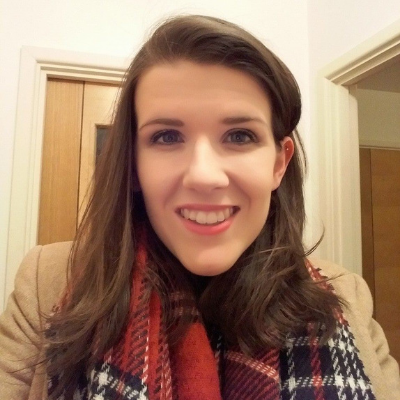
Since 2018, many things have changed for me: I’ve adopted a dog, bought my first home, and got engaged to my girlfriend of five years. I never imaged all of these things would happen to me.
Growing up, I never saw people like me – I knew no LGBT people until my early twenties. And what I learnt from TV was that all lesbians looked one way, and we largely all got killed off in the end.
That’s why lesbian visibility days are so important: it shows the diversity of our community, from the incredible and ground-breaking, to the beautiful every day.
2. “You never know who you could help, just by being yourself.” – Jo
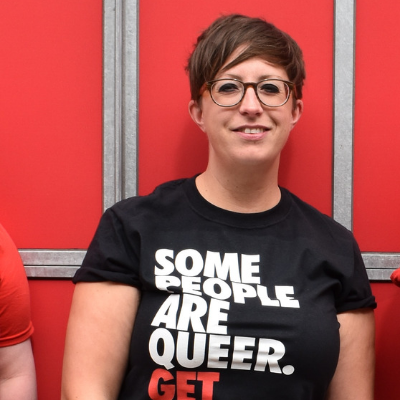
In the early 90s, I went to an all-girls secondary school not far outside of London. At that time, one of the worst accusations you could receive from your so-called classmates was of being a ‘lezzzzzbian’. The word itself was always elongated, always said in a certain tone and always accompanied by a look of, at best, distain, at worst, disgust. It seemed like so many of the girls were determined to attach the ‘lesbian label’ to someone else as fast as possible, so that they wouldn’t be ‘lumbered’ with it themselves.
I remember one maths class when I had a new metal ‘Friends’ pencil tin featuring a photograph of the whole crew sipping milkshakes. The girl who sat next to me spent the whole lesson telling me it was really weird that I had women on my pencil case. That having women on my pencil case must mean I was a lesbian. Why was a lesbian? Why? Why did I want women on my pencil case? Did I have a thing about girls? I binned the pencil case that day and replaced it with something innocuous.
I often think about the huge difference it would have made for me to have had even one visible lesbian role model at that time – ideally in real life, but even just on TV! That’s why I strive to be proud and visible as much as I can. You never know who might need it and you never know who you could help, just by being yourself.
3. “My gender, my sexuality, they’re just that: mine” – Liz
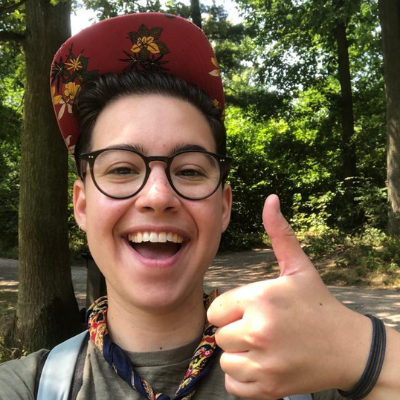
Eight years ago, I was sitting next to my mom on a plane avoiding eye contact at all costs before sputtering out 'just so you know Ma, I’m pretty gay'. This was at a time when I had been dating my first girlfriend for six months, wore way too much tie-dye, and was obsessed with The L Word – so it probably didn’t come as a big surprise.
Claiming a lesbian identity was exciting and terrifying as I learned what it meant to be a part of an incredibly diverse and supportive community, but also what it meant to be shouted at for being 'those lesbians' in bars and on the street. I came out to my mom again this year when I told her I was non-binary, and tried to explain I was still me and I was still a lesbian. Some people don’t understand how I can be both, but it’s not for those people to understand. My gender, my sexuality, they’re just that: mine.
4. “I was lucky enough to have lesbian role models growing up but not everyone does.” – Adelaide
For me, Lesbian Visibility Week is about the joy of seeing younger girls expressing themselves in a way that I never could at their age (despite my history of wearing Extremely Gay Outfits from birth!).
In the last year I've been high-fived by teenage girls at Pride, sat next to kids waving LGBT flags at a Taylor Swift concert, and watched baby lesbians cry watching 'Ring of Keys' at Fun Home in the theatre.
I was lucky enough to have lesbian role models growing up but not everyone does, so I try to be as visible as possible. I want to be someone who young girls can look at and think, 'I’m safe around her and she celebrates who I am', whether that’s because I’m holding my girlfriend’s hand in public or just standing on my own, wearing my lace-up boots and a ring of keys.
5. “It means choice and freedom. It is about sisterhood.” – Yassine
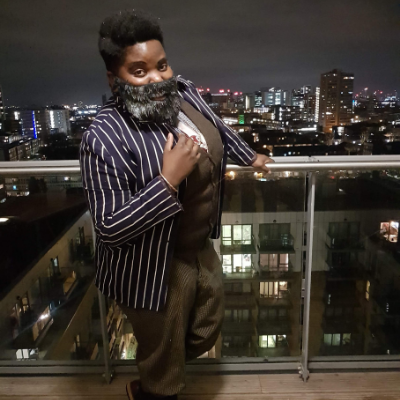
To me, being a lesbian in 2022 is about coming up from the basement, smiling at one another in lesbian spaces, having hipsters steal our haircuts and plaid shirts, yummy mummies steal our diets, and getting to hate on the L Word (yet watch it religiously) a second time around!
It means choice and freedom – of identity, expression, to love, marry, have families, be political, be sexual, be powerful, to empower, to exist. It is about sisterhood.
It can still be hard: the world over lesbians remain some of the most vulnerable people in societies that deny, erase, punish, forcibly attempt to convert, fetishise, and condemn. And there are lesbians who wish to weaponise our sexuality against others in the community. Being a lesbian in 2022 to me means that I can be proud and secure in my gender and sexuality, and that doesn’t have to invalidate anyone else’s.
6. “It is possible to thrive in life as a lesbian.” – Megan
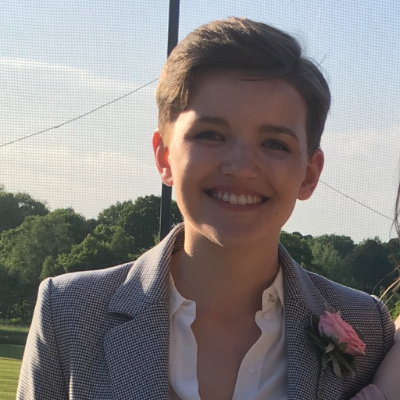
It took me years to accept ‘lesbian’ as a label. Even now it can make me feel uncomfortable, but I try to embrace it as an act of defiance.
When I was younger, ‘lesbian’ was always spat at me as a slur in a spiteful and disgusted tone. Otherwise, it was seen as a dirty word – highly sexualised and muttered under your breath.
It’s so important that young people are exposed to positive representations of lesbians in the media so that they don’t feel the same stigma. When I realised that I was only attracted to women, I thought the sky would fall in. I couldn’t see myself having a wife or a family, being successful, or finding happiness. I now realise that those premonitions were completely unfounded, and that it is possible to thrive in life as a lesbian.
7. “I was finding my home in the camaraderie and friendship of team sport.” – Erin
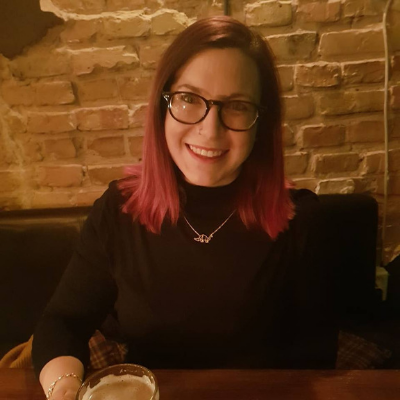
At the same time as I struggled with my sexuality as a teenager, I was also finding my home in the camaraderie and friendship of team sport. I had a safe environment where I could express myself physically and support my friends in a common goal.
The first people I came out to were teammates. Some were queer women themselves; many were allies. They supported me the same way we supported each other on the pitch: with loyalty and a lot of laughter.
I’ve been lucky to enjoy success with sport at the international level – which brings its own challenges - but sport has always continued to provide confidence and accomplishment that otherwise would have been lacking. I'm very aware of the privilege I’ve had to have such a positive experience with sport. But I sit here now – living the lesbian dream with my wife of five years and our cat – I can point directly to the power of sport as a huge part of my journey.
Visit our Lesbian Hub.
This Pansexual Visibility Day, we’re exploring what it means to be pansexual, and debunking 5 common myths about pansexuality.
With our understanding of the diversity of human experience expanding – and people feeling more able to live as their true selves – it’s so important for those with more marginalised identities to be visible.
While visibility alone won’t solve everything, it can go a long way towards helping individuals understand their feelings, and to feel seen. Visibility and representation can help the mental wellbeing of LGBTQ+ people who might feel isolated, and open doors to finding community.
Sexual orientation, like all other parts of our identities, is very personal and varies from one individual to another. For me, being pansexual means that my attraction to people has no correlation with their gender.
The concept of gender doesn’t relate to the ways in which I’m attracted to others – I’m simply attracted to those with the right energy. I see beauty in someone’s entire being, just like I see beauty in nature and in the world around me. This doesn’t mean that I don’t find people physically attractive – just that this attraction doesn’t fall into categories that are related to gender. Using the term “pansexual” allows me to revel in the expansive nature of my being, and acknowledge that I form connections with people, regardless of the gendered ways in which they might be perceived by society.
Pansexuality is just another shade in the colourful spectrum of human diversity, existing in harmony alongside all the other palettes. But – as with many other terms – pansexuality has long been misunderstood.
So today, on Pansexual Visibility Day, I’m going to explore and debunk some of the common misconceptions about this beautiful segment of the LGBTQ+ community:
1. “Aren’t pansexuality and bisexuality the same thing?”
While there are many overlaps between pansexuality and bisexuality, the official definitions differ in their approach to gender. The prefix pan- means “all”, so pansexuality is an attraction to all gender identities or attraction regardless of gender identity, while bisexuality is the attraction to multiple gender identities.
There may be individuals who align with the way pansexuality is defined yet identify with the term ‘bisexuality’, and that’s completely valid. Others may use pansexual and bisexual interchangeably. Our identities are personal and specific to each and every one of us – that’s what makes us all unique!
2. “I’ve heard that pansexuality is transphobic.”
One of the biggest misconceptions about pansexuality is that pansexual people are somehow being transphobic by stating that they’re attracted to trans people while bisexual people aren’t, because they don’t see trans people as men or women. This is a dangerous and untrue myth! Pansexuality is attraction regardless of gender, so a pansexual person’s attraction to someone has nothing to do with whether they are trans or cis.
Similarly, the existence of pansexuality does not mean that bisexual people are only attracted to men or women. Bisexual people can be attracted to people with the same gender identity, and with different gender identities from their own – including non-binary people. The recently emerging term “bi+” now makes it even more explicit that bisexuality isn’t limited by binary definitions of gender and sexuality!
3. “How can someone be attracted to everyone? Pansexuals are just greedy!”
Just because someone has the potential to be attracted to anyone doesn’t mean they are any more or less likely to be attracted to an individual. And it especially doesn’t mean that they’re automatically attracted to everyone. This is a myth that mirrors the homophobic notion that all gay men or lesbians are automatically attracted to every man or woman they meet.
It isn’t “greedy” for someone to have the potential to be attracted to people of all genders. Someone identifying as pansexual doesn’t mean they are constantly pursuing others, are more likely to cheat, or are incapable of committing to relationships. How adults decide to build consensual relationships is nobody else’s business!
4. “Pansexual people are confused – they can’t make up their mind about what they want.”
Like bisexuality, pansexuality is often erased and labelled as “sitting on the fence” or a “stepping-stone to being gay”. This misconception is commonly presented in a gendered way, with women labelled as “straight but experimenting”, and men assumed to be “gay, but too scared to fully come out”. Aside from being inherently queerphobic, these ideas are just another way in which the patriarchy manifests within our social culture.
When we make the above gendered assumptions, we’re centring men in our understanding of sexuality. We’re suggesting that it’s not possible for an individual to be attracted to people with multiple gender identities without their primary attraction being towards men. This just isn’t true: pansexual people know who they are, and they don’t need to pick between people of different genders to prove it.
5. “Pansexuality is just a new fad!”
The term pansexual is, in fact, not a new term. The word has been included in the Oxford English Dictionary since at least the early 1900s, and has been used in its current definition since at least the late 1960s. While LGBTQ+ people have long been using a range of different terms to describe their identities, we’re simply more aware of them now due to increasing social acceptance, as well as access to diverse experiences through the internet and social media.
Even if it was a new term, however, this would not invalidate pansexual people’s experiences, or suggest that they were being inauthentic. As public perception progresses, it’s likely that our language will expand and evolve to include the vast diversity of human experience – and that’s beautiful!
Research tells us that in 2022, the United Kingdom is a country that is proud to be inclusive; one where its people are increasingly embracing their LGBTQ+ neighbours, colleagues, family and friends.
However, with intolerant, minority viewpoints being presented as fact in our media and in our politics, it’s never been more important to show up to protect our rights.
As we look back on 50 years of Pride in the UK, we can reflect on how LGBTQ+ acceptance has seen one of the fastest and most dramatic changes in public attitude in post-war Britain.
According to the British Social Attitudes survey in 1987, at the height of the AIDS epidemic and the dawn of Section 28, three-quarters of the public said they felt that a same-sex relationship was either ‘always’ or ‘mostly’ wrong. These attitudes were often fuelled by sensationalist, homophobic reporting in our press.
35 years on, the world has changed, even if the headlines haven’t.
Our research shows that today, the UK public is significantly more likely to take pride in supporting the LGBTQ+ community than it is to find them ‘wrong’. One in three people reported they actively ‘respect’ us, and one in five declared ‘admiration’. Less than one in 20 reported feelings of ‘envy’, ‘resentment’ or ‘fear’.
[resource1]
This report adds further colour to the beautiful picture being painted by other pieces of research. YouGov polling shows more than seven in ten Brits would support someone close to them who came out as LGBTQ+, and greater numbers of people now feel comfortable being out as their true selves.
Despite this, the hard-won rights of LGBTQ+ people are under threat. In the digital age of misinformation, we’re facing new, often underhanded, challenges that threaten to weaken the foundations on which we’re building a safer future for all. Through attacks in our politics, online, and in our media, who continue to promote what are now demonstrably minority viewpoints uncontested, the LGBTQ+ community finds itself under a near-constant deluge.
And the real harm is already being felt.
This year, the UK Government reversed its promise to implement a trans-inclusive ban on conversion practices, acting against international medical and human rights consensus, and instead acting on rhetoric. The result is a ban that, in its current guise, will ultimately end up protecting no-one from abuse.
Additionally, the UK Government’s own research has shown that reported LGBTQ+ hate crime has grown at double the rate of other forms of hate crime over the past two years. And with four in five anti-LGBT hate crimes going unreported, these figures are likely only the tip of the iceberg. Words have an impact, and the debates on LGBTQ-inclusive education and trans equality in the media, online, and in the street are creating an environment where an LGBTQ-phobic minority feel emboldened to make us less safe.
And the world is noticing. The Council of Europe approved a report by the Parliamentary Assembly which condemns “extensive and often virulent attacks on the rights of LGBTI people for several years” in the UK. And our country has dropped down ILGA-Europe’s annual ranking of LGBTQ+ rights across Europe for the third year running, plummeting from 1st to 14th since 2015.
None of this is the will of the UK public.
That’s why it’s now more important than ever that we, as a majority movement of people who support LGBTQ+ equality, make our voices heard. We’ve fought and won before, and we can do it again. Over the past 50 years – since the first Pride in London marched against police pushback – we’ve witnessed a host of dramatic changes that have improved countless LGBTQ+ lives. We’ve been fearless in our demand for progress in the face of ongoing anti-LGBTQ+ sentiment. But our work is never done.
Now is the time to act. Together.
As long as LGBTQ-phobia threatens our ability to thrive as our true selves, we must all stand up for LGBTQ+ rights and resist attempts to drive us back into hiding. We’re stronger together, but we must not stand passively by as a silent majority. So, let’s speak up and act now to show the world – and our leaders – that we are a country that is proud to be inclusive.
Find out more about our campaigns.
In certain parts of the press and political discourse, trans issues are sometimes portrayed as the most pressing concern for the British public. But does this reflect the broader reality, or is it more the product of a perspective shaped by a particular group of influential voices?
Whether it is in healthcare, sport, education or the workplace, the existence of trans people, and their continued participation in society, continues to be the source of much debate in the British press.
And this has bled over into our politics. In a worrying (and increasing) trend, we have seen some politicians build their profile on a platform of anti-LGBTQ sentiment; repeating trans-hostile soundbites as part of a wider ‘war on woke’.
But does this level of coverage, really reflect what the British public think and feel about trans people?
The short answer is no.
The UK public is clear and consistent: trans issues are not a cause of national concern.
Whenever the British public is polled on the issues they want to see action on, trans people consistently rank at, or near, the bottom of the list.
For instance, a YouGov poll saw trans people finishing rock bottom of a closed list of 16 issues that the public felt most strongly about, with just 2% of the general public identifying trans people as their top concern. And interestingly, that dipped to just 1% of people who voted Conservative at the last General Election.
And in July 2022, the research group Opinium presented more than 500 Conservative members with a closed list of 28 issues and asked them to choose up to four they are passionate about. Trans people, and trans participation in sport, came in at 26th and 27th respectively.
So what do the British public want to see action on? The same things that they have wanted to see action on for the last 40 years: health, education, security and housing.
At a time when people are worrying how they will heat their homes, it comes as no surprise that the general public has little time for culture war techniques as a smokescreen for inaction.
Today, one in four British people is close to a trans person – attacks on trans rights are attacks on our friends, family and neighbours.
While the British public doesn’t think trans people are an issue, we need to be clear that they also don’t think that people being trans is an issue, either.
The truth is, the recent story of our nation is one of growing acceptance and love for LGBTQ+ people. We’ve come a long way since the dark days of Section 28 – when Margaret Thatcher banned the teaching of homosexuality in our institutions. Back then, Thatcher was backed by public opinion – in 1987, three-quarters of people felt that same-sex relations were ‘mostly’ or’ always’ wrong.
But today, three-quarters of people personally know a lesbian, gay or bi person, leading to a dramatic turnaround in public opinion as people got to know us as people, rather than through the lens of media stereotypes or press scandal.
Greater awareness and visibility means are now going through this same process of understanding trans people and their lives. And the effect is already being felt. Despite relentless media scaremongering, the British public is today four times more likely to feel positively about trans people as they are negatively.
Women consistently poll as being more supportive of trans people than men, showing just how out of touch with reality much of the media discourse really is.
Waging war on trans people doesn’t win votes.
Don’t believe us? Take a quick look at Scotland, where both the Alba and Scottish Conservative party are still licking their wounds after badly misjudging the public mood and campaigning on anti-trans lines. Both lost votes and seats to trans-inclusive parties.
Public support for trans people is strong – as is support for trans policy action. 62% of the public want conversion therapy aimed at trans people banned. And 41% think schools should have a specific policy to tackle transphobia.
All of which combines to show that the current moral panic around trans people doesn’t even qualify as a moral panic. Every time you take the conversation outside of a narrow circle of elite media commentators and politicians who obsess about trans people, all evidence shows that public support for trans people is strong.
This is a fake, manufactured moral panic. Yet this misinformation campaign poses a very real risk to the safety of trans people, and to the policies and laws that keep them safe and ensure they can enjoy the same rights as everyone else. We must ensure the voice of the majority of people who simply believe ‘live and let live’ is heard.
Visit our Trans Hub.
For over two centuries, LGBTQ+ people have been excluded from the Census.
Now, after two decades of campaigning, the number of lesbian, gay, bi, trans and asexual people in England and Wales has been counted in the Census 2021 for the very first time.
The Census results don’t just give visibility to a section of the population who have long been hidden – although that alone would be reason enough to celebrate. This data will help us campaign more effectively to improve the lives of LGBTQ+ people in different areas of our lives – from improving access to healthcare to tackling homelessness. With our communities now more visible in data, we will be able to better understand the issues facing us regionally and nationally – and campaign for the right solutions, backed up with evidence.
The results of the Census are already helping LGBTQ+ people across England and Wales feel more seen and joyful, and as the year rolls on, even more data will be released that will enhance our understanding of the make-up of our communities and the challenges we face. Until then, here are five things that you might have missed from the initial Census data drop!
1. There are nearly as many bi and pan people as there are lesbian and gay people.
In England and Wales, there are 736,000 bi and pan people, and 748,000 gay and lesbian people. Yet, our 2020 LGBT in Britain survey found that only 20% of bisexual people are out to their families compared to 63% of gay and lesbian people. Along with the negative attitudes and behaviours experienced by many LGBTQ+ people, bi people also experience erasure. Stemming from assumptions around what LGBTQ+ people look like, and assumptions of their orientation based on the gender of a person’s current partner, this can create a secondary layer of discrimination. The results of this Census highlight the need to tackle bi erasure and provide specific support for the bi community.
Learn more on our bi hub.
2. 0.5% of the population have a gender identity that is different from the one they were assigned at birth.
This figure is in line with what we expected to see for the trans and non-binary population in England and Wales, based on comparable data from Canada. Within this, some may be surprised to learn that the number of trans women and trans men is almost exactly the same – each accounting for 0.1% of the population, with a slightly smaller proportion identifying as non-binary at 0.06%. A small but vulnerable minority group, trans people deserve our solidarity and support.
Hear from trans and non-binary people via our trans hub.
3. There are 28,000 people in England and Wales who identify as asexual.
Ace people have always been part of the LGBTQ+ community but are often erased and ignored. Now, the results of this Census highlight that there are a significant number of individuals in England and Wales who belong to this community, and who deserve recognition and support.
Find out more about how to be an ally to asexual people.
4. LGBTQ+ people live and participate in every part of the country, rural and urban.
The Census is proof that LGBTQ+ people are not just bound to big cities – we can see representation in every community across England and Wales. This highlights the need for LGBTQ-inclusive events and support in all areas, and the importance of uplifting the voices of LGBTQ+ individuals based outside of big cities.
5. Brighton and Hove is the most LGBTQ+ place!
Brighton and Hove has the smallest proportion of cisgender-heterosexual individuals in its population out of any local authority in England and Wales. Home to countless LGBTQ+ venues, charities, and support services – and the site of one of the UK’s largest Pride parades – the community in Brighton strive to create a welcoming and safe environment for LGBTQ+ individuals, and to raise awareness for our communities in the process.